What is it?
While the Westerlund 2 cluster was the subject of Hubble's 25th anniversary image in 2015, JWST has taken a different view of the area, resulting in what previous telescopes struggled to count: the cluster's faintest members.
The JWST helped uncover for the first time the full population of brown dwarfs in this massive young star cluster, including objects as small as around 10 times the mass of Jupiter.
Brown dwarfs are grouped under the "dwarf" umbrella because they are star-like objects that form from collapsing gas clouds, yet never become big enough to sustain long-term hydrogen fusion like true stars.
Where is it?
The Carina Nebula is located in the Carina constellation, around 20,000 light-years away from Earth.

Why is it amazing?
Finding brown dwarfs in this harsh and brilliant environment is important because it helps astronomers answer a key question: How efficiently are low-mass objects, like brown dwarfs, being made when there's intense radiation in the area? A complete census of the stars in the image lets scientists compare the Westerlund 2 cluster to quieter star-forming regions and test whether extreme conditions change the "mix" of the objects that are formed.
Want to learn more?
You can learn more about the James Webb Space Telescope and star formation.
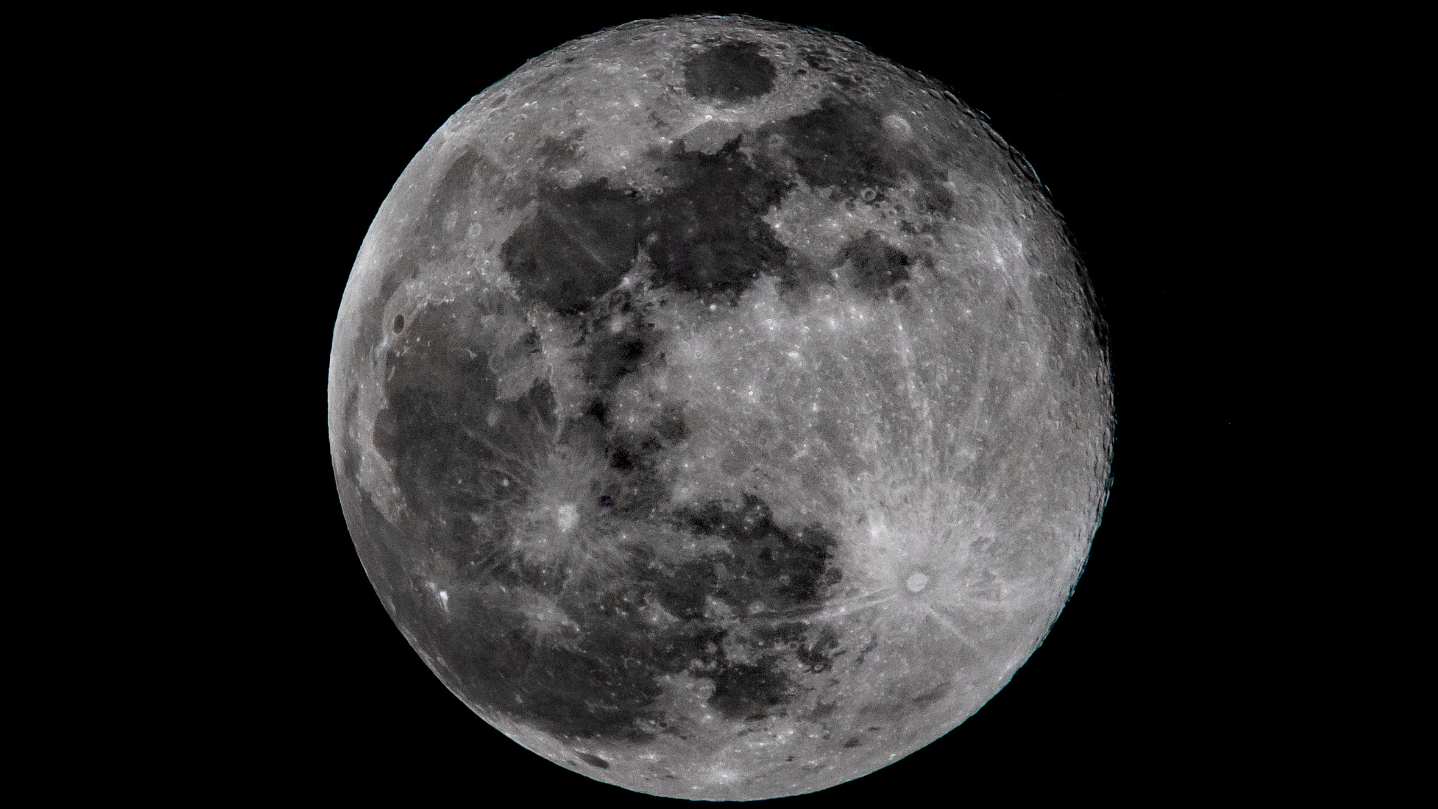
January's moon — often known as the "Wolf Moon" in reference to the packs of famished carnivores that can be heard howling this time of year — turned full as it sat close to its minimal distance to Earth in its 27-day orbit, giving rise to an enchanting supermoon.
A supermoon can appear up to 30% brighter and 14% larger than the smallest moon of the year, presenting a gorgeous sight to the naked eye and an unmissable target for photographers attempting to capture the fully-lit face of Earth's closest cosmic companion.
Experienced photographers seized the opportunity to line up impressive compositions as the Wolf Moon prowled low over the eastern horizon on the nights surrounding Jan. 3, before tracking it as the lunar disk leapt high overhead to hunt the stars through the night sky.
The January full Wolf Supermoon in photos
Photographer Gary Hershorn captured a gorgeous view of the moon hanging above the New York City skyline, where it joined the artificial glow of the city to cast columns of light across the Hudson River, as wisps of cloud played through the sky overhead.

Hershorn also captured a classic image of the lunar disk as it appeared to skim the Statue of Liberty's torch in New York around sunset on that same day (Jan. 3).

Kevin McCarthy snapped a beautifully detailed shot of the Wolf Supermoon's silvery light in the skies over North Carolina on Jan. 3, highlighting the bright streaks of material cast out from young impact sites.
"It was cloudy and we had rain for most of the day in Charlotte, North Carolina, but the skies cleared at sunset, giving me a clear view as the Wolf Super Moon rose," McCarthy told Space.com in an email. "This photo was hand-held and I took a series of images to make sure I could capture one with maximum clarity."
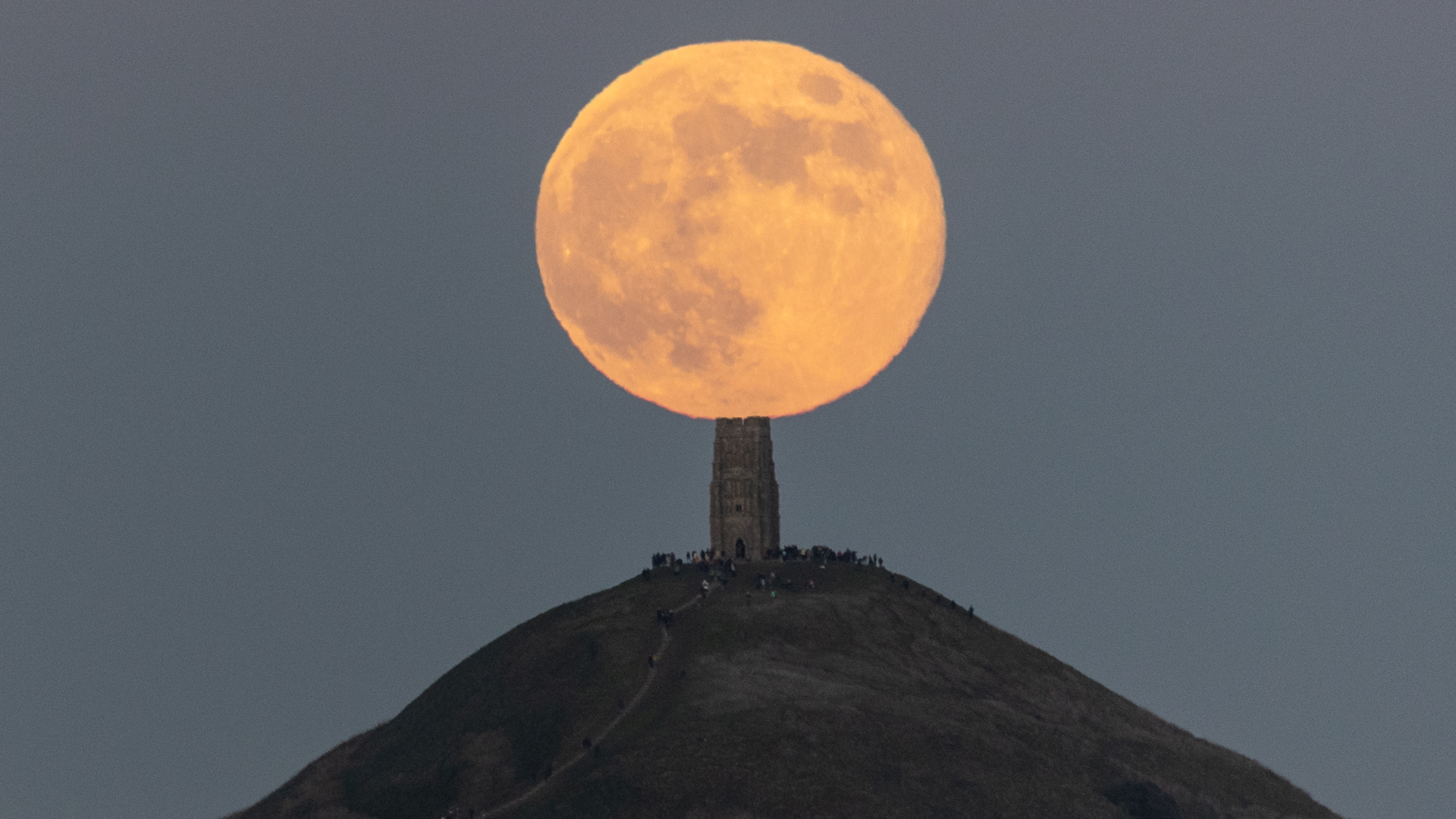
The next image was taken on the night of Jan. 3 as the moon rose over the historic hilltop that plays host to the Glastonbury Tor, in Somerset, U.K.
Matt Cardy's photo appears to show the moon balanced atop the 14th-century tower, as stargazers gather to witness the natural light show.
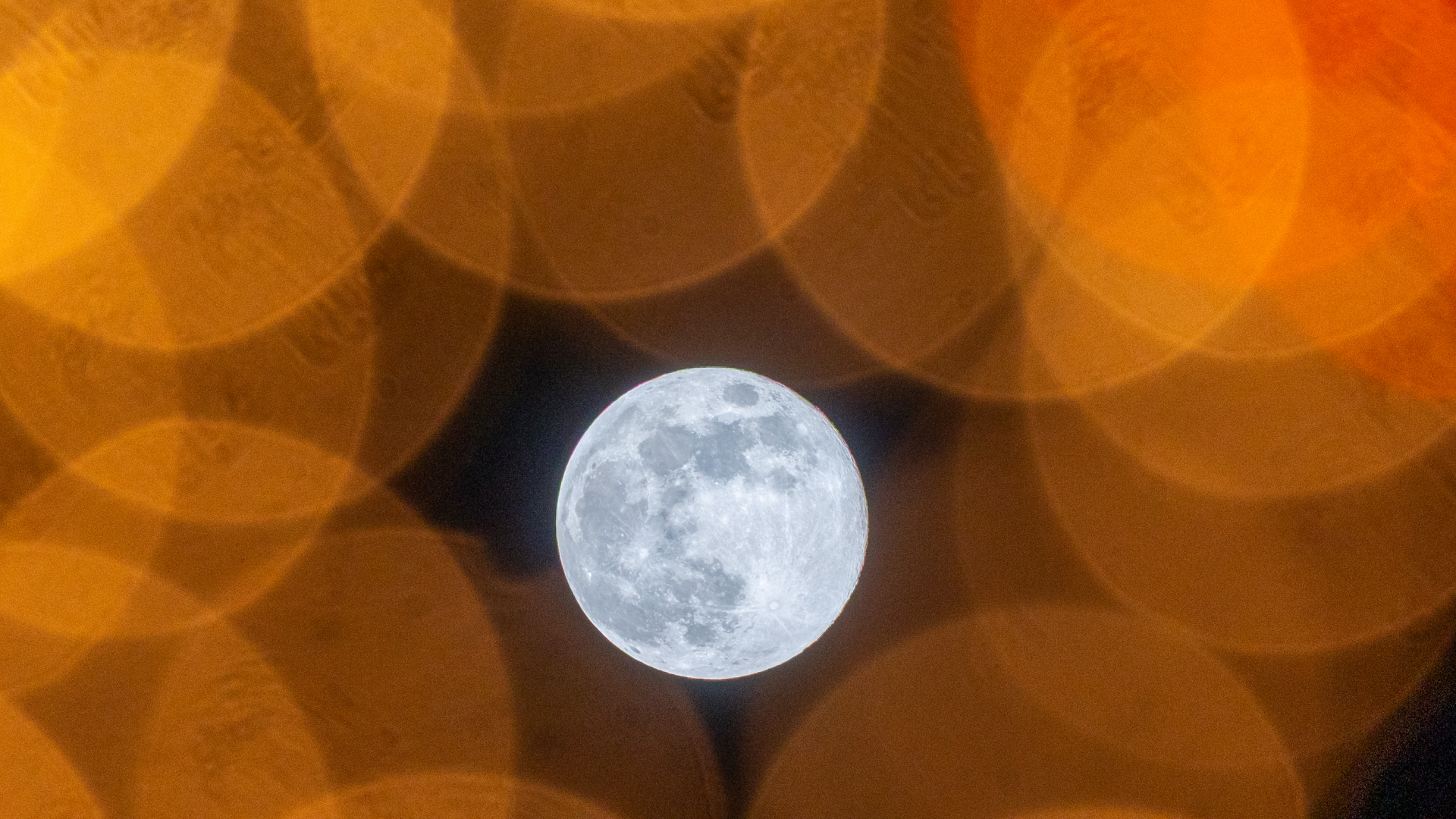
Cardy also used his telephoto lens to capture the lunar disk as it passed through a collection of Christmas lights, the unfocused light from which encircled the silvery moon with a multitude of yellow-orange spheres
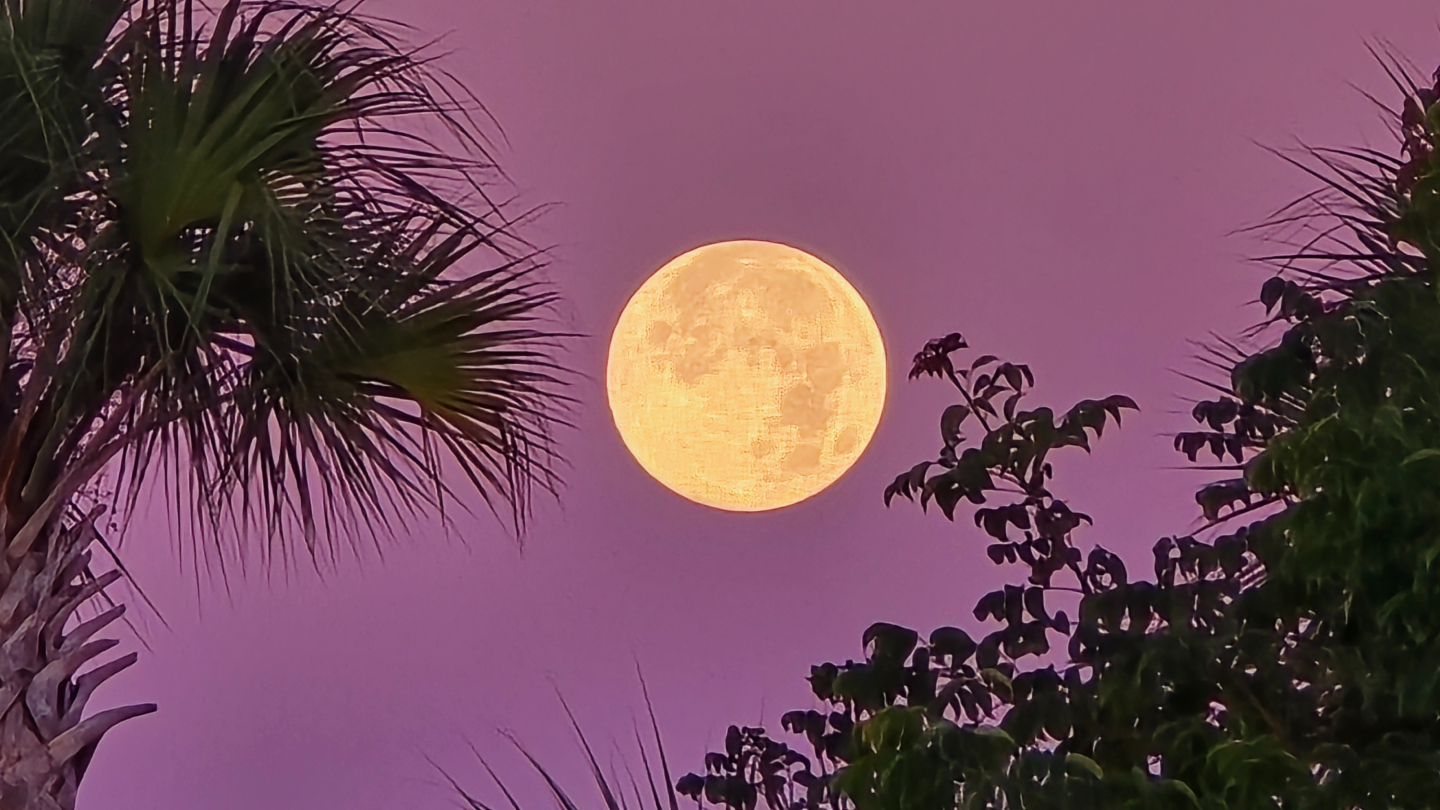
Photographer Lisa Shislowski was also able to take a colorful view of Earth's natural satellite from her vantage point in Plantation, Florida.
"About 20 minutes before the sunrise this morning, the skies were pastel in color," said Shislowski in an email to Space.com. "The full moon was getting closer to setting through the fog over the Everglades in Weston, Florida. It was truly beautiful to see."
Photographer Wang Jianmin lined up a majestic shot of the full moon positioned at the apex of a traditional tower in the city of Lianyungang in China's Jiangsu Province on Jan. 3.

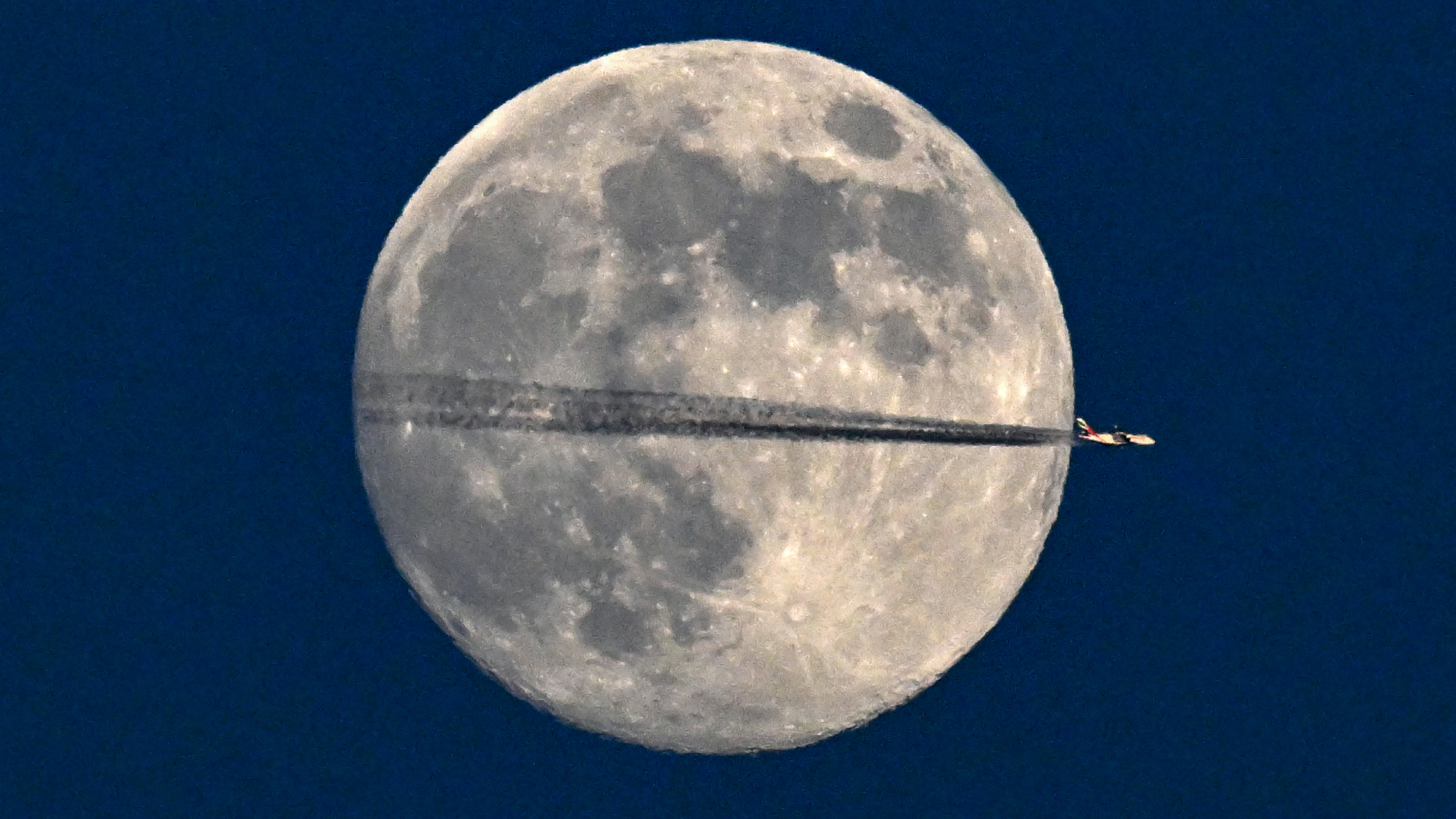
Kirill Kudryavtsev opted to capture both the ancient and the new at once, by snapping a commercial airliner as it soared past the lunar disk in the skies over Frankfurt, Germany, on Jan. 2, leaving a dense exhaust trail that bisected the dark basaltic plains scarring the lunar disk.
The next shot immortalized the moon as its light reflected in the freezing waters of a wild river running through the snowy landscape in the Mengen district of Bolu, Turkey, on Jan. 2, mere hours before the lunar disk turned full. Its orange light is the result of an atmospheric effect called Rayleigh Scattering, wherein particles deflect the bluer wavelengths of light reflected from the lunar surface, while allowing redder wavelengths to pass through relatively unaffected.

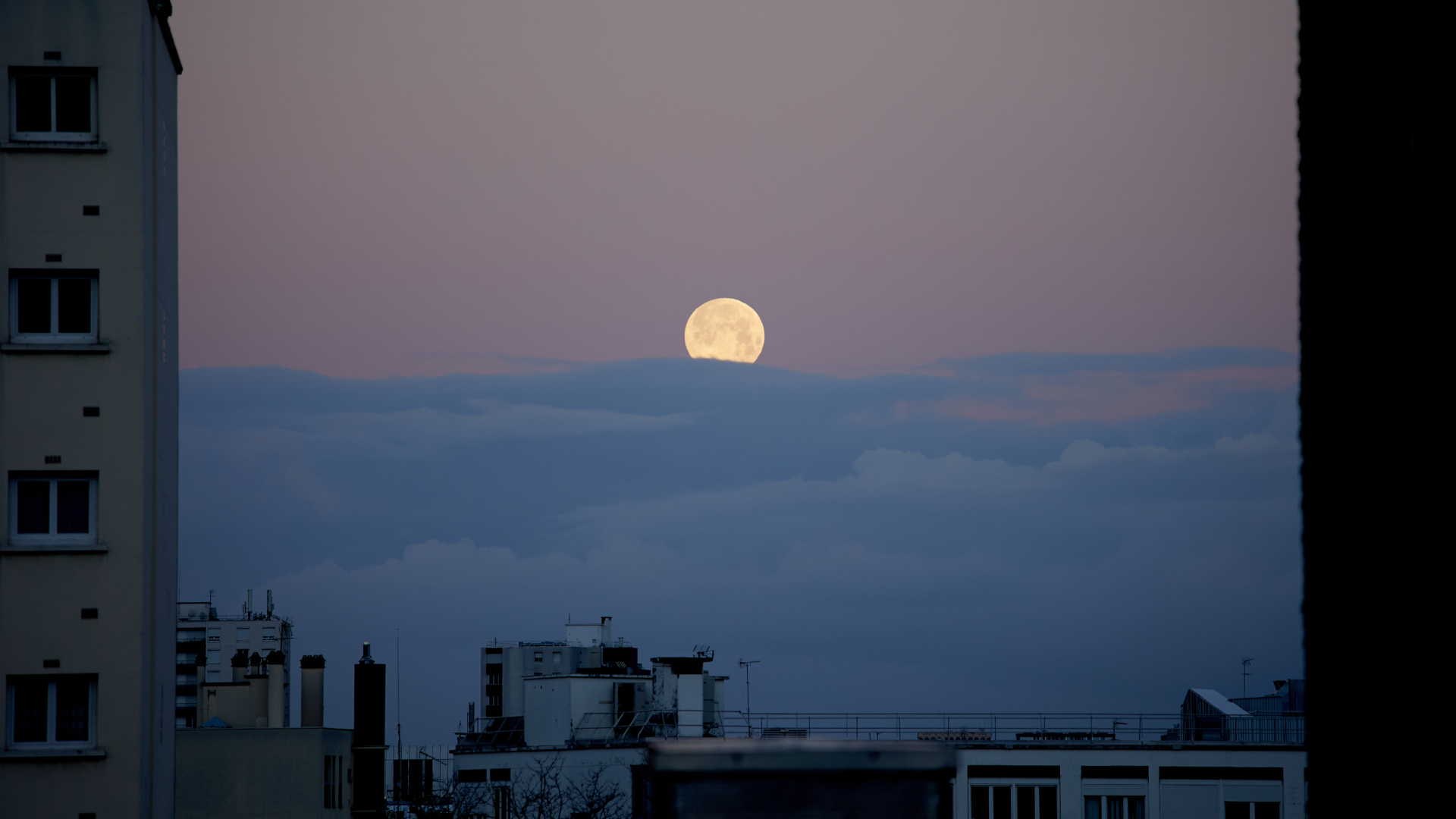
Photographer Adnan Farzat captured the Wolf Moon as it rose over Paris above an ocean of clouds on the night of Jan. 3. Subtle dark patches on the lunar surface betray the presence of colossal basaltic plains, where lava flows coated vast swathes of Earth's natural satellite, before solidifying in the extreme environment of space.
Sun Yongdong froze a moment in time as the orange moon rose above the serene mountains in Beijing, China, later that same night.

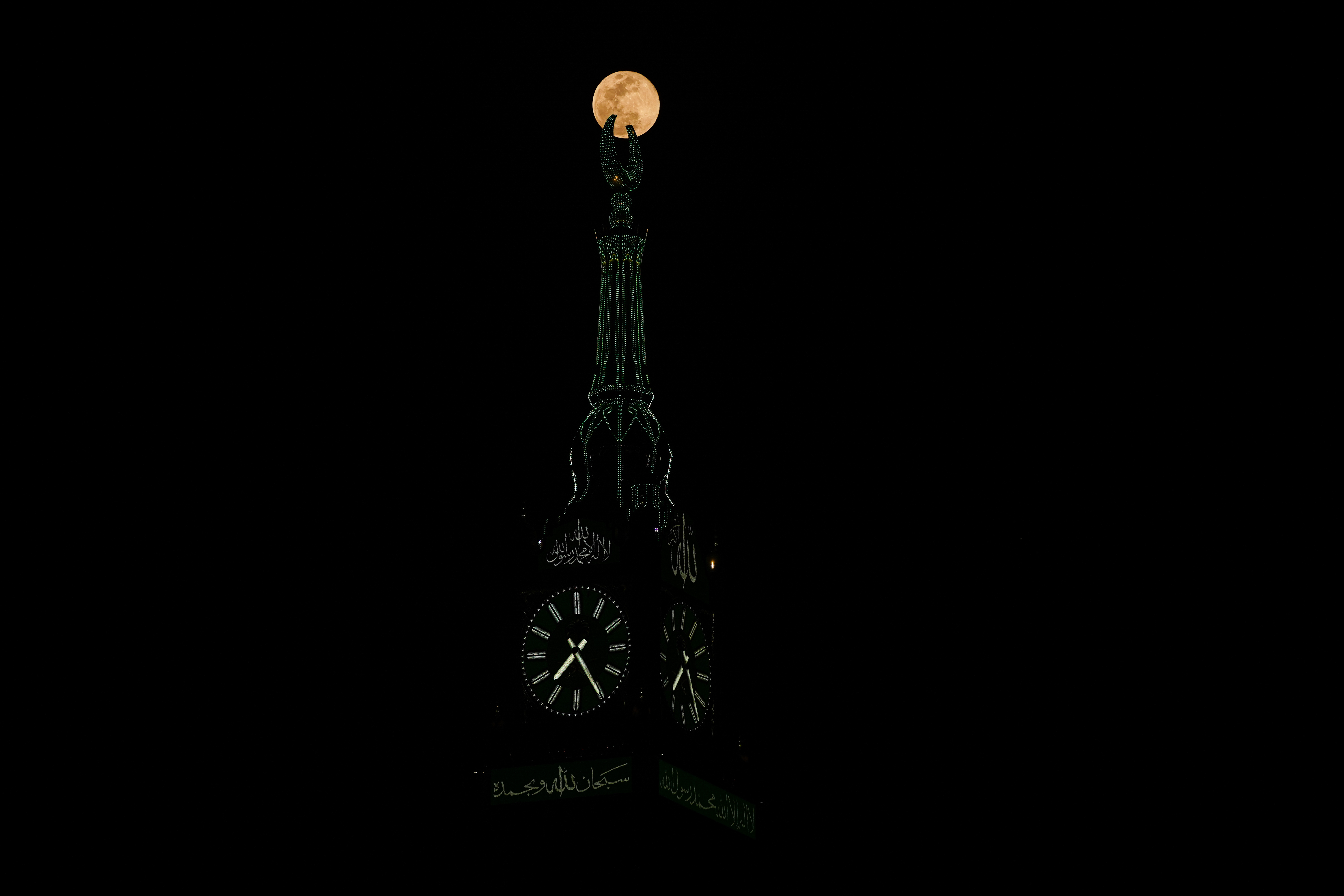
Our next lunar view comes courtesy of Ismeal Adnan Yaqoob, who imaged the lunar disk on the night of Jan. 3 as it passed the apex of the Royal Clock Tower over Mecca in Saudi Arabia.
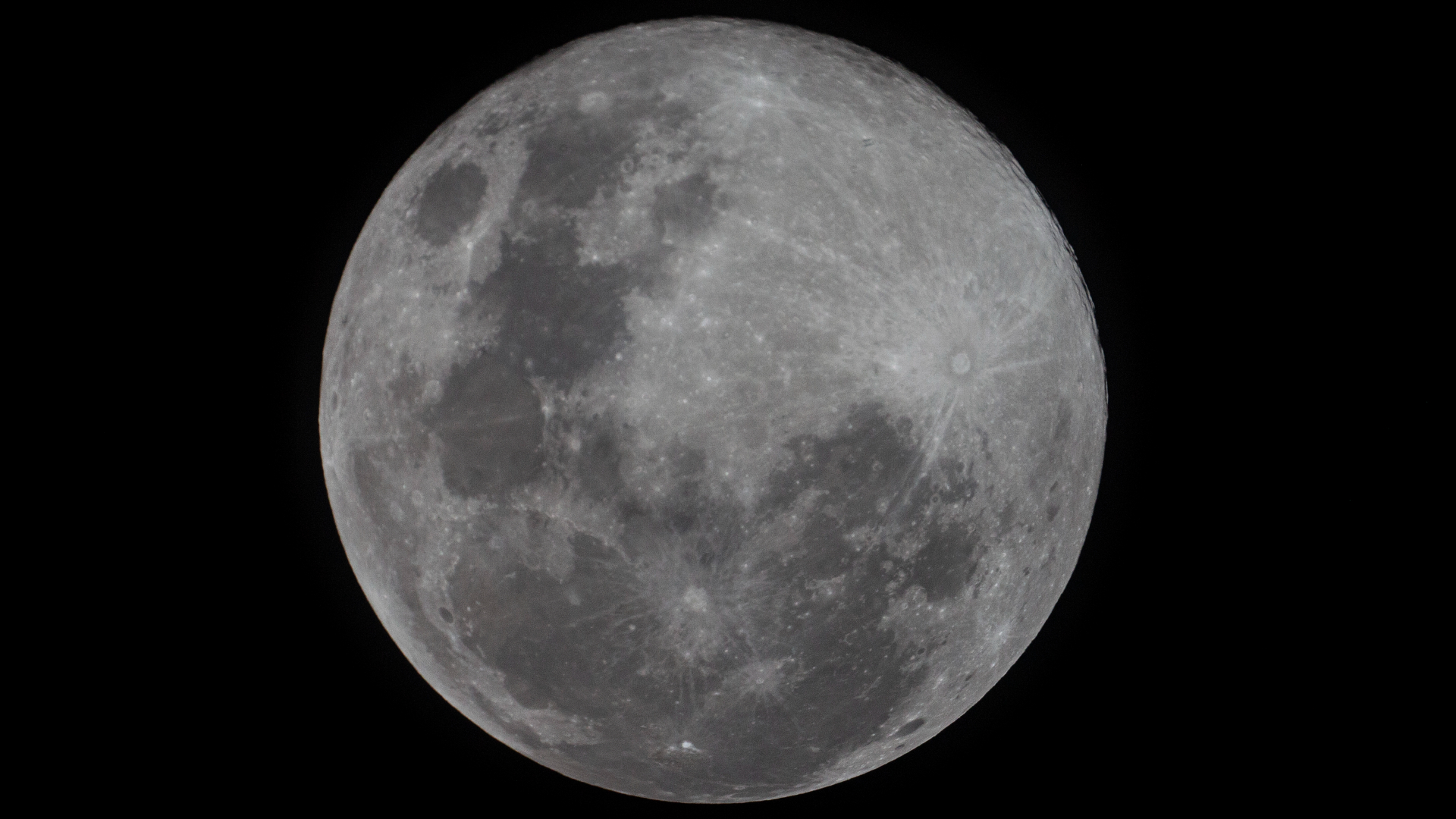
Finally, photographer Aditya Irawan was able to take a gorgeously detailed shot of the full Wolf Moon as it hung in the skies over West Java in Indonesia. Tycho Crater dominates the right side of the lunar disk, as the Kepler and Copernicus impact sites brighten the southern lunar maria.
Feeling inspired to capture your own shots of the lunar disk? Then be sure to read our roundup of the best cameras and lenses for astrophotography, along with our guide to imaging the moon. If you're in the mood for more astrophotography then you can also check out our 10 favorite astrophotos of 2025 as submitted by Space.com's readers!
Editor's Note: If you would like to share your lunar astrophotography with Space.com's readers, then please send your photo(s), comments, and your name and location to spacephotos@space.com.
]]>It will be a huge year for the moon overall. NASA plans to send humans back to the vicinity of the moon with the Artemis 2 mission no earlier than February, while China, in the second half of the year, aims to land at the lunar south pole and seek out water ice with its robotic Chang'e 7 spacecraft. But it's not only national agencies targeting Earth's companion, as commercial companies are also taking aim with a series of robotic landers at what could be the start of a sustained, more market-driven lunar presence for humanity.
Below are the commercial missions currently targeting lunar landing attempts in 2026, pending launch schedules and mission readiness.
Blue Origin: Blue Moon Pathfinder Mission 1
Jeff Bezos's Blue Origin is set to take its first shot at the moon with the Blue Moon Mark 1 pathfinder. The robotic lander is due to launch on a New Glenn rocket from Cape Canaveral as soon as early 2026, the company said in November, soon after the rocket successfully launched NASA's ESCAPADE Mars mission.
The mission is designed to be a technology demonstration of the Blue Moon Mark 1 cargo lander design, including precision landing systems and propulsion tech that will support later commercial and NASA payload deliveries to the lunar surface, with a capacity of up to 6,600 pounds (3,000 kilograms).
The lander will target the lunar south pole and will carry a NASA SCALPSS payload that will study how the lander's exhaust interacts with the moon's surface during the landing. There's a lot at stake: Blue Origin is a prime contractor for NASA's Human Landing System (HLS) with its Blue Moon lander, which is intended to land astronauts on the moon later this decade, making Mark 1 pathfinder a key rehearsal.
Firefly: Blue Ghost M2
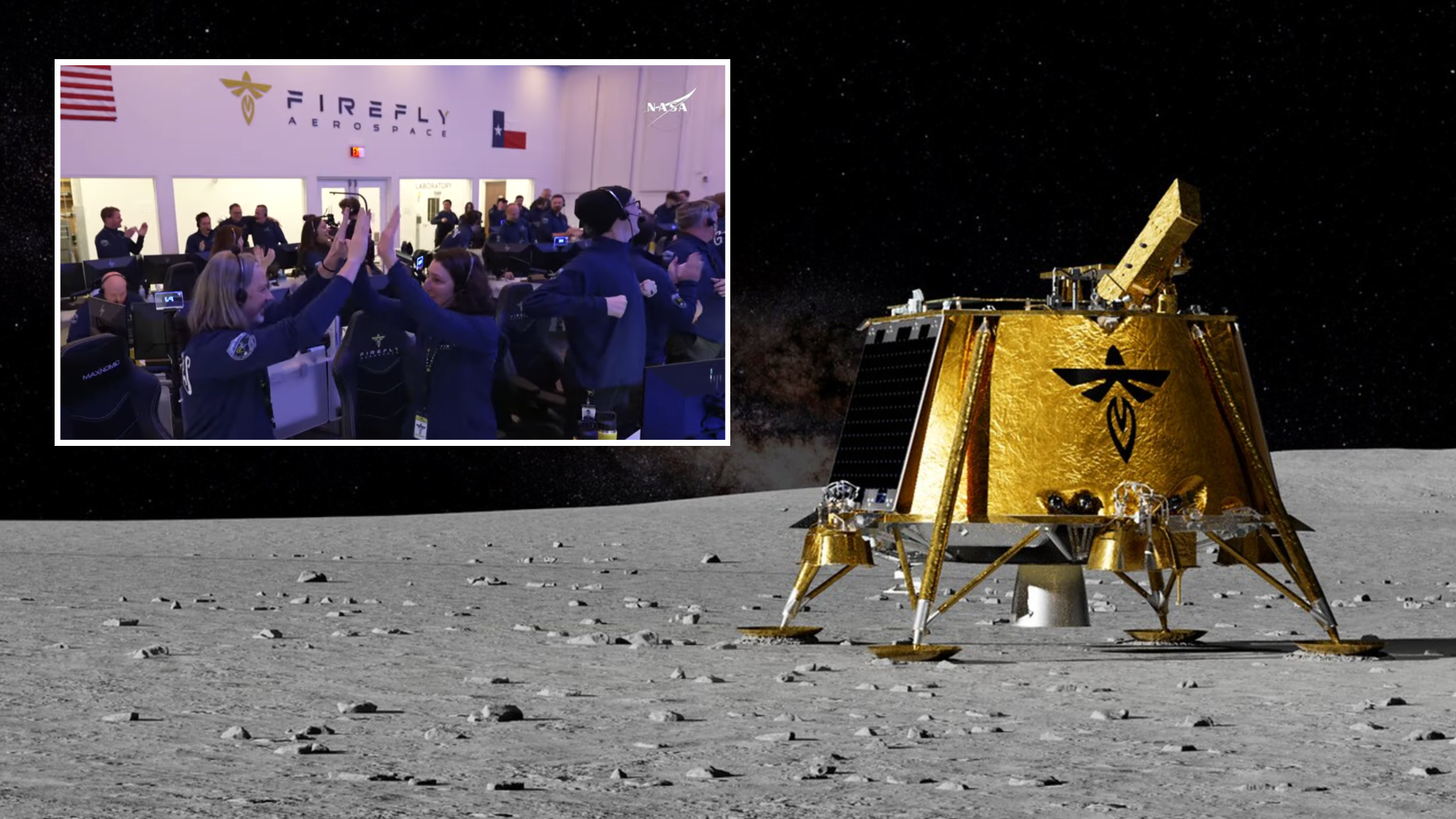
Texas-based Firefly is gearing up to return to the moon one year after its historic landing of Blue Ghost in Mare Crisium on the near side. Blue Ghost M2 is the next step in the company's push to become a repeatable commercial lunar delivery provider. It will fly as part of the NASA Commercial Lunar Payload Services (CLPS) program, while also carrying commercial and international payloads.
Blue Ghost M2 will launch on a SpaceX Falcon 9 rocket no earlier than the second quarter of 2026, aiming to land on the far side of the moon — a feat that only China has achieved to date, with Chang'e 4 in 2019 and Chang'e 6 in 2024. Among six government and commercial payloads will be the Rashid Rover 2 for the United Arab Emirates and a wireless power receiver for Volta Space.
The mission also carries the European Space Agency's Lunar Pathfinder orbiter, which will be deployed into lunar orbit by Firefly's Elytra orbital transfer vehicle. Elytra will also act as a communications relay for Blue Ghost M2 during its 10 days of operations. A comms relay is a necessity, because the far side of the moon is not visible from Earth.
Intuitive Machines: IM-3
Intuitive Machines will attempt its third lunar landing in the second half of 2026 with IM-3, looking to build on the efforts of the IM-1 Odysseus spacecraft in February 2024 and last year's IM-2 Athena, both of which toppled onto their side shortly after touching down on the lunar surface.
IM-3, again using the NOVA-C lander, will launch on a Falcon 9 rocket from NASA's Kennedy Space Center in Florida and target a landing in the Reiner Gamma region on the near side, which features a mysterious lunar swirl with an associated local magnetic field. The lander will be packed with science payloads, including magnetometers and plasma instruments, as part of the CLPS program.
Astrobotic: Griffin mission 1
Astrobotic's first moon lander, Peregrine, launched in January 2024 but suffered a propulsion anomaly due to a faulty valve and ended up in the Pacific Ocean. But the Pennsylvania-based company is back with its first Griffin lander, currently scheduled to launch no earlier than July 2026 on a Falcon Heavy rocket.
Griffin-1 will target the south pole of the moon. It was initially planned to carry NASA's VIPER rover to seek out volatiles, but the rover has moved to a later mission, following its cancellation and subsequent revival. Instead, Astrolab's four-wheeled, 1,000-pound (450 kg) FLIP moon rover will join Griffin-1 for the ride, along with Astrobotic's own, much smaller CubeRover. The lander will also carry further small commercial and cultural payloads.
Together, the missions represent another expansion of efforts to explore the moon, testing technologies and deploying science payloads that will be used for or inform future missions, including the Artemis program, as well as growing the commercial footprint in space. How the missions perform will signal if private moon landers are ready to move from the experimental to the routine.
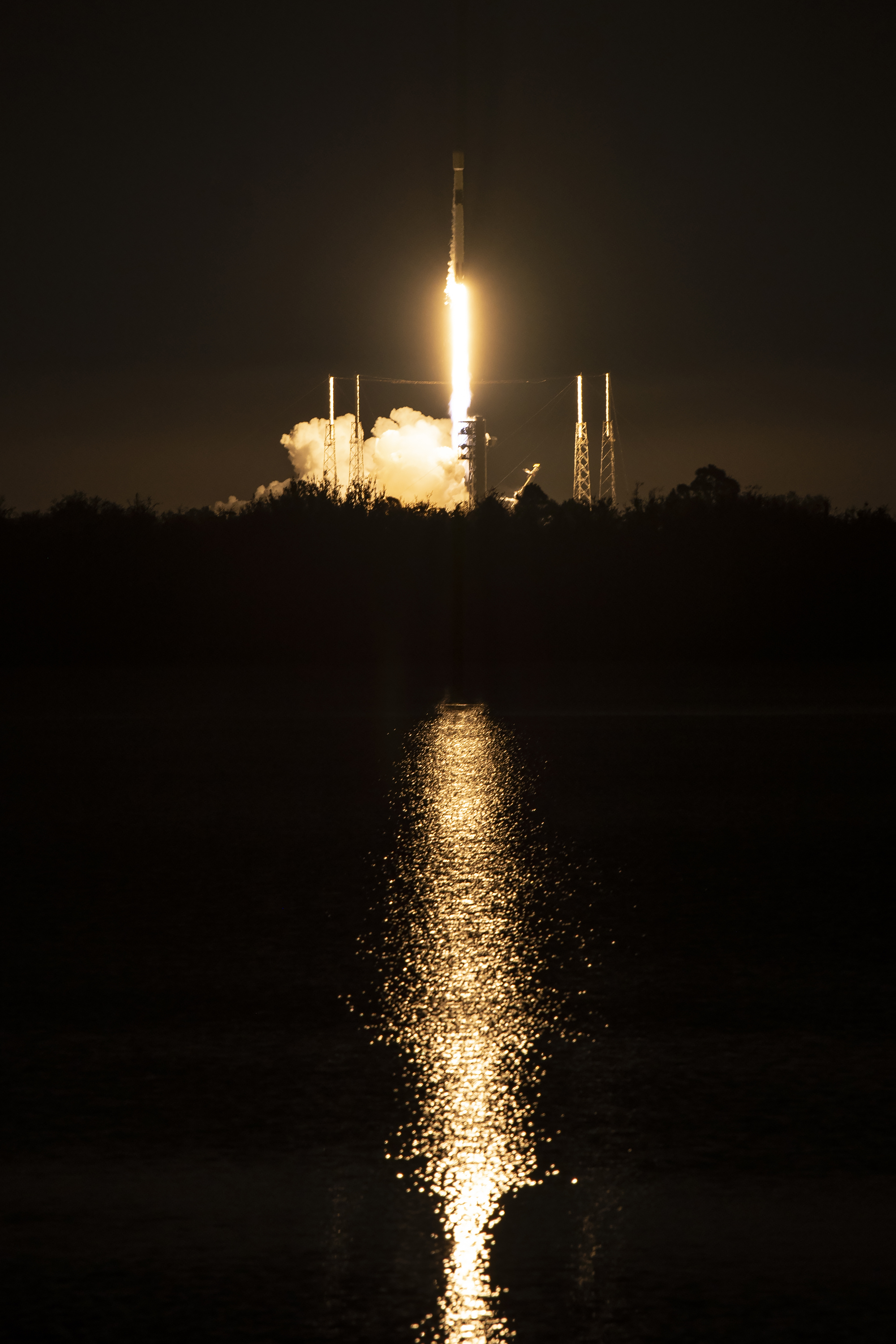
]]>The first Starlink satellites to join SpaceX's megaconstellation in 2026 were launched today (Jan. 4) on a brand new Falcon 9 rocket.
The fresh booster, carrying 29 of the internet broadband relay units, lifted off on Sunday at 1:48 a.m. EST (0648 GMT) from Space Launch Complex 40 at Cape Canaveral Space Force Station in Florida. The satellites (Starlink Group 6-88) reached low Earth orbit approximately nine minutes after leaving the ground and were successfully deployed about an hour later.
"Deployment of 29 Starlink satellites confirmed," SpaceX posted to the social media network X.
The Falcon 9's first stage (Booster 1101) made its first return to Earth, touching down on the drone ship "Just Read the Instructions," which was pre-staged in the Atlantic Ocean.
SpaceX's Starlink network, which is approaching 9,500 active satellites, provides access to broadband internet in areas around the world where connectively is otherwise sparse or nonexistent. This now includes Venezuela, after the U.S. raid on the country’s capital, seizing President Nicolás Maduro.
"Starlink is providing free broadband service to the people of Venezuela through February 3, ensuring continued connectivity," SpaceX announced on X on Sunday.
The launch was SpaceX's second for 2026, 595th completed since 2008 and 555th landing since 2015.
]]>Once a week, on average, a spacecraft (or part of one) falls back into Earth's atmosphere; most of these objects are empty rocket stages, but some are dead satellites whose low orbits finally decayed enough for them to slip into the atmosphere. They're basically like human-made meteors, but most of them don't survive long. This is because of the heat and shredding force that come with high-speed collisions with the air. However, some bits of debris from the objects can exist long enough to plummet through the sky, ranging from dust-mote-sized particles to whole propellant tanks. And this can be a big problem.
There's a risk one of those stray pieces can hit a passing aircraft — that risk is small, but it's growing enough that experts are now trying to figure out how to reduce it.
We've been lucky so far
Even in space, what goes up sometimes comes back down: spent rocket stages, defunct satellites and other bits of space debris are falling back into Earth's atmosphere with increasing regularity. And as satellite constellations and general spacecraft operations continue to become more common, the risk of deorbiting space debris will only go up.
There's a 26% chance that sometime in the coming year, space debris will fall through some of the world's busiest airspace during an uncontrolled re-entry, according to a paper published early in 2025 by researchers at the University of British Columbia. The odds of that debris actually striking an aircraft (or vice versa) are small but measurable: By 2030, the chances of any given commercial flight hitting a piece of falling space debris could be around 1 in 1,000, according to a 2020 study.
Those odds don't sound terribly daunting if you're the gambling type, but given the number of planes crisscrossing the friendly skies at any given moment, that's a lot of rolls of the dice. And it's a high-stakes gamble; risk includes not just the likelihood of an event, but the potential outcome (hundreds of people dead, in this case of that 2020 study). That's partly because commercial aircraft carry so many passengers, but it's also because it takes a much smaller bit of debris to cause a catastrophe in the air than on the ground, especially where jet engines are concerned.
"Aircraft can be affected by much smaller pieces of debris. For example, airplanes flying through the ash of a volcano is risky because of the small particles," European Space Agency space debris system engineer Benjamin Virgili Bastida told Space.com. "Kind of a similar thing could happen with re-entering debris." Virgili Bastida and his colleagues recently published a paper in the Journal of Space Safety Engineering outlining the challenges of deciding when and where to close airspace for falling space debris.
Lessons learned from Long March
One of the best known incidents of space debris affecting air traffic happened in November 2022, when the core stage of a Chinese Long March 5B rocket re-entered Earth's atmosphere. It was the fourth time a Long March 5B had made an uncontrolled re-entry, and this time its ground track passed over Spain, prompting a flurry of airspace closures.
The Long March rocket was an unusual problem even by space debris standards; the roughly 20-ton core stage was much, much more massive than most spacecraft and rocket parts that drop back into the atmosphere (and China is no longer using that version of the rocket now that the final modules of its Tiangong space station are in orbit). China's space agency also wasn't very forthcoming about the rocket's track or the fact that it was going to re-enter the atmosphere at all. But despite being an anomaly, the Long March incident is also a good illustration of both the potential danger and the need for more specific warnings, rather than broad ones.
Despite a few other close calls and airspace closures in recent years — like a SpaceX spacecraft that re-entered over European airspace in the summer of 2025, prompting airspace closures — we've been lucky so far. But maintaining that streak, without causing air-traffic gridlock by closing too much airspace for too little reason, is going to require a lot of work on multiple fronts.
"What we are trying to investigate in the studies we are running is to see what is really the threshold for risk for an aircraft," said Virgili Bastida. "At what risk should we react?"
Other pieces of the puzzle include limiting the amount of debris that even makes it to the altitudes where most planes fly (around 30,000 to 40,000 feet or 9,144 to 12,192 meters), more accurately predicting where and when spacecraft will re-enter, and coordinating between space agencies and air traffic controllers to make the decision-making progress less clunky. And none of that is as easy as it sounds.
Really wide margins of error
It's still surprisingly hard to predict exactly where and when an uncontrolled satellite is going to fall into the atmosphere. Even during a doomed spacecraft's final orbit or two, the margin of error allows for several hours, which translates into thousands of miles of distance due to the speed most re-entering satellites move. The huge uncertainty presents air traffic controllers with a difficult choice: take no action and risk lives (even if the chances are small), or close a huge swath of airspace, which will inevitably cost millions of dollars and create air traffic delays that take hours to unsnarl.
For example, the 2022 Long March 5B airspace closure in Spain delayed, canceled, or rerouted more than 300 flights; Enaire (the Spanish equivalent of the FAA), shut down a strip of airspace about 62 miles (100 kilometers) on either side of the rocket stage's path for about 40 minutes. But the debris only spent about five minutes of that time in the affected airspace, according to Virgili Bastida.
"There's a desire to be more specific and make those windows and closures as narrow and constrained as safety allows," space and aviation analyst Ian Christensen, senior director for private sector programs at the Secure World Foundation, told Space.com. Christensen added that both the FAA and the International Civil Aviation Organization are already working with the space launch industry — companies like SpaceX, ULA and Blue Origin, among others — to develop narrower, more specific airspace closures for rocket launches. Those efforts are likely to apply to dealing with the other end of spaceflight, returning debris, as well.
To get there, space agencies and air traffic controllers need two key types of information. First, when and where will the spacecraft hit the atmosphere? How much of it will survive intact down to 40,000 feet? Exactly what part of the sky will that debris be falling through (and when)?
Second, how big a threat is that debris to a passing aircraft? That answer depends on the size, speed and features of the aircraft, and researchers are in the process of working out models that can offer more specific answers. It will then be up to space agencies and air traffic controllers, working together, to decide when the risk is high enough to close a patch of sky — and for how long.
"If we react at every risk, half of the world will be impacted every now and then, so it's not feasible," said Virgili Bastida. "Do we react for everything which has a chance to reach the ground? Or do we react only for the very large objects, as we did for the Long March?"
Agencies in charge of aviation and air traffic control in individual countries (like the FAA in the U.S. and the Civil Aviation Administration of China in China) will eventually have to define how much risk requires them to close airspace for falling space debris. That could include factors like the likely size of the pieces and the chances of an impact, so a standard might look something like, "If there's a 1 in 3,720 chance of particulate matter getting sucked into a jet engine, we should close the airspace." (Those numbers are just for illustration.)
Better predictions need more data
The margin of error is so large, in part, because we don't really know much about the detailed physics of the upper edge of the atmosphere, between 62 and 124 miles (100 and 200 kilometers) up. The term "upper edge" is misleading, in fact, because the transition from vacuum to air is more gradual, and the altitude where it happens depends on temperature and other factors — including how active the sun is at that moment. All of those factors affect how quickly the atmosphere's drag can slow down a spacecraft and pull it in.
Satellites don't spend much time passing through this rarefied region, and most of them are already dead and in the process of being disintegrated by the friction of the thin air against their hulls.
"There is very little information on this region of the atmosphere, so the models are just kind of extrapolated down or up," said Virgili Bastida.
Building better models requires more data, and one way of getting that data is ESA's upcoming DRACO (Destructive Re-entry Assessment Container Objective) mission. When it launches in late 2027, DRACO will measure — in 200 sensors' worth of detail — exactly how a small satellite disintegrates during its plunge into Earth's upper atmosphere. Its goal is to measure not just the spacecraft's trajectory on the way down, but exactly when different components burn or break apart.
To do that, DRACO's lead system engineer Alex Rosenbaum and his team are fitting the DRACO capsule with components in a range of different materials, each outfitted with sensors to measure its temperature and the time and altitude of its fiery demise. There will even be a mock-up of a propulsion bay and a composite fuel tank, even though DRACO won't actually have working propulsion. The capsule itself won't survive, which is the point. A black box, similar to the flight data recorders used on commercial aircraft, will escape the high-altitude breakup via parachute.
"It is a very peculiar mission because it will be very short," Rosenbaum told Space.com. "We are working for several years on a mission that will be operative for a couple of hours."
Meanwhile, there's the Inter-Agency Space Debris Coordination Committee — a group of 13 space agencies whose members include JAXA, ESA, Roscosmos, CNSA and ISRO. IADC runs an annual exercise called a Re-Entry Campaign, in which members choose "an interesting test case" from among the defunct satellites due to drop back into Earth's atmosphere in the coming months. Member agencies pool their information on the object and their predictions about the time and path of its re-entry. Afterward, they compare what actually happened to their predictions in order to help test and refine those models. It's steady work with cumulative results — not too dramatic but very important.
The Re-Entry Campaigns and DRACO will help improve predictions and shed light on how to reduce the amount of space debris by designing satellites and rocket stages that disintegrate as completely as possible at high altitudes. But once space agencies and air traffic controllers have that data, someone is going to have to decide what to do with it.
What exactly does that look like?
Agencies have to talk to each other
First, air traffic controllers and national aviation authorities will need good information from, and regular communication with, the agencies that monitor space traffic and space junk. In the U.S., the FAA and the Department of Transportation, both of which regulate space launches as well as aviation. And at the United Nations, the U.N. Office for Outer Space Affairs is working with the Secretariat of the Civil Aviation Authority to build the kinds of connections that help experts exchange data and work together on studies.
And second, since the paths of re-entering spacecraft often cross national borders, aviation agencies and air traffic controllers in multiple countries will need to be able to communicate and plan. The Long March 5B incident in 2022 demonstrated what happens without that coordination: the Spanish airspace closures "concentrated and forced aircraft into other areas, which were still, anyway, under the remaining track," according to Virgili Bastida and his colleagues in their paper.
Building the kind of coordination that could make the next incident go more smoothly is crucial — and it needs to happen before the next incident, according to Virgili Bastida and his colleagues. That coordination is likely to take the form of standards: criteria and guidelines that define what's appropriate to do in a particular situation. In aviation, standards come from national agencies like the FAA and the European Union Safety Agency, or from international organizations like the International Civil Aviation Organization (a U.N. agency).
"The aviation world is very driven by standards, and we're seeing a lot of activity in the space world around standards as well," said Christensen. "Those give us ways to develop technical mitigation approaches, technical solutions, and then implement them at the national level with some coordination internationally.
"The sky is not going to fall on your head"
We may be approaching a future where closures or delays for re-entering space debris are as common as weather-related delays now. But if Virgili Bastida gets the world he's hoping for, that future is one in which we won't even notice, because re-entries will be predicted in advance and flight plans can just route around the affected areas.
"I'm optimistic that at the technical level and at the operational level, we'll be able to work on this issue and make significant success," said Christensen.
In the meantime, Virgili Bastida suggests that while policymakers and engineers need to be thinking about space debris and air traffic, the average traveler shouldn't lose sleep over the risks.
"The probability of being hit by space debris is very low, much lower than any other risk that we have in normal life. So even if there are many re-entries and it's kind of worrisome, it should not be your main worry," said Virgili Bastida. "The sky is not going to fall on your head. But we are working on ways to do it even better."
There are about 15,000 satellites orbiting the Earth. Most of them, like the International Space Station and the Hubble Telescope, reside in low Earth orbit, or LEO, which tops out at about 1,200 miles (2,000 kilometers) above the Earth’s surface.
But as more and more satellites are launched into LEO – SpaceX's Starlink internet constellation alone will eventually send many thousands more there – the region's getting a bit crowded.
Which is why it's fortunate there's another orbit, even closer to Earth, that promises to help alleviate the crowding. It's called VLEO, or very low Earth orbit, and is only 60 to 250 miles (100 to 400 kilometers) above the Earth's surface.
As an engineer and professor who is developing technologies to extend the human presence beyond Earth, I can tell you that satellites in very low Earth orbit, or VLEO, offer advantages over higher altitude satellites. Among other benefits, VLEO satellites can provide higher-resolution images, faster communications and better atmospheric science. Full disclosure: I'm also a co-founder and co-owner of Victoria Defense, which seeks to commercialize VLEO and other space directed-energy technologies.
Advantages of VLEO
The images from very low Earth orbit satellites are sharper because they simply see Earth more clearly than satellites that are higher up, sort of like how getting closer to a painting helps you see it better. This translates to higher resolution pictures for agriculture, climate science, disaster response and military surveillance purposes.
End-to-end communication is faster, which is ideal for real-time communications, like phone and internet service. Although the signals still travel the same speed, they don't have as far to go, so latency decreases and conversations happen more smoothly.
Much weather forecasting relies on images of clouds above the Earth, so taking those pictures closer means higher resolution and more data to forecast with.
Because of these benefits, government agencies and industry are working to develop very low Earth orbit satellites.
The holdup: Atmospheric drag
You may be wondering why this region of space, so far, has been avoided for sustained satellite operations. It's for one major reason: atmospheric drag.
Space is often thought of as a vacuum. So where exactly does space actually start? Although about 62 miles up (100 kilometers) – known as the the von Kármán line – is widely considered the starting point, there's no hard transition where space suddenly begins. Instead, as you move away from Earth, the atmosphere thins out.
In and below very low Earth orbit, the Earth's atmosphere is still thick enough to slow down satellites, causing those at the lowest altitudes to deorbit in weeks or even days, essentially burning up as they fall back to Earth. To counteract this atmospheric drag and to stay in orbit, the satellite must constantly propel itself forward – like how riding a bike into the wind requires continuous pedaling.
For in-space propulsion, satellites use various types of thrusters, which provide the push needed to keep from slowing down. But in VLEO, thrusters need to be on all, or nearly all, of the time. As such, conventional thrusters would quickly run out of fuel.
Fortunately, the Earth's atmosphere in VLEO is still thick enough that atmosphere itself can be used as a fuel.
Innovative thruster technologies
That's where my research comes in. At Penn State, in collaboration with Georgia Tech and funded by the U.S. Department of Defense, our team is developing a new propulsion system designed to work at 43 to 55 miles up (70 to 90 kilometers). Technically, these altitudes are even below very low Earth orbit – making the challenge to overcome drag even more difficult.
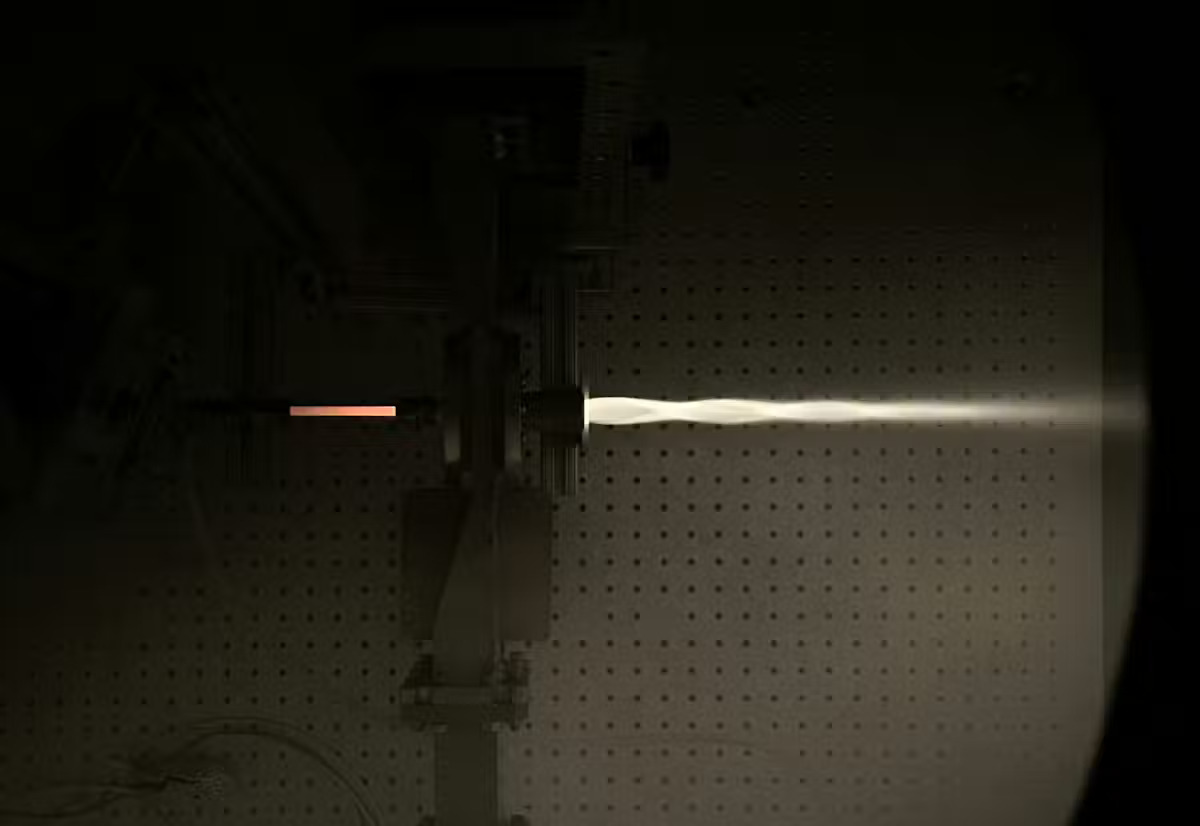
Our approach collects the atmosphere using a scoop, like opening your mouth wide as you pedal a bike, then uses high-power microwaves to heat the collected atmosphere. The heated gas is then expelled through a nozzle, which pushes the satellite forward. Our team calls this concept the air-breathing microwave plasma thruster. We've been able to demonstrate a prototype thruster in the lab inside a vacuum chamber that simulates the atmospheric pressure found at 50 miles (80 km) high.
This approach is relatively simple, but it holds potential, especially at lower altitudes where the atmosphere is thicker. Higher up, where the atmosphere is thinner, spacecraft could use different types of VLEO thrusters that others are developing to cover large altitude ranges.
Our team isn't the only one working on thruster technology. Just one example: The U.S. Department of Defense has partnered with defense contractor Red Wire to develop Otter, a VLEO satellite with its version of atmosphere-breathing thruster technology.
Another option to keep a satellite in VLEO, which leverages a technology I've worked on throughout my career, is to tie a lower-orbiting satellite to a higher-orbiting satellite with a long tether. Although NASA has never flown such a system, the proposed follow-on mission to the tether satellite system missions flown in the 1990s was to drop a satellite into much lower orbit from the space shuttle, connected with a very long tether. We are currently revisiting that system to see whether it could work for VLEO in a modified form.
Other complications
Overcoming drag, though the most difficult, is not the only challenge. Very low Earth orbit satellites are exposed to very high levels of atomic oxygen, which is a highly reactive form of oxygen that quickly corrodes most substances, even plastics.
The satellite's materials also must withstand extremely high temperatures, above 2,732 degrees Fahrenheit (1,500 degrees Celsius), because friction heats it up as it moves through the atmosphere, a phenomenon that occurs when all spacecraft reenter the atmosphere from orbit.
The potential of these satellites is driving research and investment, and proposed missions have become reality. Juniper research estimates that $220 billion will be invested in just the next three years. Soon, your internet, weather forecasts and security could be even better, fed by VLEO satellites.
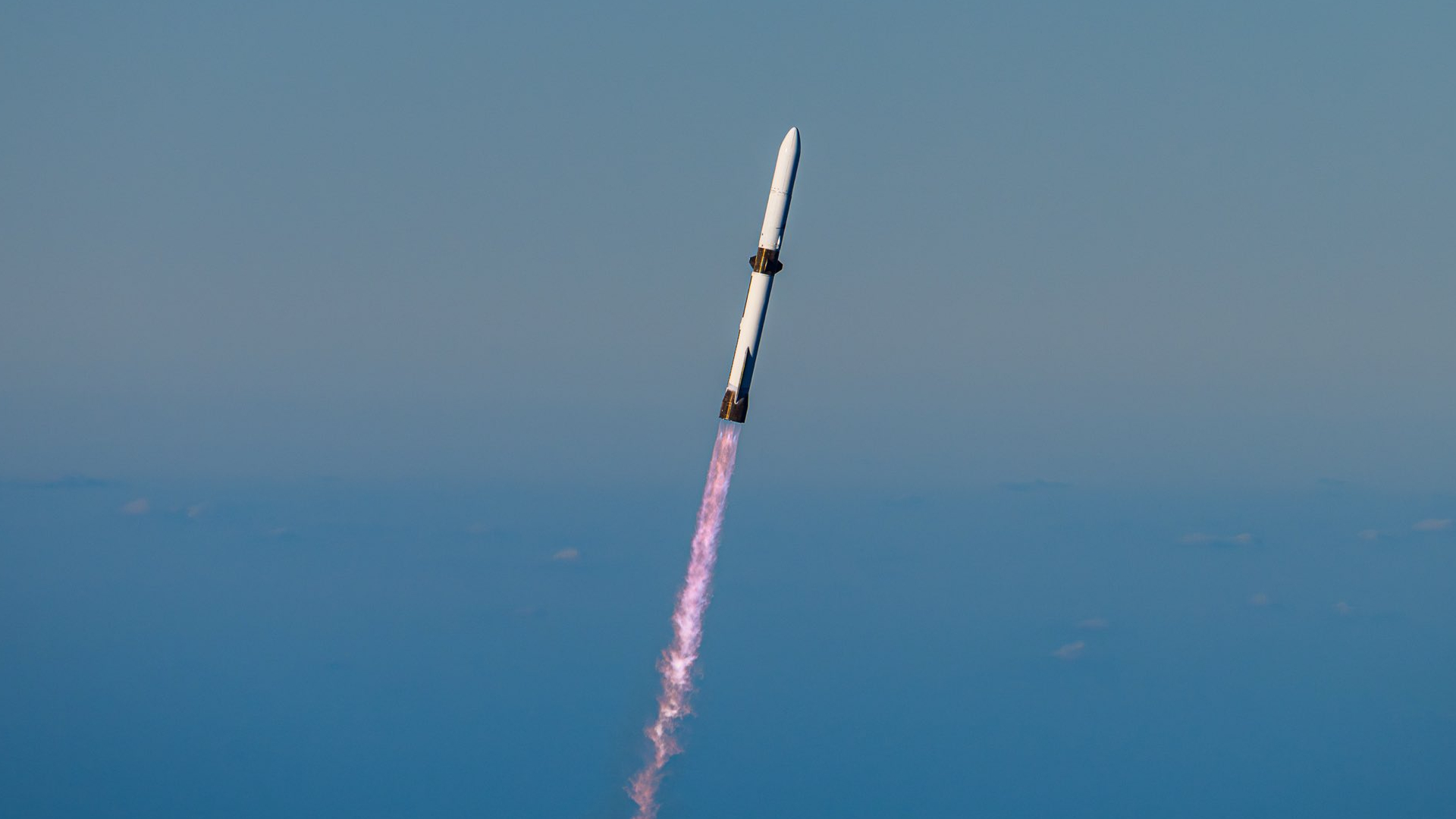
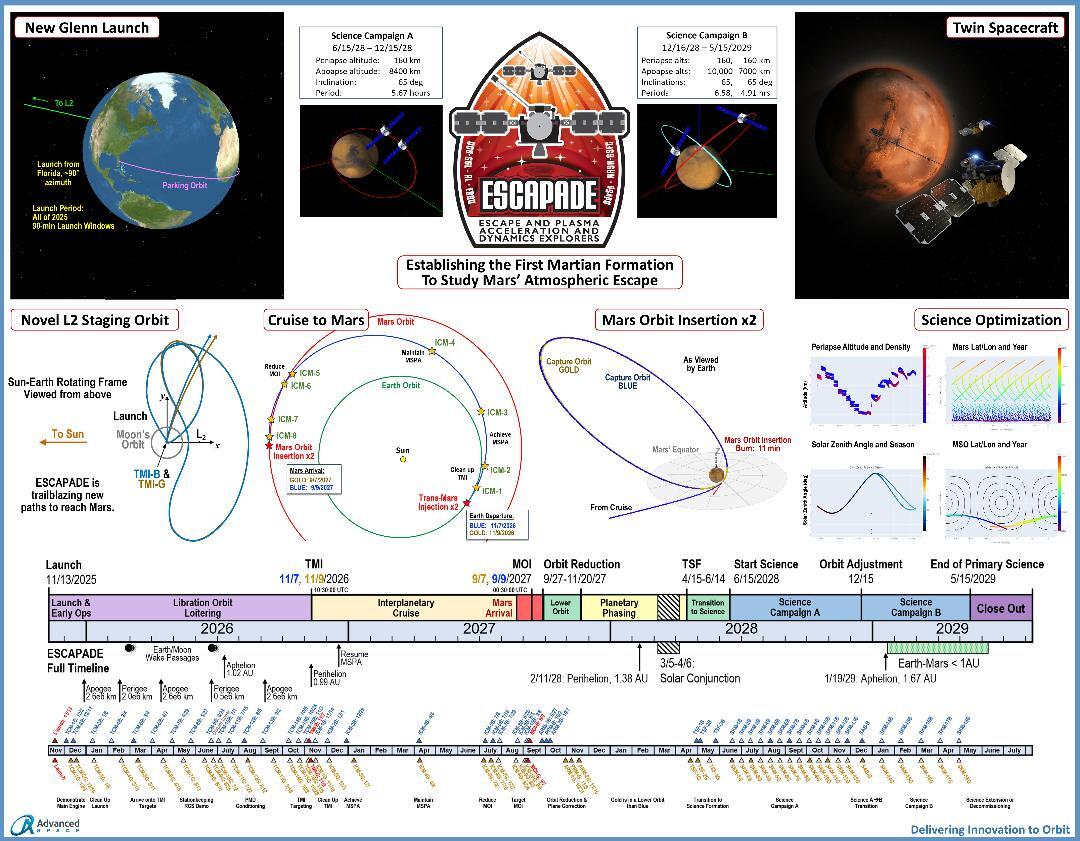
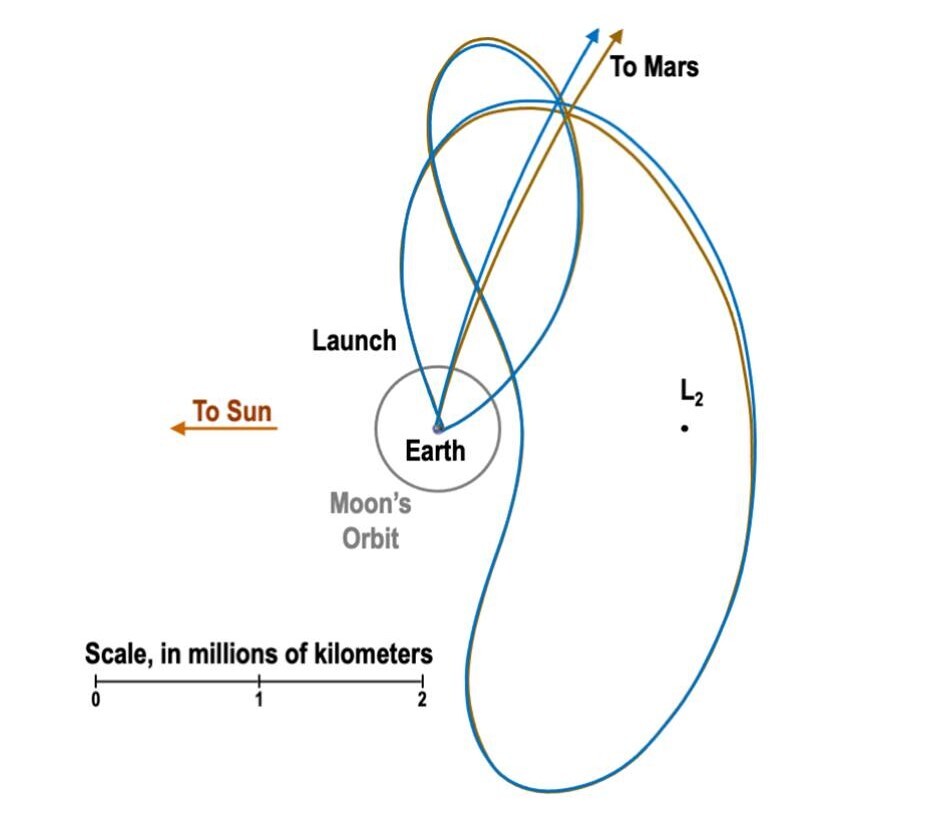
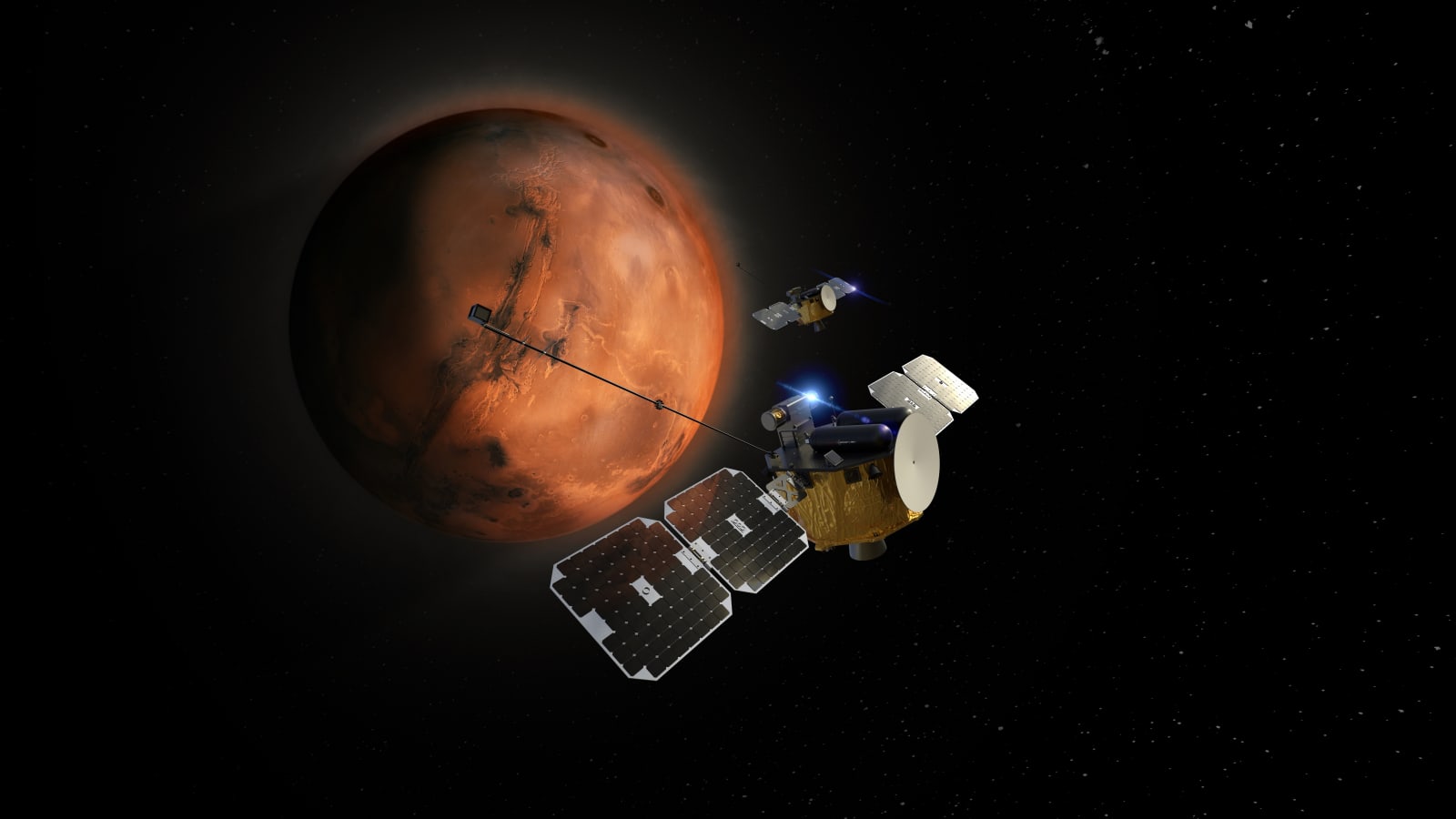
]]>At liftoff, Earth and Mars weren't in planetary position for a direct trip by the probes. So, the twin ESCAPADE probes (Escape and Plasma Acceleration and Dynamics Explorers) were sent into a "loiter" orbit, one that loops around Earth's Lagrange point 2 (L2), roughly a million miles away, opposite the sun. ESCAPADE is tasked with analyzing how the solar wind interacts with Mars' magnetic environment and how this interaction drives the planet's atmospheric escape. That's a blustery way to say the mission will provide critical insights into Mars' climate history and evolution.
The next move is scheduled for the fall of 2026, when Earth and Mars align and the two spacecraft — tagged as "Blue" and "Gold" — use Earth's gravity to slingshot toward the Red Planet. With engines firing, both spacecraft will embark on a trans-Mars injection in November 2026. After long-haul cruises they'll undertake Mars orbit insertion maneuvers in September 2027. But that extra time in space could have some consequences for the twin probes, ESCAPADE scientists say.
"The extra 12 months in space does add some additional wear-and-tear to the spacecraft," said Rob Lillis, principal investigator of the ESCAPADE mission at the UC Berkeley Space Sciences Laboratory in California.
"However we are confident that Blue and Gold will be robust enough to operate until the end of their nominal science mission in May 2029 and hopefully for many years beyond that," Lillis told Space.com.
Wide-open windows
Space loitering, kidney bean paths, gravity assists, hyperbolic orbits and wide-open windows — enter the world of Jeffrey Parker, Chief Technology Officer at Advanced Space in Westminster, Colorado, the chief architect behind the ESCAPADE mission's roundabout road trip to Mars.
Advanced Space worked with the ESCAPADE mission team since its very beginning, engaging with UC Berkeley and NASA by iterating many versions of the mission depending on launch vehicle decisions, liftoff target dates, designing spacecraft orbits, and the "get out of town" interplanetary cruise phase of the dual probes to Mars.
All that tweaking was about "how do you get to Mars when the launch vehicle is not necessarily going to Mars," Parker told Space.com. "It was a long saga, with many, many, many changes."
Parker's expertise was harnessed in a way so that ESCAPADE didn't have to wait 2.1 years before the planets lined up again. A central judgment that made that feasible was switching from ion propulsion to a chemical propellant system, a trade that increased the size of propellant tanks on each spacecraft to hold more fuel.
"Having that extra fuel really did help," said Parker, and gave rise to multiple choices of trajectories, even looping around Earth endless times to a Venus swing-by to get to Mars.
"It's really hard to beat the planetary alignment at launch," Parker said, with ESCAPADE specialists ultimately finding that the L2 loitering strategy was the way to go, he said, an approach that offered a "degree of freedom."
Reasonable assumptions
Lillis gave details regarding the loiter orbit decision. Both ESCAPADE spacecraft have multiple redundant systems so that a single event upset or even a serious single event latch-up from a cosmic ray or solar energetic particle will not endanger the mission, Lillis said. "We have now checked and commissioned both redundant sides of both spacecraft and found all systems healthy," he said.
Lillis said that the ESCAPADE team attempted to quantify the additional risk using reasonable assumptions, and shared their findings with NASA earlier this year. "We were both satisfied that the extra 12 months in space did not significantly reduce overall mission success likelihood," he said.
Indeed, the loiter orbit requires several trajectory correction maneuvers. However, because the orbit is flexible, said Lillis, none of these are critical, in the sense that they can be re-tried or delayed if they don't go just right the first time.
And in fact, one of these was already delayed. In an update posted on Dec. 15, NASA wrote that one of the twin probes' initial trajectory correction maneuvers were delayed when low thrust was observed from one of the spacecraft, but noted that "there are no long-term impacts from the trajectory correction delay."
All eyes on slingshots
"The loiter does add some risk from the critical trans-Mars injection engine maneuver," Lillis said. The two spacecraft must burn their engines for just the right duration, at the right time, at low Earth altitude on Nov. 7 and 9, 2026 in order to slingshot themselves to Mars.
"If the engines fail to light, we would miss the interplanetary transfer window and have to wait two more years for a chance to get to Mars. However, that is almost a year away and we'll have lots of opportunities to practice and become comfortable with our propulsion systems," Lillis said, "so we see this as an acceptable risk."
For Parker at Advanced Space, that boost in velocity for the ESCAPADE twins to head off to Mars is a critical maneuver. "We will have all eyes on that maneuver to make sure that it is completed successfully," he said.
Clever engineering
ESCAPADE is a product of NASA's Small Innovative Missions for Planetary Exploration (SIMPLEx) program, an endeavor geared to showcase low-cost science spacecraft. But to maintain a lower overall cost, SIMPLEx missions have a higher risk posture and lighter requirements for oversight and management, notes the space agency.
Rocket Lab, the private space entrepreneurial firm, designed, built, integrated, and tested the ESCAPE probes at its space systems production complex in Long Beach, California.
Morgan Connaughton, a spokesperson for Rocket Lab explains that the company doesn't like to focus on what could go wrong. While Blue and Gold have to withstand extreme environments, "we've designed them to do just that," she told Space.com.
In a post-launch blog from Rocket Lab, the company explained that keeping spacecraft in tip-top shape for years takes some clever engineering and notable materials science.
State of electronics
"Just like in any electronic device, chips degrade, sensors drift, radios get noisy. On top of that, cosmic rays and the Sun's own eruptions can upset electronics. And all parts of the spacecraft are sensitive to high and low temperatures," the Rocket Lab statement adds. "To prevent our propellant lines from freezing when they spend months facing the darkness of space, there are heaters and insulating blankets."
All in all, Rocket Lab said they've made sure everything on the ESCAPADE twins can work for years on end "by regularly checking the state of electronics, testing our valves to make sure they aren't stuck, and have redundant components for critical parts such as computers, radios, star trackers, inertial measurement units, etc."
Template for tomorrow
Meanwhile, Parker at Advanced Space senses that the ESCAPADE voyages to Mars serves as a template for tomorrow.
"The notion of building up a colony on Mars means you are going to have to send lots of spacecraft," said Parker.
ESCAPADE enables launches to Mars outside the two-week period every two years, Parker advised. It's a key to sending goods and eventually humans to the Red planet anytime, countering possible logjams due to uncompromising launch windows for direct inject Mars opportunities.
"You could have a sequence of launches," said Parker, "all flying together in a string of pearls, flying by the Earth in rapid succession and end up flying the same interplanetary window. Folks on the surface of Mars could expect the next fleet of spacecraft showing up every couple of years. And ESCAPADE is demonstrating how to do that," he concluded.
That drought is about to end. From 2026 to 2028, Earth will experience a double eclipse cascade — three total solar eclipses (August 2026, August 2027 and July 2028) and three annular solar eclipses (February 2026, February 2027 and January 2028) — a repetition of a pattern last seen from 2008 to 2010.
For eclipse chasers who want to experience one of nature's greatest events — and for anyone who missed the 2024 total solar eclipse in North America — the coming years offer multiple chances for immersion and redemption in the shadow of the moon. One thing's for sure: 2026 marks the start of a brief golden age of opportunities for solar eclipse chasers.
Three total solar eclipses in two years
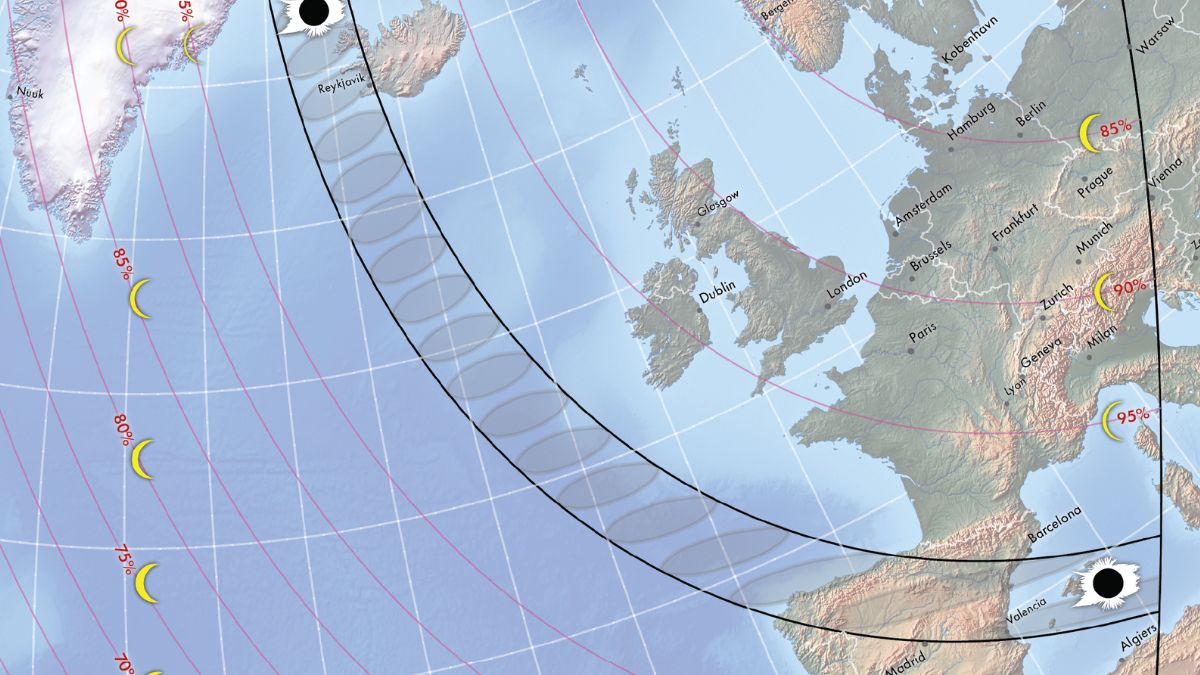
The excitement begins with a total solar eclipse on Aug. 12, 2026. It will be the first total eclipse visible from Europe since 2015 and the first from mainland Europe since 1999.
The path of totality for the August 2026 solar eclipse will begin in remote Siberia, cross eastern Greenland and western Iceland, and then sweep across northern Spain, before exiting just east of the Balearic Islands in the Mediterranean. Observers in Greenland's Scoresby Sund, Iceland's Reykjanes and Snæfellsnes peninsulas, and the Spanish cities of Leon, Burgos and Valladolid will be within the path and see the sun's ghostly corona. While totality will last just over two minutes at its maximum, the low position of the eclipsed sun — particularly in Spain — will offer some dramatic photographic opportunities.
Then comes the really big one.
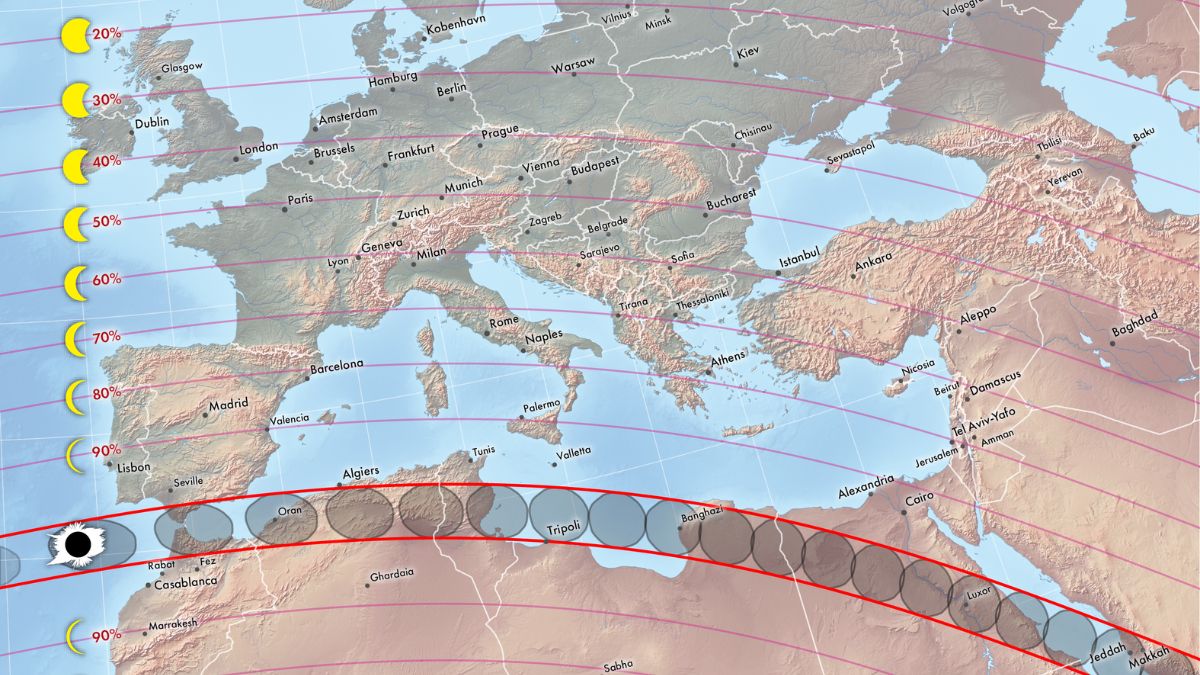
On Aug. 2, 2027, a total solar eclipse lasting up to 6 minutes, 22 seconds will see the moon's shadow move slowly across southern Spain, North Africa and the Middle East. Totality will be visible from historic and cultural landmarks, including the temple- and monument-strewn Luxor, Egypt, offering a near-guaranteed view of the sun's corona in clear skies (although dust storms are possible). No wonder it's being dubbed the "eclipse of the century."
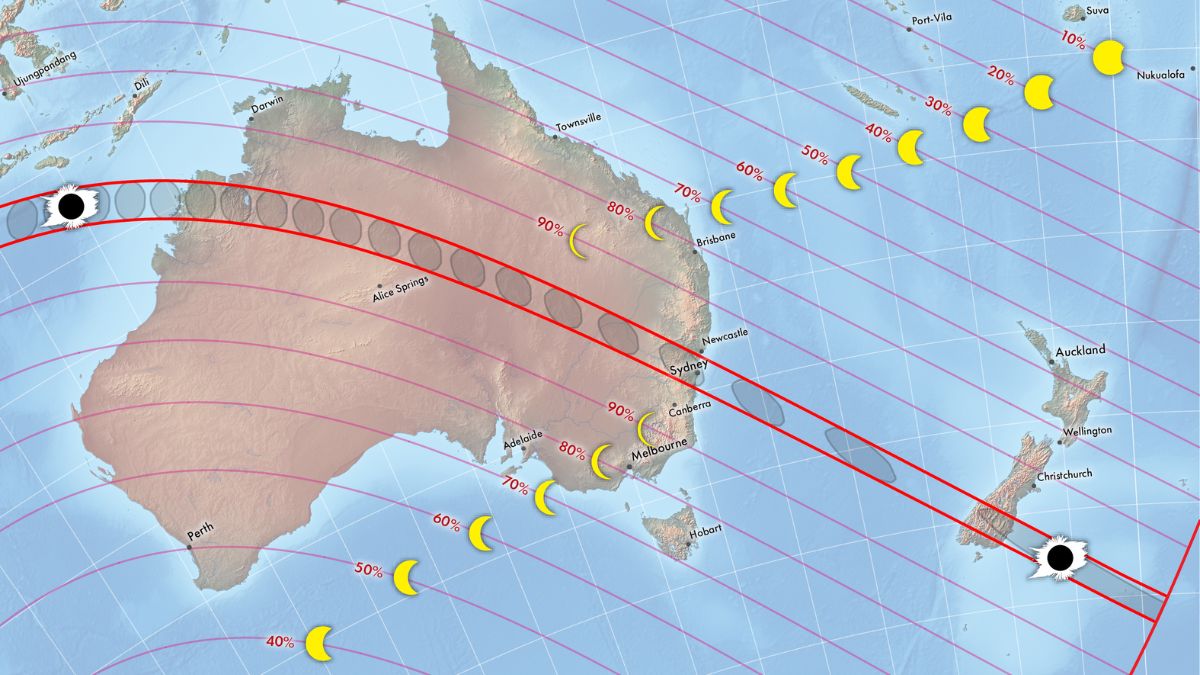
Less than a year later, on July 22, 2028, another total solar eclipse will cut across the Australian Outback and New Zealand. For the first time since 1857, totality will grace Sydney, Australia's largest city, while remote parts of Western Australia will enjoy over five minutes of totality, with clear skies likely.
A rare opportunity
Most people consider themselves lucky to see just one total solar eclipse in their lifetime. But from August 2026 to July 2028, dedicated eclipse chasers can experience three shows across three continents.
The trio also offers a range of travel styles, such as chasing eclipses from Arctic and Mediterranean cruise ships in 2026, photographing the eclipsed sun above ancient temples in 2027, and combining stargazing and Outback road trips in 2028. All three eclipses occur during the Northern Hemisphere summer, a time when many can travel more easily.
Although it's rare, this sequence of three total solar eclipses within a two-year period is not unique. In fact, a trio of total solar eclipses begins every 18 years, 11 days and eight hours — the length of one Saros, the cycle of the sun and moon that determines when and where solar eclipses occur. After one Saros cycle, the Earth-moon-sun geometry is almost the same, so a similar eclipse happens again.
From 2026 to 2028, three separate Saros cycles — each producing a total solar eclipse — are in resonance. Looking back in time, there are similar trios, from 1990 to 1992 and from 2008 to 2010, although most of these eclipses took place in remote regions and were difficult to access or troubled by clouds. A trio will occur again from 2044 to 2046, and two are in North America.
Although it may not be unprecedented, the eclipse trio we're about to encounter is the most travel-friendly and geographically spectacular in decades. This is generational.
Best places to see the 2026, 2027 and 2028 total solar eclipses
Planning ahead is crucial for witnessing the three total solar eclipses, each of which has a unique character.
- Aug. 12, 2026 total solar eclipse: Choose a cruise near Greenland, urban comforts in Reykjavik, a trip to rural Spain, or a sunset eclipse over the sea from Majorca.
- Aug. 2, 2027 total solar eclipse: From southern Spain, Morocco, Algeria, Tunisia and Egypt, expect clear skies and a very long totality. However, head to Luxor, Egypt (home of the longest totality of the remaining 21st century), for the ultimate bragging rights.
- July 22, 2028 total solar eclipse: Sydney will be busy, but head to the Kimberley region of Western Australia or north of Alice Springs in the Northern Territory for the best clear-sky experience.
Beyond the "big three"
This golden age isn't limited to total solar eclipses. The timeline also includes a trio of annular — or "ring of fire" — solar eclipses in three consecutive years, within just 708 days. Annular eclipses may not be as interesting as total solar eclipses, but they are special.
There's a quiet start on Feb. 17, 2026, with an annular solar eclipse visible only from a remote region of Antarctica. But after that, there's a classic Atlantic-to-Africa track in 2027 and, in 2028, a travel editor's dream when the Galápagos Islands and Spain see a ring of fire. For Spain in 2028, it will be the third major solar eclipse in just 532 days — a gift like no other for European eclipse chasers.
Upcoming annular solar eclipse:
- Feb. 17, 2026 annular solar eclipse: This event is for extreme adventurers only, though Antarctic cruises may offer views of a partial solar eclipse.
- Feb. 6, 2027 annular solar eclipse: This annular eclipse will be visible from parts of Chile, Argentina, Uruguay, Brazil, Cote d'Ivoire, Ghana, Togo, Benin and Nigeria (sunset). Choose between a high eclipse over Patagonia's likely clear skies and a risky sunset view from West Africa.
- Jan. 26, 2028 annular solar eclipse: The path of annularity crosses the Galápagos Islands, mainland Ecuador, Peru, Brazil, Suriname, French Guiana, Morocco, Portugal and Spain (sunset), presenting an amazing opportunity for a Galápagos cruise or a trip to southern Portugal or Spain.
To celebrate the thrill of space exploration and the joy of learning, we've created a special crossword puzzle built entirely from this week's top Space.com stories. It's a fun, brain-tickling way to revisit the highlights, whether you're a casual stargazer or a die-hard astrophysics fan.
Expect clues that span planetary science, rocket launches, stargazing, and entertainment tied to the stars. If you read about it on Space.com last week, it might just show up in this puzzle. And if you didn't? Well, now's your chance to catch up while flexing your trivia muscles.
So channel your inner astronaut or astronomer, and dive into this week's interstellar quiz. The answers are out there, you just have to connect the clues.
Try it out below and see how well you do!
The summer of 2025 brought unprecedented flash flooding across the U.S., with the central and eastern regions hit particularly hard. These storms claimed hundreds of lives across Texas, Kentucky and several other states and caused widespread destruction.
At the same time, every hurricane that formed, including the three powerful Category 5 storms, steered clear of the U.S. mainland.
Both scenarios were unusual – and they were largely directed by the polar jet stream.
What is a jet stream?
Jet streams are narrow bands of high-speed winds in the upper troposphere, around four to eight miles (seven to 13 kilometers) above the surface of the Earth, flowing west to east around the entire planet. They form where strong temperature contrasts exist.
Each hemisphere hosts two primary jet streams:
The polar jet stream is typically found near 50 to 60 degrees latitude, across Canada in the Northern Hemisphere, where cold polar air meets warmer midlatitude air. It plays a major role in modulating weather systems in the midlatitudes, including the continental U.S. With winds up to 200 mph, it's also the usual steering force that brings those bitter cold storms down from Canada.
The subtropical jet stream is typically closer to 30 degrees latitude, which in the Northern Hemisphere crosses Florida. It follows the boundary between tropical air masses and subtropical air masses. It’s generally the weaker and steadier of the two jet streams.

These jet streams act like atmospheric conveyor belts, steering storm systems across continents.
Stronger (faster) jet streams can intensify storm systems, whereas weaker (slower) jet streams can stall storm systems, leading to prolonged rainfall and flooding.
2025's intense summer of flooding
Most summers, the polar jet stream retreats northward into Canada and weakens considerably, leaving the continental U.S. with calmer weather. When rainstorms pop up, they’re typically caused by localized convection due to uneven heating of the land – picture afternoon pop-up thunderstorms.
During the summer of 2025, however, the polar jet stream shifted unusually far south and steered larger storm systems into the midlatitudes of the U.S. At the same time, the jet stream weakened, with two critical consequences.
First, instead of moving storms quickly eastward, the sluggish jet stream stalled storm systems in place, causing prolonged downpours and flash flooding.
Second, a weak jet stream tends to meander more dramatically. Its broad north-south swings in summer 2025 funneled humid air from the Gulf of Mexico deep into the interior, supplying storm systems with abundant moisture and intensifying rainfall.
This moisture surge was amplified by unusually warm conditions over the Atlantic and Gulf regions. A warmer ocean evaporates more water, and warmer air holds a greater amount of moisture. As a result, extraordinary levels of atmospheric moisture were directed into storm systems, fueling stronger convection and heavier precipitation.
Finally, the wavy jet stream became locked in place by persistent high-pressure systems, anchoring storm tracks over the same regions. This led to repeated episodes of heavy rainfall and catastrophic flooding across much of the continental U.S. The same behavior can leave other regions facing days of unrelenting heat waves.
The jet stream buffered US in hurricane season
The jet stream also played a role in the 2025 hurricane season.
Given its west-to-east wind direction, the southward dip of the jet stream – along with a weak high pressure system over the Atlantic – helped steer all five hurricanes away from the U.S. mainland.
Most of the year's 13 tropical storms and hurricanes veered off into the Atlantic before even reaching the Caribbean.
Climate change plays a role in these shifts
So, how does climate change influence the jet stream?
The strength of jet streams is controlled by the temperature contrast between the equatorial and polar regions.
A higher temperature contrast leads to stronger jet streams. As the planet warms, the Arctic is heating up at more than twice the global average rate, and that is reducing the equator-to-pole temperature difference. As that temperature gradient weakens, jet streams lose their strength and become more prone to stalling.
This increases the risk of persistent extreme rainfall events.
Weaker jet streams also meander more, producing larger waves and more erratic behavior. This increases the likelihood of unusual shifts, such as the southward swing of the jet stream in the summer of 2025.
A recent study found that amplified planetary waves in the jet streams, which can cause weather systems to stay in place for days or weeks, are occurring three times more frequently than in the 1950s.
What's ahead?
As the global climate continues to warm, extreme weather events driven by erratic behavior of jet streams are expected to become more common. Combined with additional moisture that warmer oceans and air masses supply, these events will intensify, producing storms that are more frequent and more destructive to societies and ecosystems.
In the short term, the polar jet stream will be shaping the winter ahead. It is most powerful in winter, when it dips southward into the central and even southern U.S., driving frequent storm systems, blizzards and cold air outbreaks.
]]>When NASA scientists opened the sample return canister from the OSIRIS-REx asteroid sample mission in late 2023, they found something astonishing.
Dust and rock collected from the asteroid Bennu contained many of life's building blocks, including all five nucleobases used in DNA and RNA, 14 of the 20 amino acids found in proteins, and a rich collection of other organic molecules. These are built primarily from carbon and hydrogen, and they often form the backbone of life's chemistry.
For decades, scientists have predicted that early asteroids may have delivered the ingredients of life to Earth, and these findings seemed like promising evidence.
Even more surprising, these amino acids from Bennu were split almost evenly between "left-handed" and "right-handed" forms. Amino acids come in two mirror-image configurations, just like our left and right hands, called chiral forms.
On Earth, almost all biology requires the left-handed versions. If scientists had found a strong left-handed excess in Bennu, it would have suggested that life's molecular asymmetry might have been inherited directly from space. Instead, the near-equal mixture points to a different story: Life's left-handed preference likely emerged later, through processes on Earth, rather than being pre-imprinted in the material delivered by asteroids.

If space rocks can carry familiar ingredients but not the chemical "signature" that life leaves behind, then identifying the true signs of biology becomes extremely complicated.
These discoveries raise a deeper question – one that becomes more urgent as new missions target Mars, the Martian moons and the ocean worlds of our solar system: How do researchers detect life when the chemistry alone begins to look "lifelike"? If nonliving materials can produce rich, organized mixtures of organic molecules, then the traditional signs we use to recognize biology may no longer be enough.
As a computational scientist studying biological signatures, I face this challenge directly. In my astrobiology work, I ask how to determine whether a collection of molecules was formed by complex geochemistry or by extraterrestrial biology, when exploring other planets.
In a new study in the journal PNAS Nexus, my colleagues and I developed a framework called LifeTracer to help answer this question. Instead of searching for a single molecule or structure that proves the presence of biology, we attempted to classify how likely mixtures of compounds preserved in rocks and meteorites were to contain traces of life by examining the full chemical patterns they contain.
Identifying potential biosignatures
The key idea behind our framework is that life produces molecules with purpose, while nonliving chemistry does not. Cells must store energy, build membranes and transmit information. Abiotic chemistry produced by nonliving chemical processes, even when abundant, follows different rules because it is not shaped by metabolism or evolution.
Traditional biosignature approaches focus on searching for specific compounds, such as certain amino acids or lipid structures, or for chiral preferences, like left-handedness.
These signals can be powerful, but they are based entirely on the molecular patterns used by life on Earth. If we assume that alien life uses the same chemistry, we risk missing biology that is similar – but not identical – to our own, or misidentifying nonliving chemistry as a sign of life.
The Bennu results highlight this problem. The asteroid sample contained molecules familiar to life, yet nothing within it appears to have been alive.
To reduce the risk of assuming these molecules indicate life, we assembled a unique dataset of organic materials right at the dividing line between life and nonlife. We used samples from eight carbon-rich meteorites that preserve abiotic chemistry from the early solar system, as well as 10 samples of soils and sedimentary materials from Earth, containing the degraded remnants of biological molecules from past or present life. Each sample contained tens of thousands of organic molecules, many present in low abundance and many whose structures could not be fully identified.
At NASA's Goddard Space Flight Center, our team of scientists crushed each sample, added solvent and heated it to extract the organics — this process is like brewing tea. Then, we took the "tea" containing the extracted organics and passed it through two filtering columns that separated the complex mixture of organic molecules. Then, the organics were pushed into a chamber where we bombarded them with electrons until they broke into smaller fragments.
Traditionally, chemists use these mass fragments as puzzle pieces to reconstruct each molecular structure, but having tens of thousands of compounds in each sample presented a challenge.
LifeTracer
LifeTracer is a unique approach for data analysis: It works by taking in the fragmented puzzle pieces and analyzing them to find specific patterns, rather than reconstructing each structure.
It characterizes those puzzle pieces by their mass and two other chemical properties and then organizes them into a large matrix describing the set of molecules present in each sample. It then trains a machine learning model to distinguish between the meteorites and the terrestrial materials from Earth's surface, based on the type of molecules present in each.
One of the most common forms of machine learning is called supervised learning. It works by taking many input and output pairs as examples and learns a rule to go from input to output. Even with only 18 samples as those examples, LifeTracer performed remarkably well. It consistently separated abiotic from biotic origins.
What mattered most to LifeTracer was not the presence of a specific molecule but the overall distribution of chemical fingerprints found in each sample. Meteorite samples tended to contain more volatile compounds – they evaporate or break apart more easily – which reflected the type of chemistry most common in the cold environment of space.
Some types of molecules, called polycyclic aromatic hydrocarbons, were present in both groups, but they had distinctive structural differences that the model could parse. A sulfur-containing compound, 1,2,4-trithiolane, emerged as a strong marker for abiotic samples, while terrestrial materials contained products formed through biological process.
These discoveries suggest that the contrast between life and nonlife is not defined by a single chemical clue but by how an entire suite of organic molecules is organized. By focusing on patterns rather than assumptions about which molecules life "should" use, approaches like LifeTracer open up new possibilities for evaluating samples returned from missions to Mars, its moons Phobos and Deimos, Jupiter's moon Europa and Saturn's moon Enceladus.
Future samples will likely contain mixtures of organics from multiple sources, some biological and some not. Instead of relying only on a few familiar molecules, we can now assess whether the whole chemical landscape looks more like biology or random geochemistry.
LifeTracer is not a universal life detector. Rather, it provides a foundation for interpreting complex organic mixtures. The Bennu findings remind us that life-friendly chemistry may be widespread across the solar system, but that chemistry alone does not equal biology.
To tell the difference, scientists will need all the tools we can build — not only better spacecraft and instruments, but also smarter ways to read the stories written in the molecules they bring home.
Earth orbits the sun at an average distance of 93 million miles (150 million kilometers), a distance known as 1 astronomical unit. However, our planet's path around its star isn't a perfect circle, but rather takes the form of an ellipse, or oval, which sees Earth's distance from the sun vary by approximately 3% as it progresses through its yearly orbit.
The moment of perihelion — our closest approach to the sun in 2026 — will occur at 12:15 p.m. EST (1715 GMT) on Jan. 3, when our Blue Marble will pass 91,498,806 miles 147,253,054 km) from our parent star.
Around this time, the sun would loom fractionally larger when viewed through a telescope fitted with a quality solar filter compared to how it would look at its most distant point from the sun known as aphelion, when we are separated by a further 3.1 million miles (5 million km).
However, this difference is very slight, with the sun having an angular size of 32 arcminutes and 31 arcseconds at perihelion compared to 31 arcminutes and 27 arcseconds at aphelion, according to In-The-Sky. The slight decrease in our distance to the sun also has no appreciable effect on Earth's temperature or the passage of the seasons, which is driven by the 23.4 degree tilt in Earth's rotational axis relative to our orbit around the sun.
Remember, it's never safe to look at the sun with the naked eye or through an ordinary telescope, pair of binoculars, or any other optical equipment as doing so can lead to an instant and permanent loss of vision.
Editor's Note: If you have the specialized equipment needed to safely capture an image of the sun during perihelion and would like to share your astrophotography with Space.com's readers, then please send your photo(s), comments, and your name and location to spacephotos@space.com.
The Quadrantid meteor shower is active from Dec. 26, 2025 to Jan. 16, 2026, with a narrow peak lasting roughly six hours that unfolds in the period preceding dawn on Jan. 4, according to EarthSky.org. The shower owes its brief peak to the near-perpendicular angle at which Earth smashes through the thin debris trail left by asteroid 2003 EH1. Shooting stars appear when shards of ancient comets and asteroids collide with Earth, burning up in a fiery display as they are overwhelmed by friction.
Quadrantid meteor showers are capable of producing impressive displays, with up to 200 shooting stars visible each hour under dark sky conditions around the peak. Unfortunately, the 2025-6 shower comes to a head in the light of a full moon, whose glare will wash out all but the brightest meteors. NASA predicts an hourly rate of just 10 meteors per hour on the night of the peak. The January full moon is often called the "Wolf Moon", in reference to the predators that have been heard howling at Earth's satellite during the scarcity of winter.
Meteors associated with the Quadrantid shower appear to come from a patch of sky close to the "handle" of the famous Big Dipper asterism in the constellation Ursa Major — a circumpolar constellation that never sets for stargazers in the Northern Hemisphere. As such, the shower is best viewed from locations north of 51 degrees latitude.
The shower gets its name from a constellation created by French astronomer Jerome Lalande in 1795, known as Quadrans Muralis, which occupies this space near the Big Dipper, according to NASA. The constellation, however, was not chosen as one of the 88 constellations formally recognized by the International Astronomical Union (IAU).
The radiant will rest low on the northern horizon after sunset, but soars high overhead during the pre-dawn peak-viewing hours. Quadrantid meteors can appear in any part of the sky, though it's best not to look exactly in the direction of the radiant, where the trails will be at their shortest.
Hoping to immortalize your view of the Quadrantids? Then be sure to check out our guide to photographing shooting stars and if you're looking to upgrade your equipment, see our picks of the best cameras and lenses for astrophotography. .
Editor's Note: If you capture an image of a Quadrantid meteor and want to share your astrophotography with Space.com's readers, then please send your photo(s), comments, and your name and location to spacephotos@space.com.
]]>Those of you who woke up early yesterday for New Year's Day after a night of champagne and fireworks to watch the 137th annual Tournament of Roses Parade in person, online, or on TV might have spotted Paramount's "Star Trek" 60th Anniversary float cruising along down rainy Colorado Boulevard amid the colorful flow of equestrian units and marching bands.


Paramount+ Essential (ads): $5.99 /mo
Paramount+ with SHOWTIME (no ads): $11.99 /mo
Star Trek:'s next series, Starfleet Academy, will be available to watch on Paramount+. You can also watch almost every other Star Trek show and movie on there, too, while you wait.View Deal
In addition to reminding fans of "Star Trek's" big birthday bash this coming fall, the fantastic float designed by artist John Ramirez and constructed by Artistic Entertainment Services (AES) also served to herald "Star Trek: Starfleet Academy," which premieres Jan. 15 on Paramount+.
Christened as "Star Trek 60: Space For Everybody," this aromatic Rose Parade creation was blanketed in flowers, seaweed, lettuce seeds, and white coconut lovingly applied by more than 100 "Star Trek" volunteers. It featured a partial starship bridge, a pair of transporters, San Francisco's Golden Gate, orbiting worlds, and the majestic USS Enterprise hovering above it all. Riding aboard the float and demonstrating their finest parade waves were "The Original Series'" George Takei, "Strange New Worlds'" Rebecca Romijn, and "Starfleet Academy's" Karim Diané and Tig Notaro (who also appears in "Star Trek: Discovery").

Here's Paramount's official description:
"As the year of 2026 marks a historic chapter for Star Trek, highlighting the legendary franchise's milestone of six decades, the anniversary emphasizes “Space for Everybody,” extending an open invitation to celebrate the future that Star Trek aspires to — a future of HOPE, a future of EXPLORATION and a future where we rise to the challenge to BE BOLD.
"From back to front, the float features the iconic starship U.S.S. Enterprise rising above an array of Star Trek planets. Local Los Angeles landmark Vasquez Rocks feature prominently at the back of the float, paying homage to its role as a frequent Star Trek filming location, with interactive transporters adorning the center of the float.
"In honor of Star Trek: Starfleet Academy, their campus also rises above the float as the newest addition to both the Star Trek universe and the classic San Francisco cityscape. The side of the float boasts the Star Trek 60 logo in honor of the franchise’s 60th anniversary, while front and center is the renowned bridge of the U.S.S. Enterprise, where Star Trek actors will be stationed for the parade."
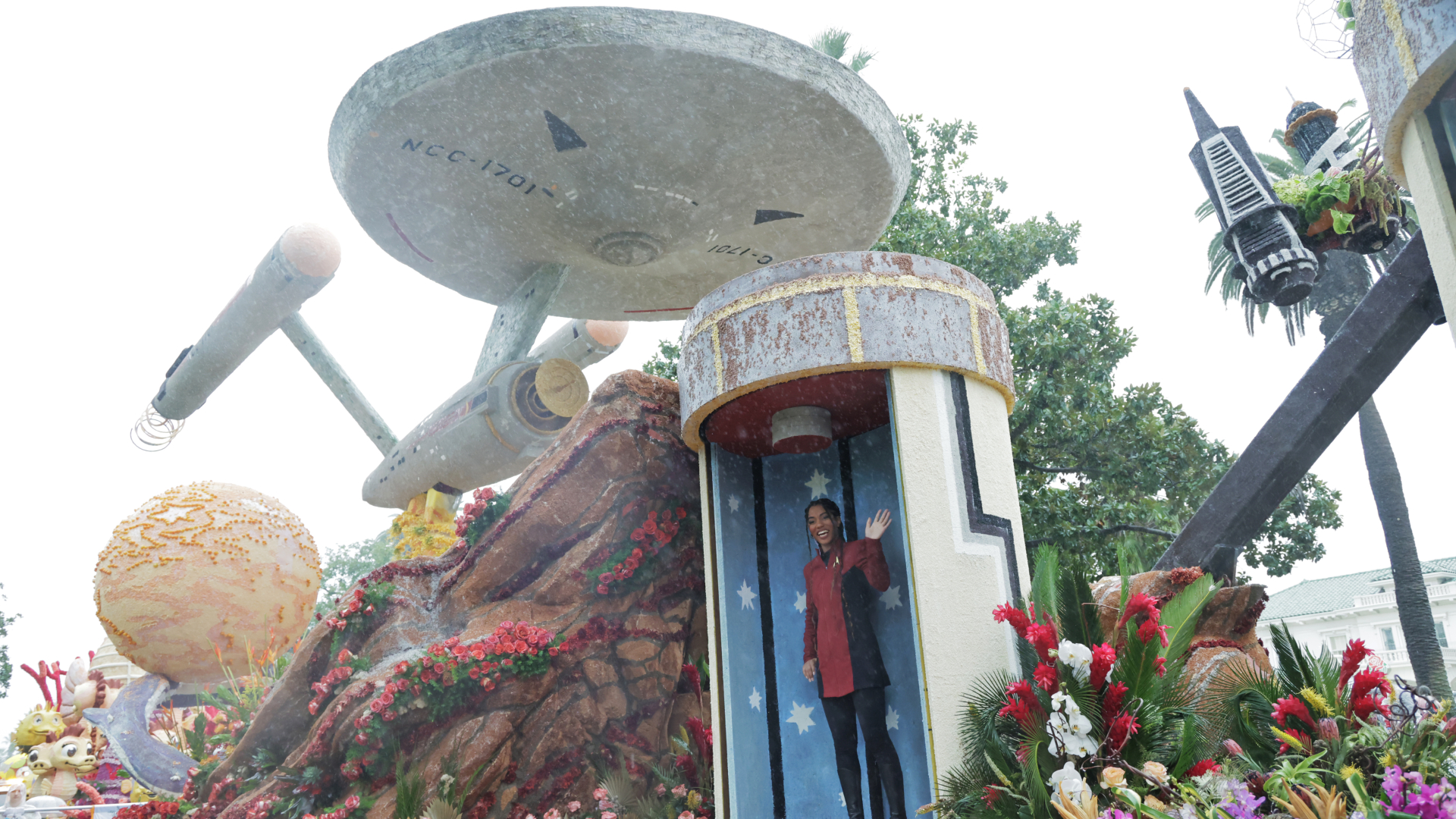
It's hard to believe, but apparently this was also the first time that any "Star Trek" cast members had been seen riding on a Rose Parade Float. And in a bit of parade magic, the creatives at AES also crafted the float with a pair of transporter pods made from golden red millet and blue statice that simulated sci-fi tech using a set of twins dressed in red Starfleet uniforms.
Stay tuned all year for more news on "Star Trek's" 60th anniversary!
]]>VPN stands for virtual private network and essentially, it gives the device you're using its own IP address. This is helpful for several reasons, both concerning entertainment purposes and for online safety, with additional safety support like ad blockers, password managers, malware detection and much, much more.
So, if you're travelling to a skywatching location or a launch site and you want to access content on the best streaming services from back home, which may be geolocked on your travels, or you want to better protect your own device, which may be one of the best laptops, getting one of the best VPNs is a great way to do that.
VPNs also range in price, from free options available to hundreds of dollars, depending on the plan you opt for. Thankfully, though, they're often on offer, so you can get a long-term plan from a reliable provider that will only cost a couple of dollars a month, or the equivalent of. So why exactly do you need one? Read on to find out.
How Does a VPN Work?

Something that may surprise you is that VPNs don't actually use satellite signals. Instead, they take the internet connection, obtained by your router via satellite signal and they 'tunnel' it to a server location of your choice. Tunnelling is where an encrypted connection is established between your device and the server you choose, making your device appear as if it's in a different location.
Essentially, all traffic on your device is encrypted, meaning it's close to impossible to intercept, and is sent to the VPN server, at which point the traffic is forwarded to the correct destination on the internet.
The benefits of this mean your device is a lot harder to track and hack into. It also allows you to access content on a website or app from back home while you're travelling. So if you're travelling and you want to watch something on Disney Plus (for example) that may be available at home, but not abroad, you can set your device's location to home and access your content that way.
Safety Features


On top of a dedicated IP address, making your device appear as if it's in a different country, VPN providers will often offer added security features, increasing levels of which are available depending on which plan you choose to subscribe to.
These features include, but are not limited to, ad and tracker blockers, which improve your online experience and prevent anyone from seeing your online activity. Anti-malware protection, which will often protect you against software that's designed to cause damage to your device. And, data breach scanners to protect you against and alert you to anything that tries to breach your device's defences and gain access to your personal data.
More advanced features can include Password managers, encrypted cloud storage and advanced features on browsing and downloading content. You'll also often find that you can secure numerous devices at once if you get a VPN from one of the leading VPN providers.

The added safety features are particularly useful when you're travelling to a dedicated skywatching location or a launch site, for example, especially if you're using public Wi-Fi or hotspotting from a mobile phone. That's because these types of connections are when your device is at its most vulnerable to online threats, so having a scrambled connection, a dedicated IP address and features like scanners and anti-malware protection give you that security when on the go and when you're unable to use a secure connection.
Of course, you need to be vigilant at the best of times, too. That's why some of the safety features you can get with a VPN from a top provider can help protect you against malicious and dodgy links, websites and, as mentioned above, anything that tries to gain access to your device or details, even when you're on a reliable and trusted connection. You can also get Wi-Fi routers with a built-in VPN, so that you have a layer of protection before your connection even reaches your device.
It's important to note, however, that a VPN does not guarantee 100% online safety, even if it does increase your levels of protection.
How much do they cost?

Well, this depends on what plan you go for, from which provider and if you get a good deal or not. So the objective answer is you can get a decent VPN for anywhere between free and hundreds of dollars. When you sign up, you'll usually have to pay the full amount rather than in installments. That's not the most helpful answer, we know, but let's break it down a little bit.
As has been mentioned, VPN providers will offer higher levels of security and more features, the more you pay for a chosen plan. This can range from a dedicated IP address, ad/tracker blockers and protection against malware, to all the bells and whistles, including dedicated email addresses, encrypted storage and insurance. Typically, the most basic plans will cost a couple of dollars a month, between $2 to $4. After that, we can see prices rise to just below $10 a month for the most premium plans.
It also depends on if you get a good deal or not. Without an offer, most decent VPN providers will offer their plans for several hundred dollars, spread over a certain period of time (i.e. 12/24 months). But you don't have to wait for a sales event like Black Friday, as we often see VPNs on offer year-round. Providers will also sometimes host their own sales, so it's important to keep an eye out. We also see free plans available, which will often only offer basic protection, but free is free and it's a step up from not having a VPN.
Provider | Most Basic Plan | Most Premium Plan |
|---|---|---|
2-year Basic: $2.99 | 2-year Prime: $6.89 | |
2-year Starter: $1.99 | 2-year One+: $4.19 | |
2-year Basic: $3.49 | 2-year Pro: $7.49 | |
2-year Free: Free | 2-year Unlimited: $7.99 |
Should I get a VPN?
It's certainly a good idea to have one. It vastly improves your online safety and it's particularly useful to have on your travels. If you want added levels of security while streaming, downloading and for general online use, you should get a VPN.
It must be said that your online experience will stay the same without one, so if you're happy as you are, you don't need one. But, by getting a dedicated IP address and having security features that block ads and trackers and look out for malware, your online safety is improved. It's particularly useful when using public Wi-Fi connections and hotspots, especially if your device has personal details on it.
On top of the added security, it's great for unlocking streaming content that might be blocked or unavailable in a region you're in, which would otherwise be available from back home.
So, in a world where technology is ever improving and it's getting harder and harder to stay safe online, it's a good idea to have a VPN, regardless of which plan from which provider you opt for, as long as they're a reliable provider.
]]>SpaceX launched the first mission of 2026 tonight (Jan. 2).
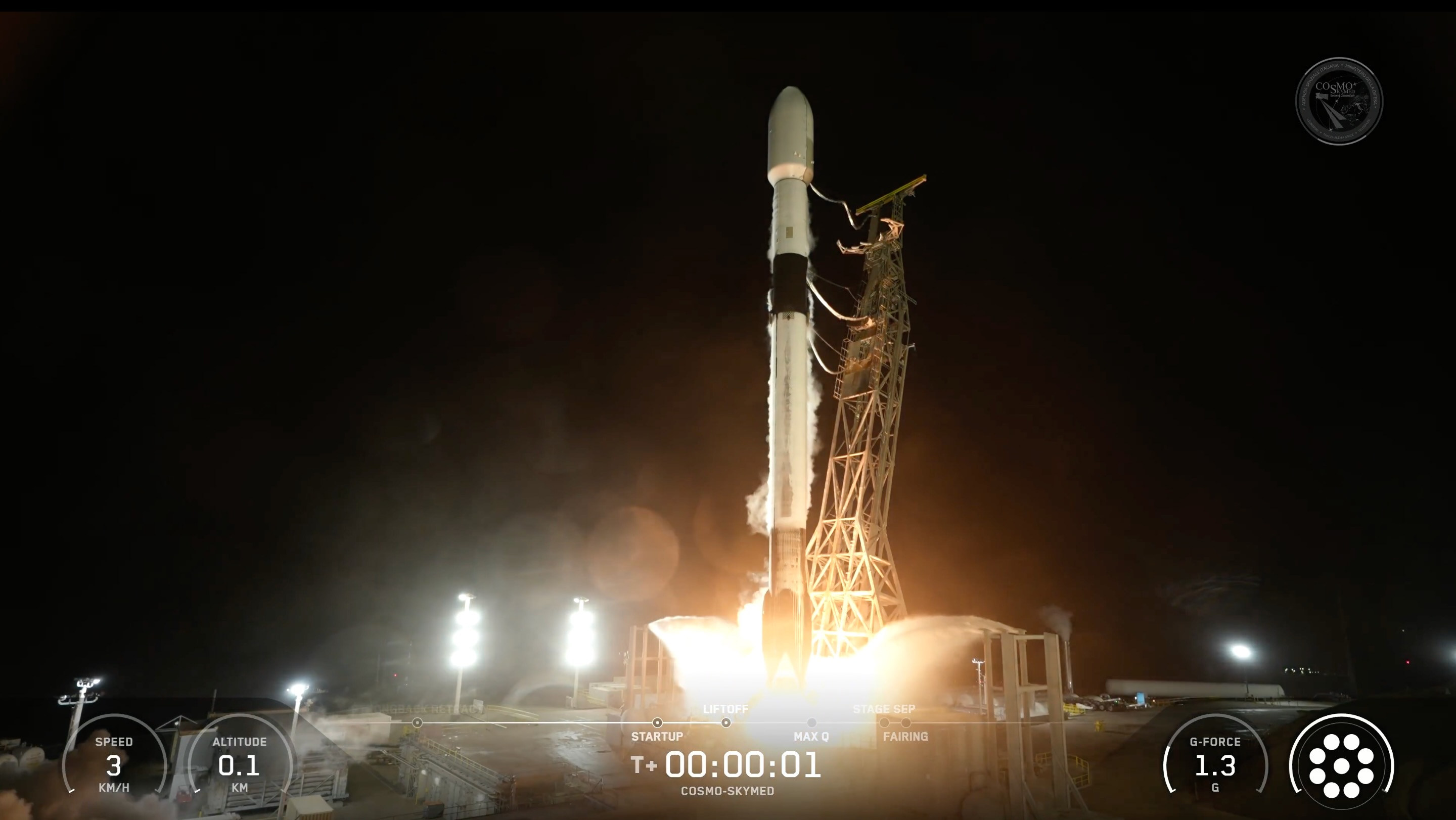
A Falcon 9 rocket lifted off from Vandenberg Space Force Base in California tonight at 9:09 p.m. EST (6:09 p.m. local California time; 0209 GMT on Jan. 3), carrying an Italian Earth-observing satellite to orbit.
The rocket's first stage landed back at Vandenberg as planned about 8.5 minutes after liftoff. It was the 21st flight for this particular booster, according to SpaceX.
About 4.5 minutes later, the Falcon 9's second stage deployed the payload — a COSMO-SkyMed Second Generation satellite — into low Earth orbit for the Italian Space Agency and the Italian Ministry of Defence.
The spacecraft will study Earth using synthetic aperture radar, gathering data at all times of day and in all weather conditions from an altitude of 385 miles (620 kilometers).
COSMO-SkyMed Second Generation is a small network designed to "monitor the Earth for the sake of emergency prevention, strategy, scientific and commercial purposes, providing data on a global scale to support a variety of applications," according to a European Space Agency explainer.
Among those applications are "risk management, cartography, forest & environment protection, natural resources exploration, land management, defense and security, maritime surveillance, food & agriculture management," the explainer adds.
Three COSMO-SkyMed Second Generation satellites have now launched to date. The first one flew in December 2019 atop a Soyuz rocket, and the second lifted off in January 2022 on a Falcon 9.
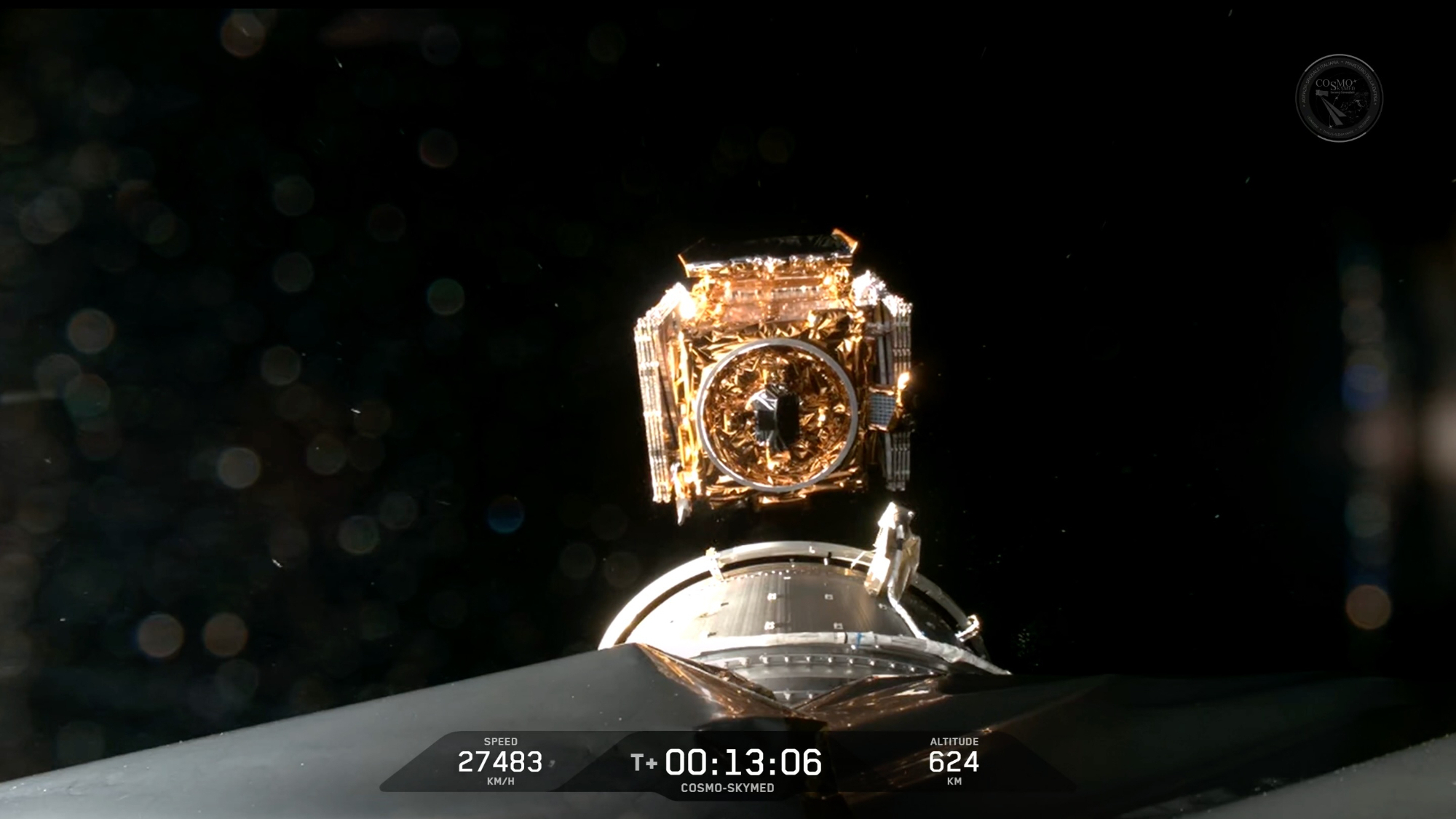
Tonight's liftoff was the first of 2026 not just for SpaceX but for the global launch community.
It's no surprise that SpaceX is breaking in the year. Elon Musk's company launched a whopping 165 orbital missions in 2025 — far more than any other entity, either commercial or governmental. That was also a record for SpaceX, which the company may aim to break again this year.
Editor's note: This story was updated at 9:25 p.m. ET on Jan. 2 with news of successful launch, rocket landing and satellite deployment.
]]>All Starlink broadband spacecraft currently orbiting 342 miles (550 kilometers) or so above Earth — about 4,400 satellites — will descend to an altitude of roughly 298 miles (480 km) over the course of 2026.
There are two main reasons for the move, according to Michael Nicolls, vice president of Starlink engineering at SpaceX, who announced the plan via X on Thursday (Jan. 1).
"As solar mininum approaches, atmospheric density decreases, which means the ballistic decay time at any given altitude increases — lowering will mean a >80% reduction in ballistic decay time in solar minimum, or 4+ years reduced to a few months," Nicolls wrote in his X post. "Correspondingly, the number of debris objects and planned satellite constellations is significantly lower below 500 km, reducing the aggregate likelihood of collision."
Solar activity waxes and wanes on an 11-year cycle. We likely just passed through the maximum phase of the current one, known as Solar Cycle 25. (Scientists have been tracking these cycles diligently since 1755, when the numbering system began.) The next solar minimum is expected in 2030 or thereabouts.
As Nicolls noted, the atmospheric changes wrought by solar activity are of great interest and importance to satellite operators. An active sun causes a thicker atmosphere, which increases frictional drag on spacecraft and brings them down faster. Low solar activity has the opposite effect.
The downward migration in 2026 involves roughly half of SpaceX's Starlink megaconstellation, which currently consists of nearly 9,400 operational spacecraft (though that number is always growing). The fleet is highly reliable; there are just two dead Starlinks currently in orbit, according to Nicolls.
"Nevertheless, if a satellite does fail on orbit, we want it to deorbit as quickly as possible," he wrote. "These actions will further improve the safety of the constellation, particularly with difficult-to-control risks such as uncoordinated maneuvers and launches by other satellite operators."
Low earth orbit (LEO) is getting increasingly crowded these days. Starlink is the main driving factor; about two-thirds of all operational satellites belong to the megaconstellation. But other giant networks are being assembled as well. For example, China has begun building out two LEO internet constellations, each of which will each feature more than 10,000 spacecraft if all goes to plan.
]]>There's some familiarity and comfort ahead, as the slate sees "Star Trek: Strange New Worlds" and "Invincible" return for their respective fourth seasons, while "The Boys" wraps up its super shenanigans with season 5. "Paradise" season 2 also promises to twist and turn minds into balloon animals, whereas "Monarch: Legacy of Monsters" season 2 is likely to carry on all the pomp stomp and circumstance from before.
In terms of new additions, expect "Star Trek: Starfleet Academy" to become a water cooler conversation starter, along with DC's "Lanterns" and the Darth Maul-centric show "Star Wars: Maul – Shadow Lord." Plus, there's the long-gestating adaptation of William Gibson's "Neuromancer", a show that has been brewing for over 40 years.
If that isn't enough, the "For All Mankind" spinoff, "Star City," shines in the distance, as does the Nicolas Cage-led "Spider-Noir" and the much-anticipated "Blade Runner 2099." Phew!
Oh, what a time it is to be a sci-fi fan in 2026! Here are all the upcoming sci-fi shows to be excited for this year.
1. 'Star Trek: Starfleet Academy' season 1
Release date: January 15, 2026 | Where to watch: Paramount+
Set in the 32nd century, "Star Trek: Starfleet Academy" sees the reformation of the Starfleet Academy, headed up by Holly Hunter's Nahla Ake.
With a bunch of cadets running loose and learning all about the final frontier, expect there to be upcoming sci-fi shows 2026more teen drama, comical mischief and sci-fi mishaps than usual on "Star Trek" shows.
Sandro Rosta's Caleb Mir is the main character to watch here, as his reason for joining the Starfleet is much more personal than anyone else's.

Watch Star Trek: Starfleet Academy on Paramount+:
Essential (ads): $7.99/mo or $59.99/yr
Premium (no ads): $12.99/mo or $119.99/yr
2. 'Paradise' season 2
Release date: February 23, 2026 | Where to watch: Hulu (US) /Disney+ (UK)
"Paradise" turned out to be one of the best new shows of 2025, and the follow-up season is hot on its heels.
Blending political intrigue with doomsday consequences, the first season centers around U.S. Secret Service agent Xavier Collins (Sterling K. Brown) investigating the murder of President Cal Bradford (James Marsden), as well as discovering the history of what led to the creation of the controversial bunker.
The show's twisty narrative threads unravel as the story progresses, especially through its love of flashbacks, and as season 2's trailer demonstrates, the bunker is only the tip of the iceberg here.

Watch Paradise on Hulu:
Hulu with Ads: $11.99/month or $119.99/year
Premium (No Ads): $18.99/month
3. 'Monarch: Legacy of Monsters' season 2
Release date: February 27, 2026 | Where to watch: Apple TV
Even though "Godzilla Minus One" remains the best adaptation of the kaiju in recent times, Legendary Entertainment's MonsterVerse continues to flourish in building an interconnected universe of Titans, featuring the feisty Godzilla and his temperamental hairy buddy Kong.
In "Monarch: Legacy of Monsters" season 1, siblings Cate (Anna Sawai) and Kentaro Randa (Ren Watabe) learn of their father's connection to the organization Monarch, which was originally meant to protect both humans and Titans. Now, in season 2, they uncover more of the truth – both about the past and present.
The best part about it? More monster-mashing mayhem!
Watch Monarch: Legacy of Monsters on Apple TV+:
Apple TV+: $12.99/month (7-day free trial)
Apple TV & Peacock Premium: $14.99/month
4. 'Invincible' season 4
Release date: March 2026 | Where to watch: Prime Video
Mark Grayson (Steven Yeun) returns as Invincible, but after hanging out with his little alien brother, Oliver (Christian Convery), too much, he might need to change his name to Unprincipled.
As seen in the previous season, Oliver isn't shy of treating villains in the harshest way possible, and Mark seems to have learned this lesson from his baby bro. So, is Mark about to go full Omni-Man in season 4?
According to "Invincible" co-creator Robert Kirkman, Mark is set to undergo a major transition, and we're here for it.

Watch Invincible on Amazon Prime Video:
Amazon Prime: $14.99/month or $139/year
Amazon Prime Video: $8.99/month
Ad-free add-on: $2.99/month
5. 'The Boys' season 5
Release date: April 8, 2026 | Where to watch: Prime Video
Oi! There's only one way in which this blood feud between Billy Butcher (Karl Urban) and Homelander (Antony Starr) ends.
After four seasons of love sausages, exploding body parts, and supes climbing into other people's orifices, this is set to be the finale of all finales.
Jensen Ackles' Soldier Boy returns in "The Boys" season 5, undoubtedly providing backup for his psychopathic and milk-loving offspring Homelander, while the rest of the Boys will need to hope that Butcher comes to his senses and stands by them one last time.
Watch The Boys on Amazon Prime Video:
Amazon Prime: $14.99/month or $139/year
Amazon Prime Video: $8.99/month
Ad-free add-on: $2.99/month
6. 'Lanterns'
Release date: U.S. summer 2026 | Where to watch: HBO
James Gunn's DC Universe expands with the addition of "Lanterns," which is all about the emerald knights known as the Green Lantern Corps.
In the show, the seasoned Hal Jordan (Kyle Chandler) takes newbie John Stewart (Aaron Pierre) under his wing as he teaches him how even in the brightest day or the blackest night, no evil must escape their sight – oh, and how to use the power ring too.
Nathan Fillion's Guy Gardner, who last appeared in "Superman" and "Peacemaker" season 2, is confirmed to feature in "Lanterns," as well as Ulrich Thomsen, who will play the villainous Sinestro.

Watch Lanterns on HBO Max:
Basic (Ads): $10.99/month or $109.99/year
Standard (No Ads): $18.49/month or $184.99/year
Premium (4K): $22.99/month or $229.99/year
7. 'Spider-Noir'

Release date: TBC | Where to watch: MGM+
Everyone knows Nicolas Cage could play a potato and make it an Oscar-worthy performance. Fortunately, he doesn't need to get too starchy for "Spider-Noir."
Reprising his voice role from "Spider-Man: Into the Spider-Verse," Cage plays a private investigator Spidey variant from 1930s New York. While not much is known about the noir-inspired eight-episode series yet, the official poster showcases the name on his office door to be Ben Reilly, who is better known as a Peter Parker clone from the comics.
It remains to be seen if this is merely a nod-and-wink alias or somehow tied to something bigger. All we know is our spidey sense is tingling for this one.

Watch Spider-Noir on MGM+ (7-day free trial):
MGM+: $7.99/month or $61.99/year
MGM+ Prime Video Channel: $7.99/month
8. 'Blade Runner 2099'

Release date: TBC | Where to watch: Prime Video
Five years. That's the time it has taken between Ridley Scott blabbing that a "Blade Runner" series was in the works, and it eventually being released on Prime Video… and that's assuming it doesn't get delayed.
Not much is known about "Blade Runner 2099," except the fact that it's a sequel to both the films and stars Michelle Yeoh as a replicant. Additionally, Hunter Schaefer from "Euphoria" and Tom Burke from "The Lazarus Project" are set to appear in main roles.
Hopefully, this "Blade Runner" sequel spares us from Jared Leto's annoying presence. Fingers crossed.
Watch Blade Runner 2099 on Amazon Prime Video:
Amazon Prime: $14.99/month or $139/year
Amazon Prime Video: $8.99/month
Ad-free add-on: $2.99/month
9. 'X-Men '97' season 2
Release date: Mid-2026 | Where to watch: Disney+
Sure, "X-Men '97" is nostalgia-bait, reeling in all the peeps who grew up on a healthy diet of the marvelous mutants from "X-Men: The Animated Series," bub. Even so, the revival continued the trend of smart and mature storytelling, bringing Professor X's team to modern times (even if the events technically take place in the 90s) and establishing itself as one of the best sci-fi shows of 2024.
The first season dropped more than a few shockers and heart-wrenching moments, and season 2 is likely to follow suit, especially if it centers around the maniacal Apocalypse as predicted.
Siri, play the theme song on repeat until "X-Men '97" airs again.

Watch X-Men '97 on Disney+:
Disney+ (With Ads): $11.99/month
Disney+ Premium (No Ads): $18.99/month or $189.99/year
10. 'Neuromancer'
Release date: TBC | Where to watch: Apple TV
William Gibson's 1984 novel "Neuromancer" and cyberpunk go hand-in-transhuman hand. Despite its legendary status in literature, it's taken over four decades for an adaptation to materialise, which is bizarre when you consider how this race-against-time sci-fi-licious tale about AI should be like catnip for Hollywood execs.
Maybe they don't like reading anything except spreadsheets? Regardless, showrunners Graham Roland and J. D. Dillard are bringing a 10-episode version of "Neuromancer" to Apple TV, starring Callum Turner as Case, Briana Middleton as Molly, and Mark Strong as Armitage.
Expect to see many – oh so many – "Neuromancer explained" articles on the Internet thereafter, because this story isn't afraid to get weird.
Watch Neuromancer on Apple TV+:
Apple TV+: $12.99/month (7-day free trial)
Apple TV & Peacock Premium: $14.99/month
11. 'Star Trek: Strange New Worlds' season 4
Release date: TBC | Where to watch: Paramount+
"Star Trek: Strange New Worlds," aka the best jumping-on point for non-Trekkies, returns for its penultimate season. The show's only limit is its imagination, as fans have already seen Captain Pike and his crew delight in musical and animated episodes.
So, how much further can "Strange New Worlds" take the – ahem – strangeness of these interplanetary quests? Well, you haven't seen anything yet, because Pike is about to show the muppets who has the better space adventure in season 4.
Go kick rocks, Kermit!
Watch Star Trek: Strange New Worlds on Paramount+:
Essential (ads): $7.99/mo or $59.99/yr
Premium (no ads): $12.99/mo or $119.99/yr
12. 'Star Wars: Maul – Shadow Lord'

Release date: TBC | Where to watch: Disney+
Say what you want about "Star Wars: Episode I – The Phantom Menace," but Darth Maul remains one of the coolest villains ever introduced in this franchise.
Fans received more of the horned Sith Lord in "Star Wars: The Clone Wars" and "Star Wars Rebels," but now he's set to receive the star treatment as he gets his solo animated series titled "Star Wars: Maul – Shadow Lord."
Set after the events of the Clone War, Maul (voiced once again by fan-favorite Sam Witwer) plots and plans his return to power. At the same time, he also trains a new apprentice in the art of the dark side. Look, Disney and Lucasfilm, you had us at Maul already, so please just let this show be good.
13. 'VisionQuest'

Release date: TBC | Where to watch: Disney+
Death in the MCU is about as permanent as one of those rub-on Batman tattoos you had as a kid. Paul Bettany's Vision returned in "WandaVision," but now viewers get to experience him trying to reconcile his memories and who he is in "VisionQuest."
In typical Marvel fashion, though, details prove to be scarce apart from story leaks and photos from questionable online sources. Having said that, the series piques the interest, especially because of the news that James Spader's Ultron will be a major player here.
Maybe the MCU is well and truly back, after all.
Watch VisionQuest on Disney+:
Disney+ (With Ads): $11.99/month
Disney+ Premium (No Ads): $18.99/month or $189.99/year
14. 'The Boroughs'
Release date: TBC | Where to watch: Netflix
What happens when a supernatural danger descends on a blissful retirement community? They fight back, of course.
Reading the logline for "The Boroughs," it sounds an awful lot like "Stranger Things" but with retirees instead of kids. That's okay, though, especially considering the talented Duffer brothers are behind this eight-episode sci-fi show too.
If that isn't enough to entice you, consider the main cast list for a second here: Bill Pullman, Geena Davis, Alfred Molina, Clarke Peters, and Alfre Woodard. Stranger who? Exactly.

Watch The Boroughs on Netflix:
Standard with ads: $7.99/month
Standard: $17.99/month
Premium (4K): $24.99/month
15. 'Silo' season 3
Release date: TBC | Where to watch: Apple TV
"Silo" season 3 will take viewers back to pre-apocalyptic times, adapting Hugo Howey's "Shift" (the second book in the "Silo" trilogy) and revealing more about what led to the silo's creation.
Showrunner Graham Yost promised that many questions are set to be answered, such as the origin of the Pez dispenser and the dirty bomb, while also stating that this season sets up an important location that plays a role in the fourth and final season.
Series regulars Rebecca Ferguson and Steve Zahn are expected to return, but they aren't siloed, as new cast members Jessica Henwick and Ashley Zukerman join the fray.
Watch Silo on Apple TV+:
Apple TV+: $12.99/month (7-day free trial)
Apple TV & Peacock Premium: $14.99/month
16. 'Star City'

Release date: TBC | Where to watch: Apple TV
"For All Mankind" showcases what would have happened had the Soviet Union won the global space race. The alt-space history show offers some food for thought, posing serious questions about what would have happened to America in the aftermath and the knock-on effect.
So, it makes all the sense in the world to explore the same premise from the Soviet Union's perspective. Rhys Ifans and Anna Maxwell Martin lead "Star City," which should tide viewers over as they await further seasons of "For All Mankind."
In more good news, "For All Mankind" showrunners Ronald D. Moore, Ben Nedivi, and Matt Wolpert will helm this spinoff, too.
Watch Star City on Apple TV+:
Apple TV+: $12.99/month (7-day free trial)
Apple TV & Peacock Premium: $14.99/month
Now, after decades of ever-elongating timelines, evolving mission frameworks and years of delays, NASA is ready to go back. The U.S. space agency's Artemis program faces its second mission in 2026, and it will be the first to carry a crew of astronauts aboard the Orion spacecraft. The Artemis 2 mission is designed to fly its crew once around the moon before returning them to Earth over the course of about 10 days, during which the astronauts will become the first in a generation to see the moon up close.
Artemis 2 follows the November 2022 launch of an uncrewed Orion on NASA's Space Launch System (SLS) rocket on Artemis 1. At the time, NASA had hoped to fly Artemis 2 in 2023, but damage to Orion's heatshield during atmospheric reentry pushed that goalpost by a year, and then another year.
Through its series of planned Artemis missions, NASA plans to establish a permanent outpost on the moon. From there, the agency hopes to develop and mature the technologies needed to expand deeper into the solar system to places like Mars.
A lot of U.S. spaceflight discourse this past year has focused on when NASA will get boots on the lunar surface, and whether U.S. astronauts will land on the moon's southern polar region before a group of Chinese taikonauts plants their flag there first. When President Trump's fiscal year 2026 budget proposal was released, the administration put a stronger emphasis on NASA's human exploration of space — despite cutting NASA's funding by nearly a quarter and its science programs virtually in half. That emphasis, though, put a spotlight on the Artemis program and invited deeper scrutiny of NASA's launch system and lunar lander development.
Under NASA's current plan, Artemis 2 and 3 rely on the agency's SLS rocket to launch its Orion spacecraft to cislunar space, where it will dock with the Gateway space station, for transfer to a lunar lander for the last leg down to the surface. NASA's Human Landing Services (HLS) contract for that vehicle was awarded to SpaceX for a version of their Starship vehicle currently being developed to transport Artemis 3 astronauts down to the moon's surface — a controversial decision which elicited industry pushback and, more recently, one that NASA has begun backpedalling on.
Criticisms of both SLS and Starship have called the program's architecture and timeline into question. Before its first launch in 2022, SLS spent more than a decade in development at a cost of nearly $50 billion since 2006.
In the time it took to turn the SLS design schematics to a fully realized and assembled rocket, SpaceX introduced the world to reliable rocket reusability — not something SLS was designed for. And, with the successful recovery and relaunch of SpaceX's newest Super Heavy booster this year, some have questioned whether SLS's $4 billion-per-launch price tag is the most cost-effective way to send Orion to orbit.
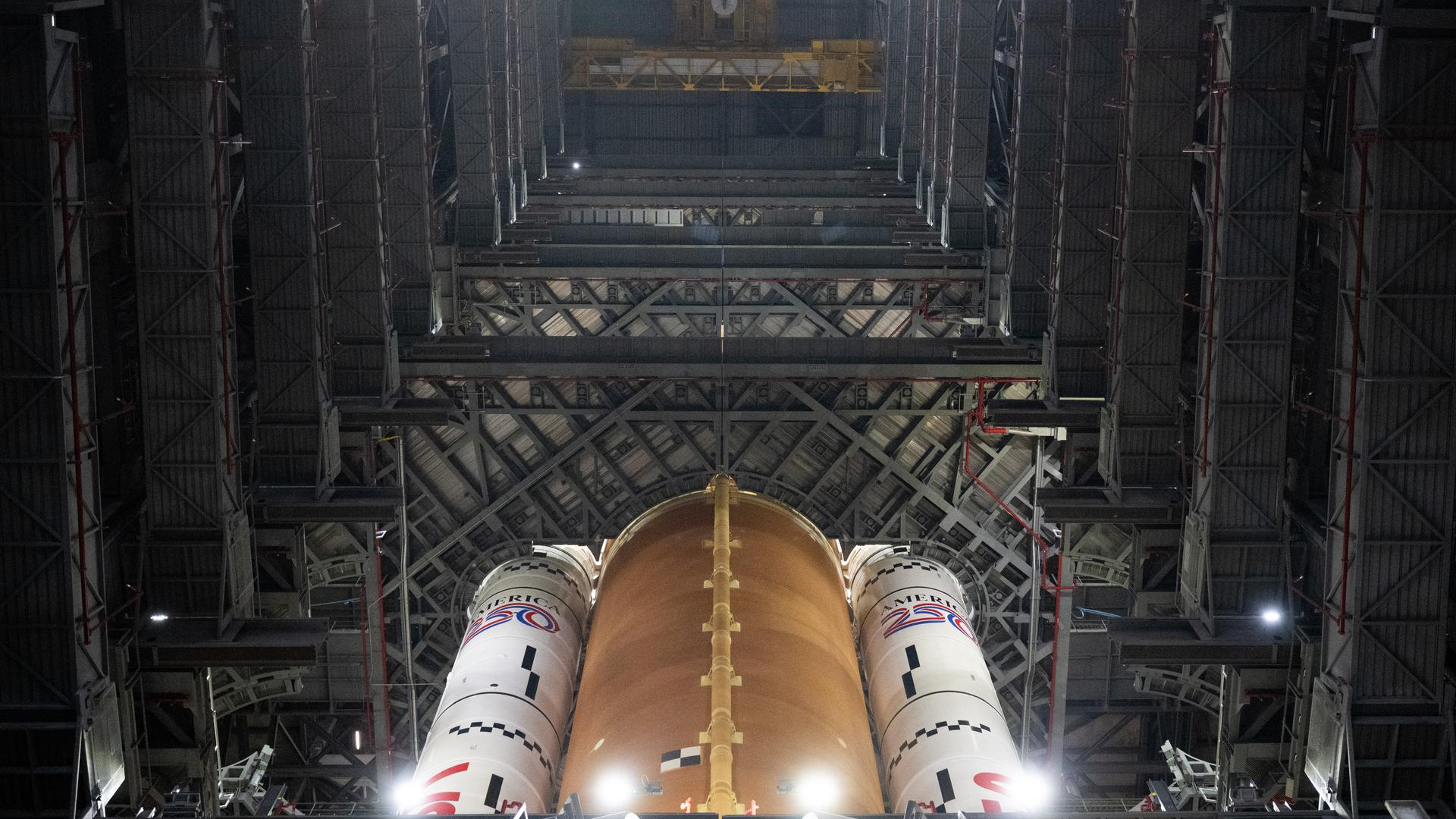
Starship is another story. SpaceX seems to have worked out much of the kinks developing the Super Heavy booster responsible for launching Starship — though a recent mishap of the booster's latest version did rupture during a pressurization test. The company has successfully caught three Super Heavy boosters using the giant "Mechazilla" chopstick-like arms attached to the rocket's launch tower, and managed to refly one of those boosters during one of Starship's 2025 test flights. Starship, however, did not have as good a year.
Of its five launches in 2025, Starship only completed its mission objectives on the final two. The development delays have raised concerns about the vehicle's readiness for Artemis 3, which NASA had hoped to launch in 2027, but internal SpaceX documents obtained by Politico in November indicate the company doesn't expect Starship to be ready for that mission until 2028.
U.S. lawmakers, space industry leaders and even former NASA administrators have spoken out publicly in criticism of Starship's delayed development, and are raising red flags that such delays could hand control of the moon to China.
During testimony before the Senate Commerce Committee in September, former NASA Administrator Jim Bridenstine cautioned against positioning the Artemis program to become completely reliant on SpaceX for mission success. "Unless something changes, it is highly unlikely the United States will beat China's projected timeline," he said.
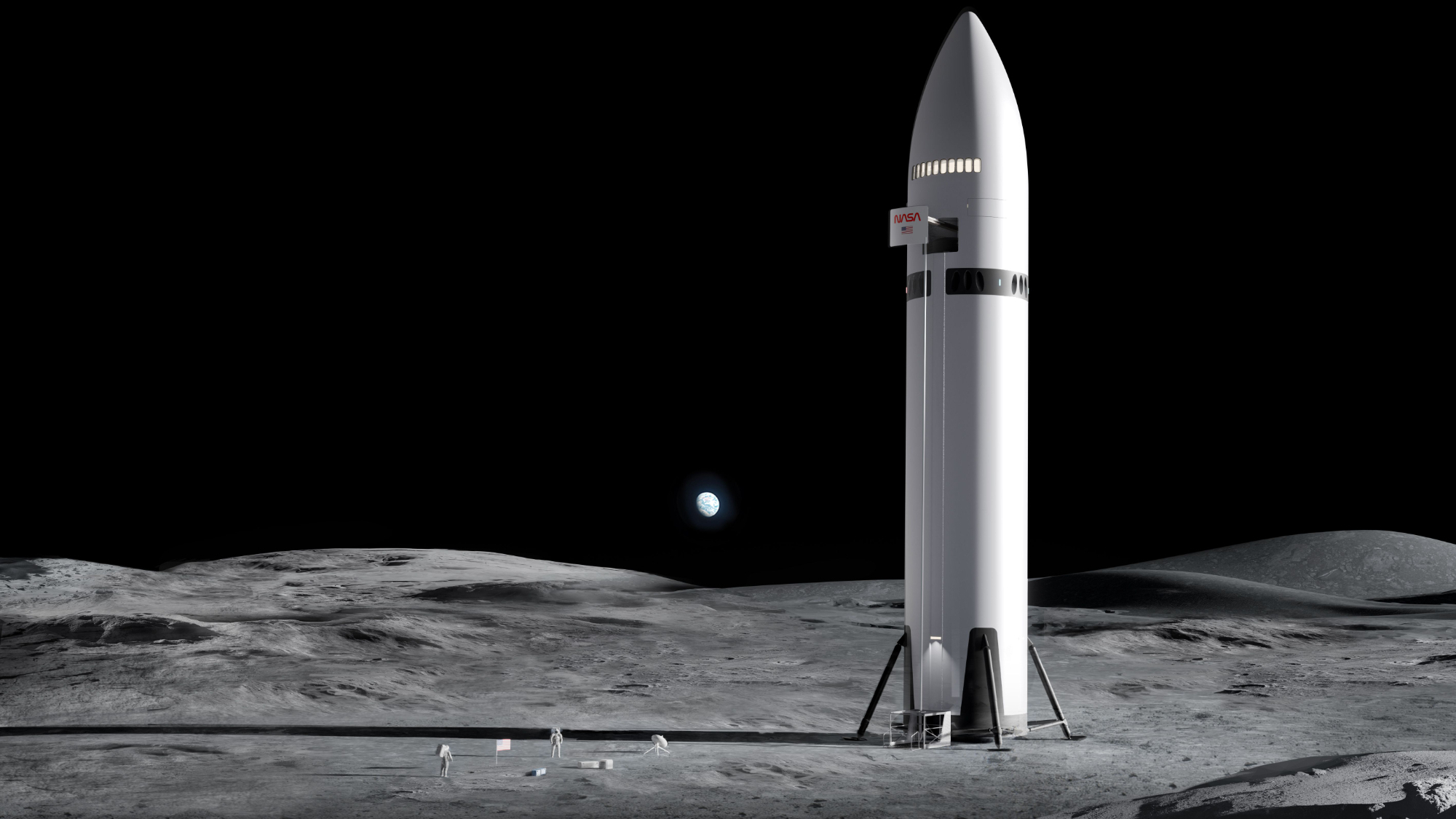
That's a problem, experts say. The U.S. and China are both eyeing the moon's southern polar region to set up camp, where scientists believe there is an abundance of water ice — a valuable resource that can be used to provide astronauts with everything from suitable drinking water to rocket fuel. It's also a matter of national security. "If our adversaries achieve dominant space capabilities, it would pose a profound risk to America," Sen. Ted Cruz (R-Texas) said during the Commerce Committee hearing at which Bridenstine testified.
NASA, too, is feeling the pressure. Unsatisfied with SpaceX's progress, acting agency administrator Sean Duffy announced in October that NASA was considering reopening the HLS contract to other bidders, including Blue Origin, who objected to Starship's selection over their Blue Moon lander, which is originally slated for Artemis 5. Now, NASA may decide to go with whichever lander is ready first, but SpaceX CEO Elon Musk has voiced skepticism over the competing company's ability to qualify their lander before SpaceX does so with Starship.
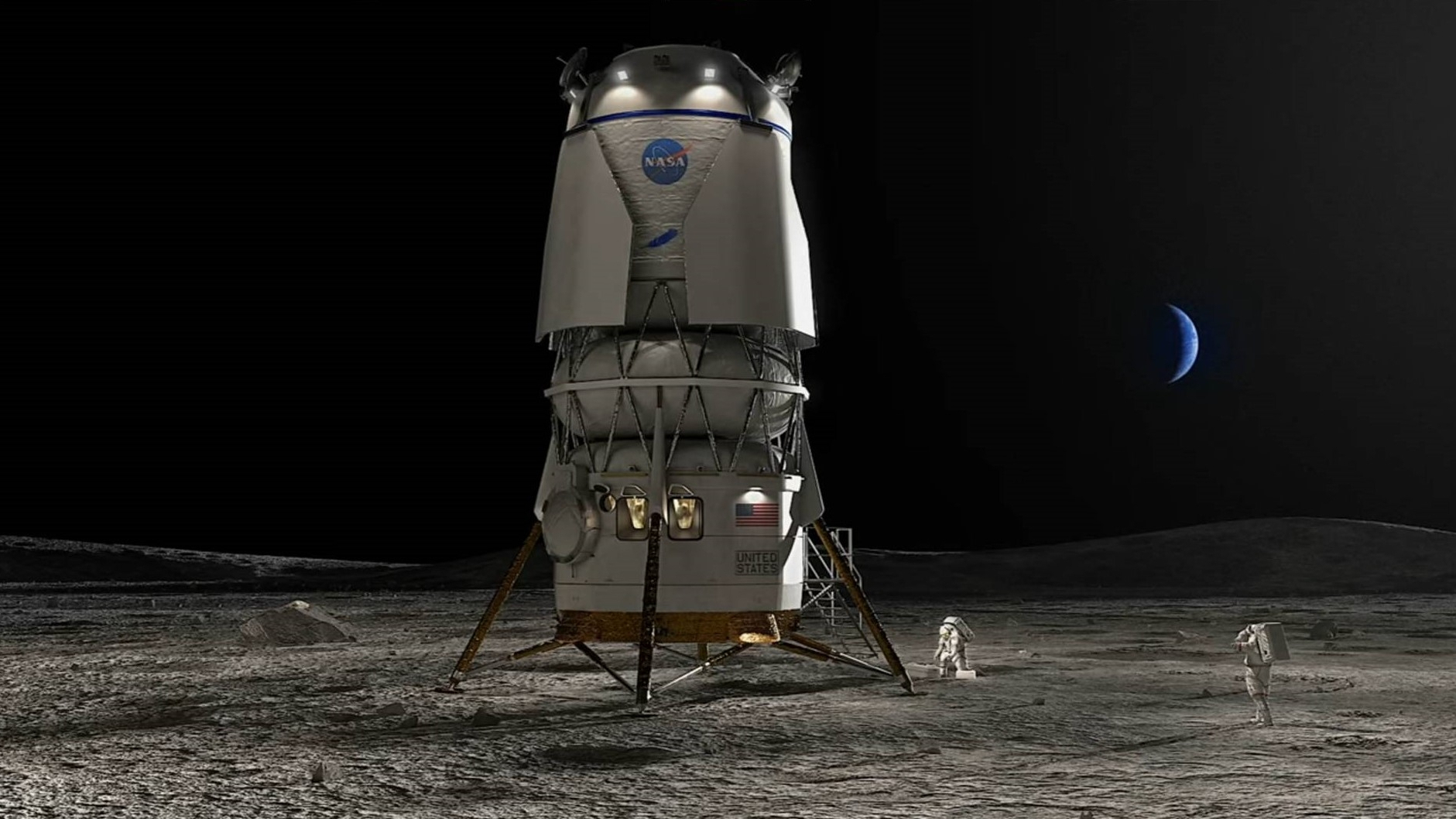
For its part, China's lunar ambitions and timeline to achieve them are about on par with the U.S., only the speed at which they're developing the technologies to accomplish those goals is quickly worrying those in the U.S. space industry who see stalls in Artemis' evolution.
In 2025, China has continued to close key technical gaps, advancing work on its Long March 10 lunar rocket, next-generation crewed spacecraft (named Mengzhou) and a crewed lunar lander. Beijing has also pressed ahead with reusable launch vehicle tests (though its most recent landing attempts were unsuccessful) reinforcing a development cadence that looks increasingly steady as Artemis faces schedule pressure.
The question still remains which country will successfully land astronauts (or taikonauts) back on the moon first, but there's no denying which nation will be the first to fly a crew to lunar space in the new millennium.
After Artemis 1, NASA named the crew of the upcoming Artemis 2 flight. The mission will be flown by NASA astronauts Reid Wiseman as Artemis 2 commander, Victor Glover as pilot, and Christina Koch and Canadian Space Agency astronaut Jeremy Hansen as mission specialists. The quartet has spent the last three years training for every aspect of their flight around the moon, with a major ramp-up over the past year that has included NASA's broader Artemis team.

"The consolidation and momentum that's building in the wider team — the flight control team, the launch control team — we are firing on all cylinders with those guys doing problem solving, answering questions that no one knows the real answer to," Koch told Space.com in an interview. "Every person that walks into every room is just ready to contribute the most that they can and to get to the right answer as a team," she said.
Koch and the other members of the Artemis 2 crew are eager to launch on their mission, and if NASA's current schedule holds, they may get that opportunity as early as February 2026. NASA is targeting no earlier than Feb. 5 for the first Artemis 2 launch window, and may roll the mission's completed SLS rocket from the Vehicle Assembly Building at NASA's Kennedy Space Center, to Launch Complex-39B as early as January. If they run into another delay, the space agency has determined additional launch windows in the months to follow, through April.
Once the day of their launch does arrive, the Artemis 2 crew will board the Orion spacecraft and ride SLS into Earth's orbit for a mission that will last roughly ten days. Should the launch go smoothly and checkouts of Orion's systems while in orbit come back nominal, a translunar injection burn of SLS's upper stage will propel Orion into a free-return trajectory around the moon, slingshotting the spacecraft around the moon and back to Earth on a course in the shape of a figure-eight. The trajectory doesn't fully place Orion in lunar orbit, but it guarantees the spacecraft and crew's return to Earth regardless of any anomalies they might encounter around the moon.

While the main objective of Artemis 2 is to put Orion through its paces on its first mission carrying astronauts, the crew will also conduct a series of science experiments. Some of that research involves the astronauts themselves, who will become their own biomedical subjects to gather in-flight data on the effects the human body experiences beyond low Earth orbit for the first time since Apollo, including investigations into things like radiation exposure and the immune system.
In addition to humanity's long-awaited return to the moon, Artemis 2 is breaking ground in other historical ways as well. Depending on when it launches, Orion's flight around the moon may take the Artemis 2 crew further from Earth than any previous crewed mission — potentially breaking the record set during Apollo 13.
Koch and Glover will also be making history in their own right, as the first woman and first person of color to fly to the moon.
Thus, for all the uncertainty surrounding Artemis' long-term architecture, Artemis 2 represents something far simpler. It will send humans beyond low Earth orbit for the first time in more than half a century, reestablishing a capability the U.S. at one time may have taken for granted.
Whether Artemis ultimately fulfills its promise of sustained lunar exploration, or is reshaped by politics, budgets and competition with China, the program's first crewed flight around the moon will mark a definitive turning point. In 2026, humanity isn't just planning to return to lunar space — it's actually going.
An incoming coronal mass ejection (CME) — a vast plume of plasma and magnetic field from the sun — is forecast to deliver Earth a blow sometime on late Jan. 2 but more likely in the early hours of Jan. 3, according to the U.K. Met Office. If it arrives as expected, the CME could trigger minor (G1) to moderate (G2) geomagnetic storm conditions.
This is good news for aurora chasers as it raises the chance of seeing the northern lights at mid-latitudes.
Where can I see the northern lights tonight?
States that could see auroras tonight
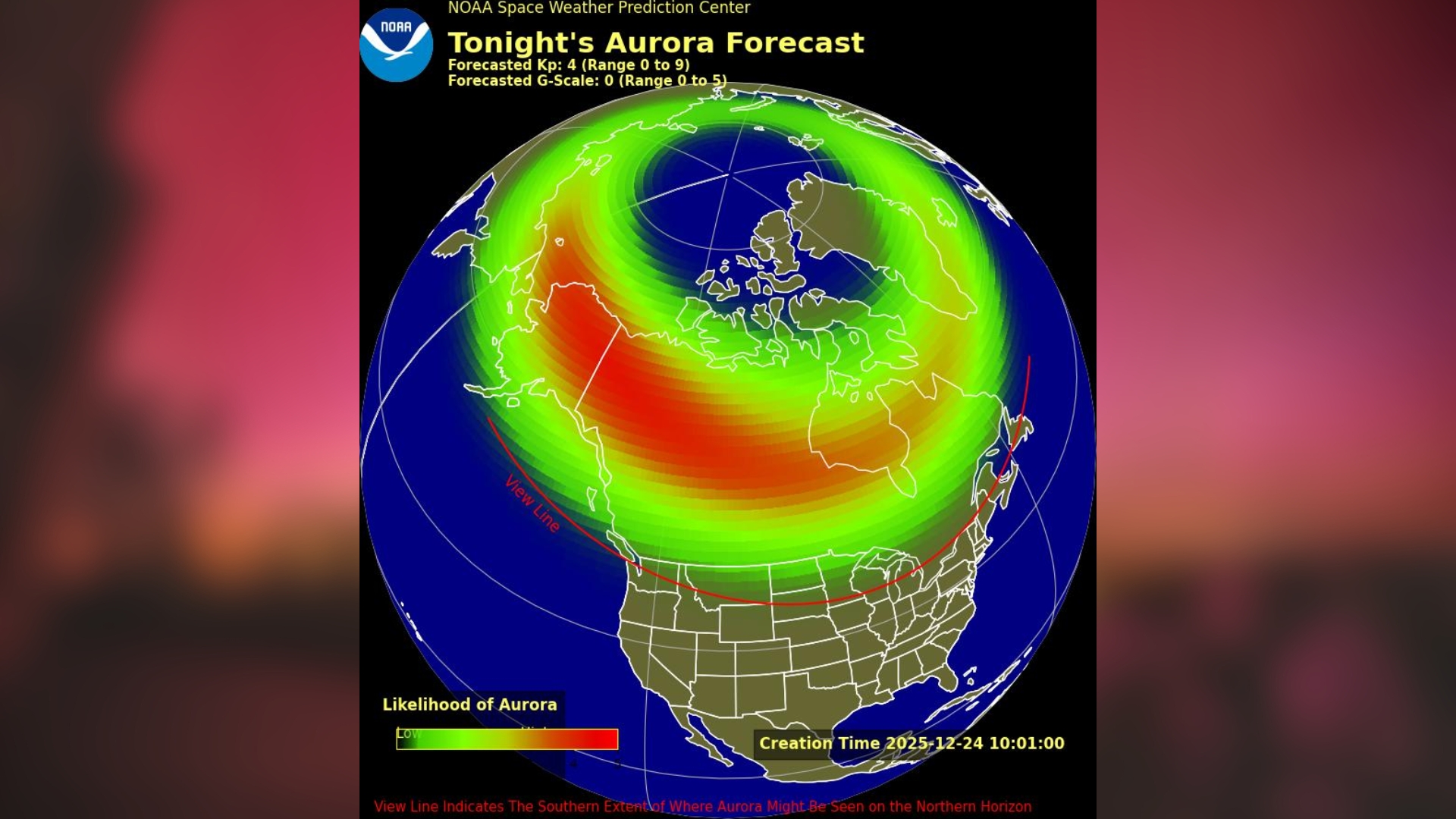
Based on the latest NOAA aurora forecast map, the following 18 U.S. states appear fully or partially above the aurora view line:
- Alaska
- North Dakota
- Minnesota
- Montana
- Wisconsin
- South Dakota
- Michigan
- Idaho
- Maine
- Vermont
- New Hampshire
- Washington
- Iowa
- Oregon
- New York
- Wyoming
- Nebraska
- Illinois
But remember, auroras can be very fickle. The list is based on current forecast data at the time of publication, but if conditions strengthen, northern lights could reach much farther south than expected. Equally, if conditions don't align, we could end up twiddling our thumbs, with no auroras at all.
Northern Hemisphere aurora forecast courtesy of the U.K. Met Office
What time should I look for the northern lights tonight?
The northern lights could be visible across 18 U.S. states tonight (Jan. 2-3) as soon as it gets dark, so it's worth keeping an eye on the sky (and your aurora alerts) throughout the evening, especially in areas with clear, dark skies.
According to NOAA's 3-day forecast, geomagnetic storm activity is expected to be best at the following times:
- 4 p.m. - 10 p.m. EST (2100-0300 GMT): Minor (G1) geomagnetic storm conditions possible.
- 10 p.m. - 4 a.m. EST (0300-0900 GMT): Moderate (G2) geomagnetic storm conditions possible.
How can I see the northern lights from where I live?
If you live in one of the 18 U.S. states forecasted to potentially catch sight of the northern lights tonight, there are a few things you can do to give yourself the best chance of seeing them.
- Find a north-facing vantage point, ideally with a clear view of the northern horizon. Try and get as far away from light pollution as possible.
- Use your phone camera first to scan the sky for signs of auroras. Phone cameras are a great way to pick out faint auroras before your eyes spot them. This will give you a good idea of where to focus your attention.
- One of the trickiest — but most important — steps is letting your eyes adapt to the dark for at least 30 minutes. This allows your night vision to fully develop, making it much easier to spot faint auroras. But be warned: even a brief glance at a non-red light source (yes, that includes checking your phone) can undo that adaptation, meaning you'll need to wait another 30 minutes for your eyes to adjust again.
- Wear warm clothing! Part of the fun of aurora hunting is the chase. Be prepared to sit or stand outside for hours if conditions are looking promising, as you won't want to miss the show when it starts!
We recommend downloading a space weather app that provides aurora forecasts based on your location. One option I use is "My Aurora Forecast & Alerts," available for both iOS and Android. However, any similar app should work well.
I also use the "Space Weather Live" app, which is available on iOS and Android, to get a deeper understanding of whether the current space weather conditions are favorable for aurora sightings.
Want to capture the perfect photo? Our how to photograph auroras guide can help.
]]>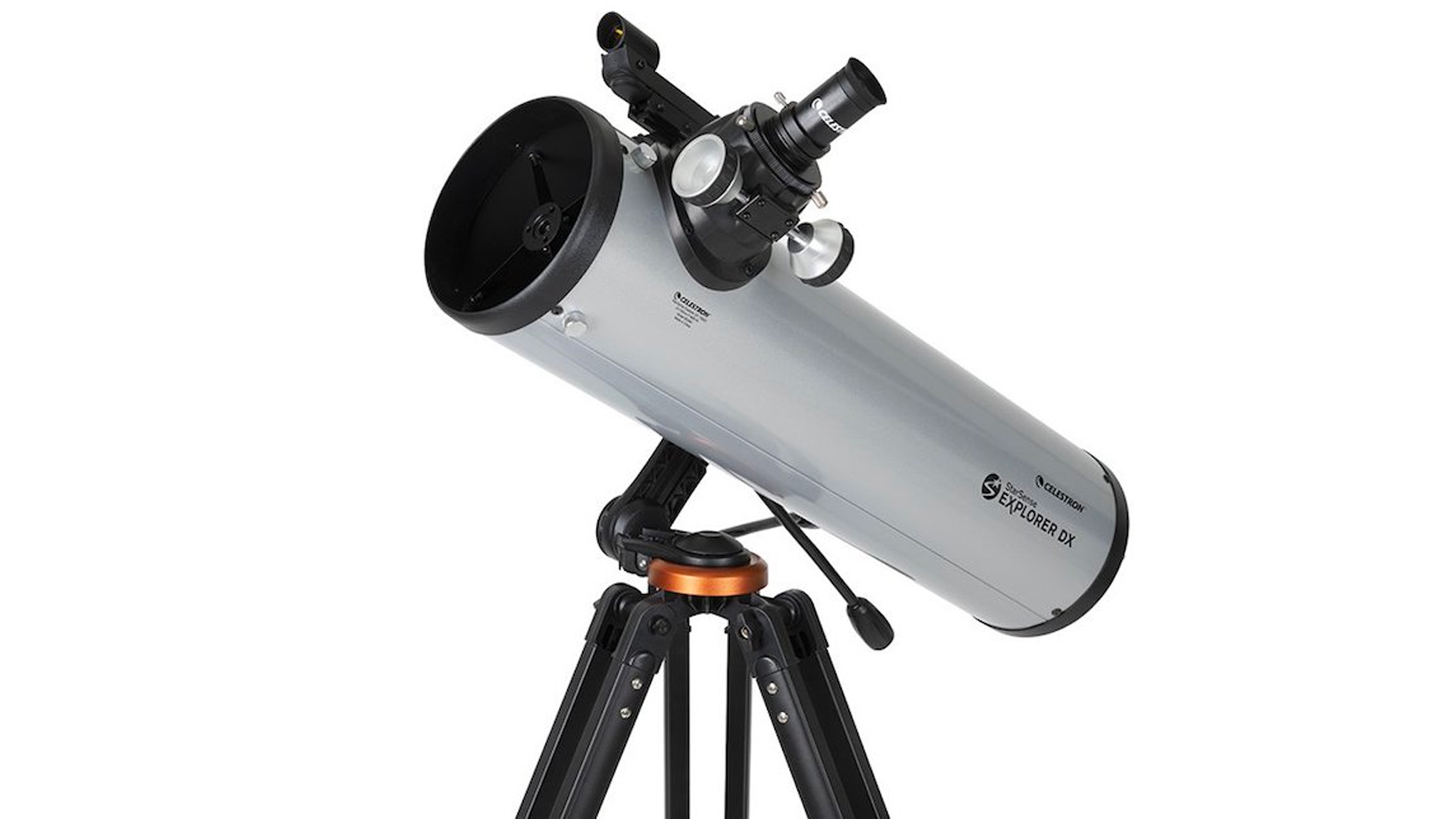
Looking for a telescope for the moon? We recommend the Celestron StarSense Explorer DX 130AZ as the best for basic astronomy in our best beginner's telescope guide.
The January 2026 full moon is upon us! Here's what to expect when the "Wolf Moon" prowls over the horizon tonight, kicking off a spectacular natural light show as the first full moon (and supermoon) of 2026.
A full moon occurs when the moon sits opposite the sun in Earth's sky — an event that occurs just once in each of its 27-day recurring orbits — causing the lunar disk to appear fully-lit from our perspective. January's full moon officially reaches peak illumination at 5:03 a.m. EST (1003 GMT) on Jan. 3, though the lunar disk will appear practically full to the casual observer on the surrounding nights. Local moonrise and moonset times will depend on your location.
January's full moon is known as the Wolf Moon, in reference to the hungry predators that have been known to howl during the long winter nights. It is also sometimes known by its Anglo-Saxon name, the "Moon After Yule", according to TimeandDate and as the "Severe Moon" by North America's indigenous Dakota people to reflect the bitter cold of the month, per the Old Farmers Almanac.
This month's full moon phase coincides with the moon's closest approach to Earth — a point in its orbit called perihelion — giving rise to a beautiful supermoon that can appear 30% brighter and 14% larger than the most distant full moon of the year. January's supermoon is the last in a string of four consecutive supermoons. After that, we'll have to wait until Nov. 24, 2026, to see another!
When to see the "Wolf Moon" rise
Look to the eastern horizon at dusk on Jan. 2 to watch the "Wolf Moon" rise shortly before sunset local time. It will appear particularly large while close to the horizon thanks to a phenomenon called the "moon illusion", a visual effect that makes low-hanging moons seem oversized.
You may notice this effect even more at sunset on the following day (Jan. 3), when the satellite will rise in a darker sky shortly after the sun sets. You may also notice the moon take on an orange-yellow hue as it sits close to the horizon, as the prolonged journey through Earth's atmosphere scatters the bluer wavelengths of reflected light, while allowing redder wavelengths to pass relatively unhindered.
New York | 5:03 a.m. EST |
London | 10:03 a.m. GMT |
Tokyo | 7:03 p.m. JST |
Beijing | 6:03 p.m. CST |
Sydney | 9:03 p.m. AEDT |
On Jan. 3, bright Jupiter will shine less than 4 degrees to the right of the lunar disk. For context, the width of your three middle fingers held at arm's length accounts for 5 degrees in the night sky.
Why not grab your camera and try to snap a picture of the first full moon of the year using our handy guide to imaging Earth's natural satellite? You may also want to check out our roundups of the best cameras and lenses for astrophotography to ensure that you're prepared to capture everything that the 2026 night sky has to offer.
Editor's Note: If you would like to share your astrophotography with Space.com's readers, then please send your photo(s), comments, and your name and location to spacephotos@space.com.
]]>Planets are typically found bound to one or more stars. However, in 2000, astronomers detected the first signs of a "rogue planet" — a free-floating world that orbited no star. Then, in 2024, researchers detected an object distorting the light from a distant star, simultaneously from both Earth and space using several ground-based observatories as well as the European Space Agency's now-retired Gaia space telescope. These observations helped scientists estimate that the object was a newfound world found about 9,950 light-years from Earth in the direction of the Milky Way's center, with a mass about 70 times larger than Earth. (Saturn, on the other hand, is about 95 Earth masses.)
The researchers behind the discovery say these types of free-floating planets should be even more abundant throughout our home galaxy than we realize. "Theoretical studies of formation of planetary systems suggest that they should be very numerous in the Milky Way, even a few times more numerous than the number of stars in the galaxy," study co-author Andrzej Udalski, an astrophysicist at the University of Warsaw in Poland, told Space.com.
More data on rogue planets could help shed light on how all planets form, and how and which kinds go rogue. Previous research suggests that chaotic interactions between worlds early in the development of planetary systems around stars can sling planets outward. Passing stars may also disrupt planetary systems, hurling worlds into the void. In addition, some rogue planets may form directly by themselves from the same clouds of gas and dust that birth stars.
Rogue planets are difficult to spot because they do not emit enough light for the current generation of telescopes to detect. Right now, the only way to discover these wandering worlds is with the help of gravitational fields, which warp the fabric of spacetime.
When a rogue planet drifts in front of a star, the world's gravitational field can act like a lens, amplifying the star's apparent brightness and letting astronomers infer the rogue planet's existence. Up to now, researchers detected about a dozen potential rogue planets with this method.
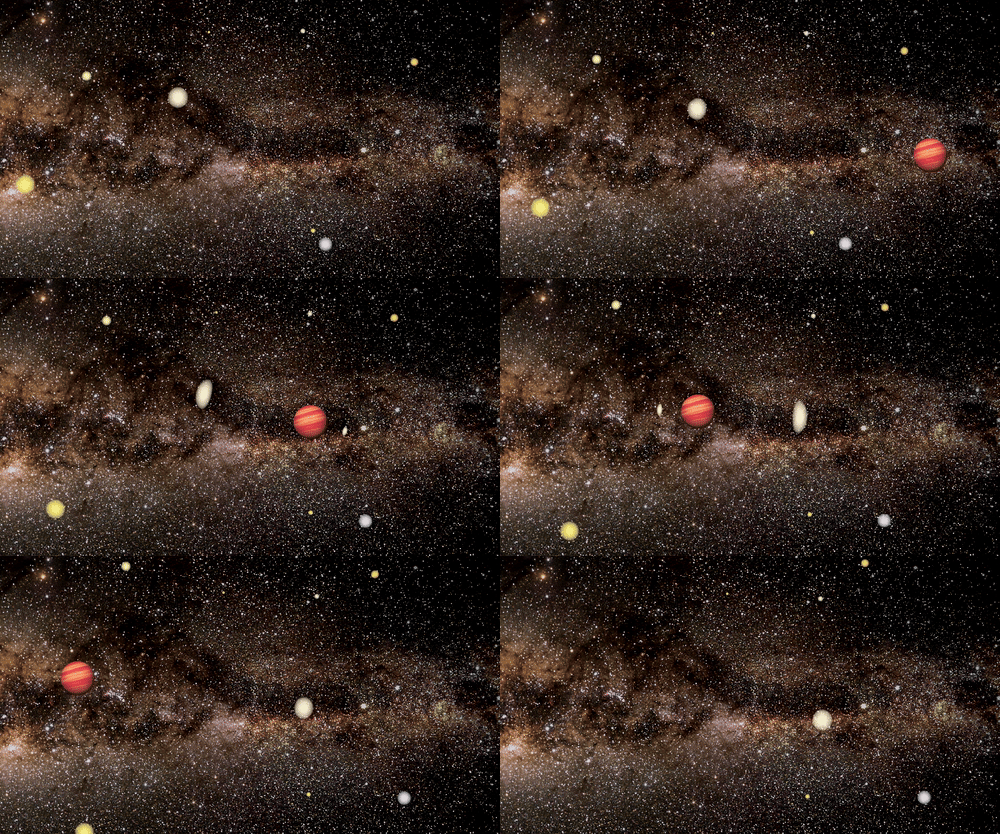
One limitation of using such "gravitational microlensing" to detect rogue planets is that it cannot by itself reveal how far away these worlds are. This in turn makes it difficult to deduce other features of those planets, such as their masses. As such, much about rogue planets remained a matter of speculation — astronomers could not even conclusively confirm they were actually planets and not more massive bodies, such as the failed stars known as brown dwarfs.
Now, astronomers have not only detected a rogue planet, but also pinpointed its distance and its mass. By viewing this event, known as both KMT-2024-BLG-0792 and OGLE-2024-BLG-0516, from two different vantage points, the scientists could essentially triangulate its distance from Earth. Once they had a better idea of its distance from Earth, they could then estimate its mass, based on how long its gravitational field distorted the light the astronomers saw.
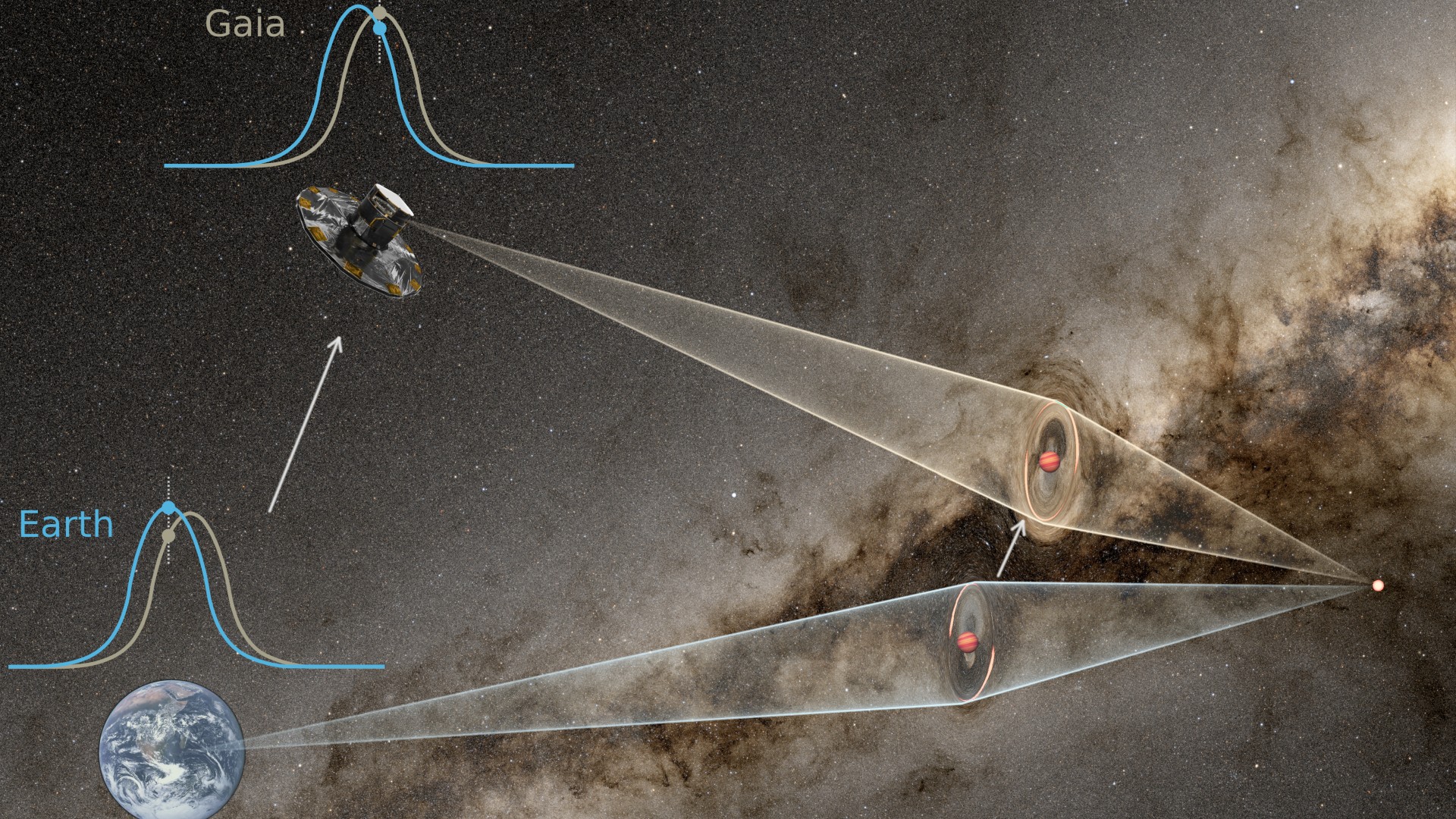
"Our discovery offers further evidence that the galaxy may be teeming with rogue planets," study co-author Subo Dong, a professor of astronomy at Peking University in China, said in a statement.
The next generation of space telescopes may detect even more rogue planets. For instance, NASA's Nancy Grace Roman Space Telescope, which may launch in 2026, will scan huge swaths of the sky in infrared light 1,000 times faster than NASA's Hubble Space Telescope. China's Earth 2.0 satellite, planned for launch in 2028, will also search for free-floating planets.
"The future of free-floating planet science looks very bright," Udalski said.
The scientists detailed their findings online Jan. 1 in the journal Science.
]]>Billings, established in the 1930s as a Soviet port and supply point, sits on a narrow spit of land separating the Arctic Ocean from connected coastal lagoons, exactly the kind of geomorphic "edge zone" where land, water, ice, and wind constantly reshape one another.
Despite mid-June being among the warmest times of year in Billings, the landscape in the image is still locked in ice. NASA notes that ice cover is routine even then, with average daily minimum temperatures around −30.9°F (−0.6°C ) in June that see these lagoons frozen and sea ice crowding the coast.
What is it?
Since launching in February 2013, Landsat 8 has been one of the world's most reliable tools for tracking Earth's surface, quietly collecting consistent, repeatable imagery that scientists use to monitor everything from crop health and wildfire scars to shifting shorelines and shrinking ice. Operated by NASA and the U.S. Geological Survey, the mission was built to extend the long-running Landsat archive and keep observations comparable over decades.
Landsat 8 carries two primary instruments. The Operational Land Imager (OLI) measures reflected sunlight in visible through shortwave-infrared wavelengths, producing multispectral images at 90-foot (27-meter) resolution and a sharper 45-foot (13-meter) panchromatic band across a wide swath, making it well suited for mapping broad landscapes while still capturing meaningful detail.
Just as important as sharpness is consistency. Landsat’s regular revisit cycle (16 days for Landsat 8 on its own, and effectively more frequent coverage when paired with other Landsat satellites) allows researchers to compare "like with like" across seasons and years, an essential ingredient for detecting environmental change rather than just photographing it.
Where is it?
This image was taken in low Earth orbit above Russia’s Chukchi Peninsula in Siberia.

Why is it amazing?
It's easy to treat the "snowman" as a delightful visual coincidence — and it is — but the real value of the image is what it reveals about permafrost landscapes, coastal Arctic dynamics, and why satellites like Landsat remain indispensable for observing them.
The photo captures a moment when frozen lagoons, sea ice, and shoreline all coexist in mid-June, a useful context for understanding seasonal ice persistence in a region where timing affects ecosystems, coastal erosion and human activity. Landsat's moderate resolution is ideal here: wide enough to put the whole coastal system in view, detailed enough to separate lagoon ice, sea ice and land surface features.
The story even puts the scale into perspective: this segmented "snowman" spans roughly 14 miles (22 kilometers ) from top to bottom. By comparison, Guinness World Records lists the tallest snowperson as .02 miles (37.21 meters), a record set in Bethel, Maine — meaning the Siberian "snowman" isn't just bigger; it's bigger by orders of magnitude.
Want to learn more?
You can learn more about Earth-observing satellites and the Arctic.
]]>In the wake of Comets C/2025 A6 (Lemmon) and C/2025 R2 (SWAN) in October, Comet R3 (PanSTARRS) is due to reach perihelion — its closest point to the sun — on April 20, 2026. On that date, this icy visitor to the inner solar system will come within 47.4 million miles (76.3 million kilometers) of the sun.
That's between the orbits of Mercury and Venus, or between 29 million and 67 million miles (47 million to 108 million kilometers), on average. On April 27, Comet C/2025 R3 (PanSTARRS) will be at its closest point to Earth — within 44 million miles (70.8 million km) — and so will probably be at its brightest.
Comet C/2025 R3 (PanSTARRS) distance and brightness
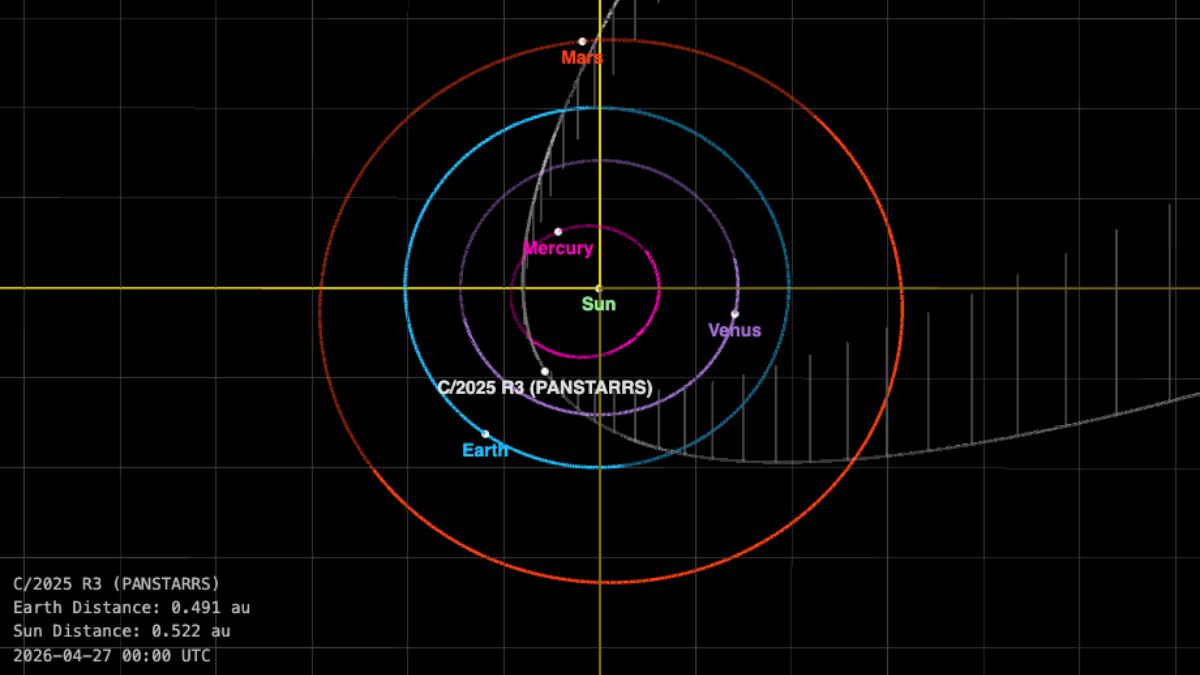
The brightness of comets is notoriously unpredictable. Although Comet C/2025 R3 (PanSTARRS) could prove to be the brightest comet of 2026, it's not known how bright it will get. Some predict it could reach magnitude 8, which is about the same brightness as Neptune — too faint to be seen with the naked eye but easy to spot in binoculars or a small telescope. Others predict Comet C/2025 R3 could reach a brightness of magnitude 2.5. That's comparable to the brightest stars in the famous W-shaped constellation Cassiopeia, which is easily visible with unaided eyes in a dark sky.
Comet R3's prospects of becoming a bright, easy-to-see nighttime object may be enhanced by a phenomenon called forward scattering. Because this comet will move between Earth and the sun, its tail will reflect and scatter a lot of sunlight in the direction of Earth — and into the eyes of observers — in late April 2026.
When and where to see Comet C/2025 R3 (PanSTARRS)
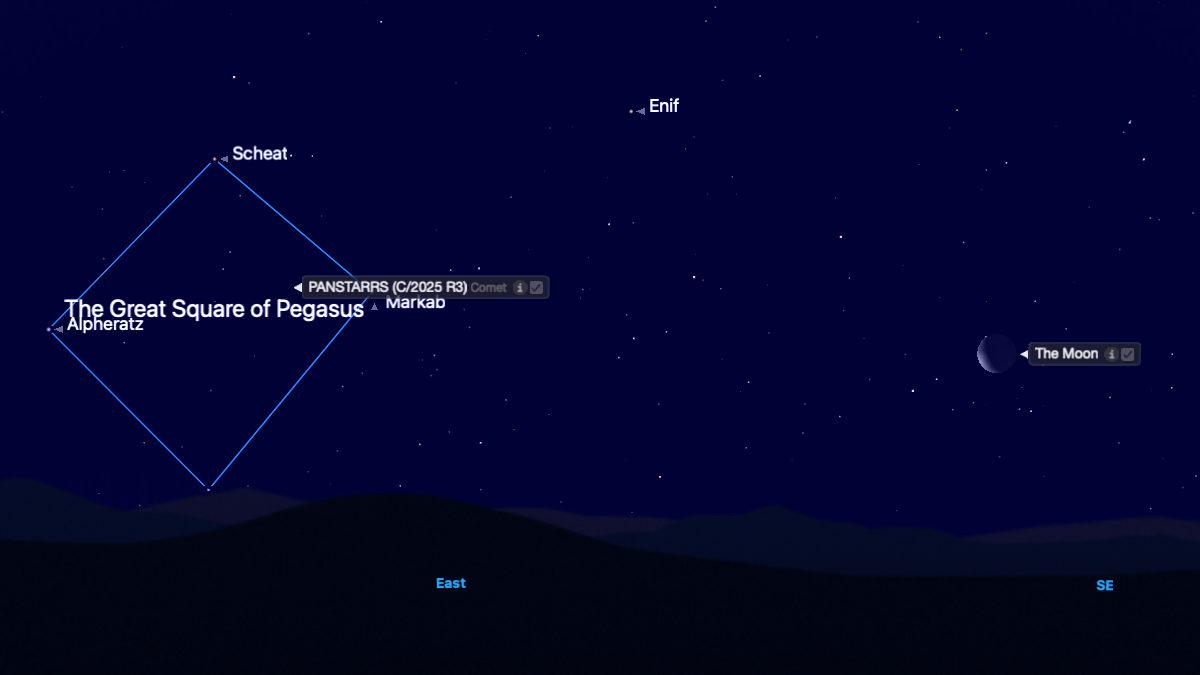
Comet C/2025 R3 (PanSTARRS) will be at its best in the predawn sky in late April, as seen from the Northern Hemisphere, and after sunset in early May for viewers in the Southern Hemisphere. It will reach perihelion in the constellation Pisces, just beneath the Great Square of Pegasus.
When Comet R3 (PanSTARRS) brightens in the night sky, there will likely be some interference from moonlight, but darkness will prevail close to perihelion. A new moon on April 17, 2026, bodes well for the comet's post-sunset perihelion on April 20. But at its closest point to Earth on April 27, it will likely be lost in the sun's glare.
Around April 13-15, the comet will be within the Great Square of Pegasus, around 15 degrees above the eastern horizon, an hour before sunrise, as viewed from mid-northern latitudes. There will be a close to a waning crescent moon for a few mornings.
Discovery of Comet C/2025 R3 (PanSTARRS)
Comet C/2025 R3 (PanSTARRS) was discovered on Sept. 8, 2025, by Pan-STARRS, a pair of 1.8-meter (5.9 feet) reflector telescopes atop Haleakalā volcano in Hawaii. Pan-STARRS constantly takes wide images of the sky, and then software compares them with older images, flagging anything that moves. Follow-up observations using the 3.6-meter (11.8 feet) Canada-France-Hawaii Telescope at Mauna Kea, Hawaii, on Sept. 17 helped astronomers calculate the comet's path.
A cluster of comets
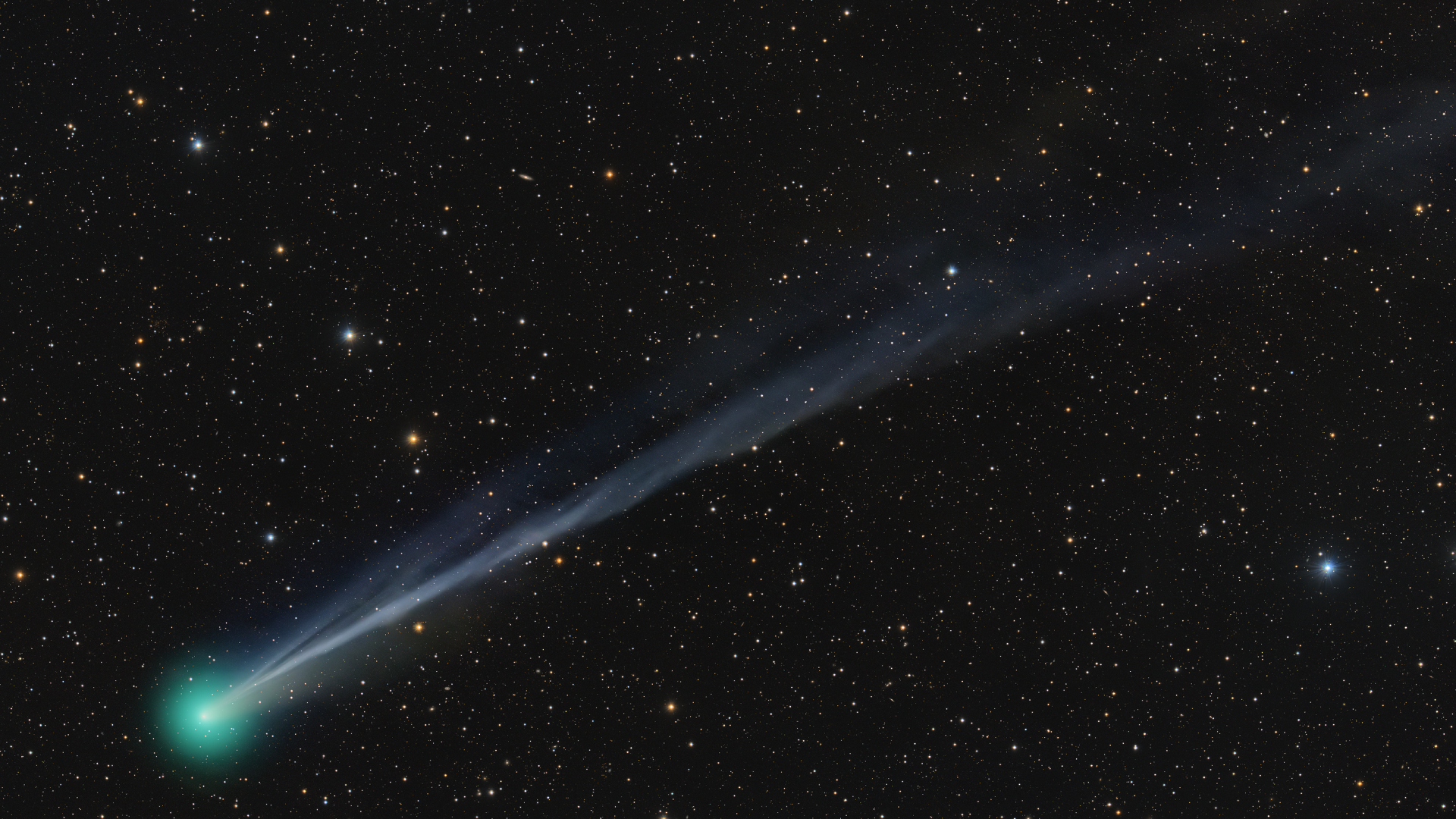
After a few barren years in the wake of Comet C/2020 F3 (NEOWISE), six notable comets made their mark in 2024 and 2025. First, there was the "Devil Comet" 12P/Pons-Brooks" (also dubbed the "Mother of Dragons" comet) in April 2024. Then came Comet C/2023 A3 (Tsuchinshan-ATLAS) in October 2024 and the bright C/2024 G3 (ATLAS), the "New Year comet," which put on a great show for viewers in the Southern Hemisphere in January 2025. It was followed in mid-October by Comet C/2025 A6 (Lemmon), which reached the cusp of naked-eye visibility and, to a lesser extent, Comet C/2025 R2 (SWAN).
That's not to mention 3I/ATLAS, only the third interstellar object ever to visit the solar system, after 'Oumuamua in 2017 and 2I/Borisov in 2019. 3I/ATLAS came closest to the sun on Oct. 29 during its trip through the solar system and then rapidly brightened, baffling scientists.
Will Comet C/2025 R3 (PanSTARRS) become a "great comet" in 2026? Only time will tell.
]]>The meteors of this first shower of the year radiate from the northeast corner of the constellation of Boötes, the Herdsman, so we might expect them to be called the "Boötids." But back in the late-18th century, there was a constellation here called Quadrans Muralis, the "Mural or Wall Quadrant" (an astronomical instrument). It is one of the many constellation names that have fallen into disuse. Thus, the meteors were christened "Quadrantids" and even though the constellation from which these meteors appear to radiate no longer exists, the shower's original moniker continues to this day.
Crumbs of a dead comet?
At peak activity, 60 to 120 Quadrantid meteors per hour can be seen under ideal conditions. However, the influx is sharply peaked: just six hours before and after maximum, these blue meteors appear at only half of their highest rates. This suggests that the stream of particles is relatively narrow — possibly derived fairly recently from a small comet.
In fact, in 2003, astronomer Peter Jenniskens of NASA, found a near-Earth asteroid (2003 EH1), whose orbit closely matches that of the Quadrantid stream. Some astronomers suspect that this asteroid is actually a fragment of an old, "extinct" comet; perhaps the same comet that was recorded by Chinese, Korean, and Japanese observers during the years 1490-91. If so, that comet may have broken apart, with some of its debris becoming the meteoroids that now produce the Quadrantids.
2026: A poor year
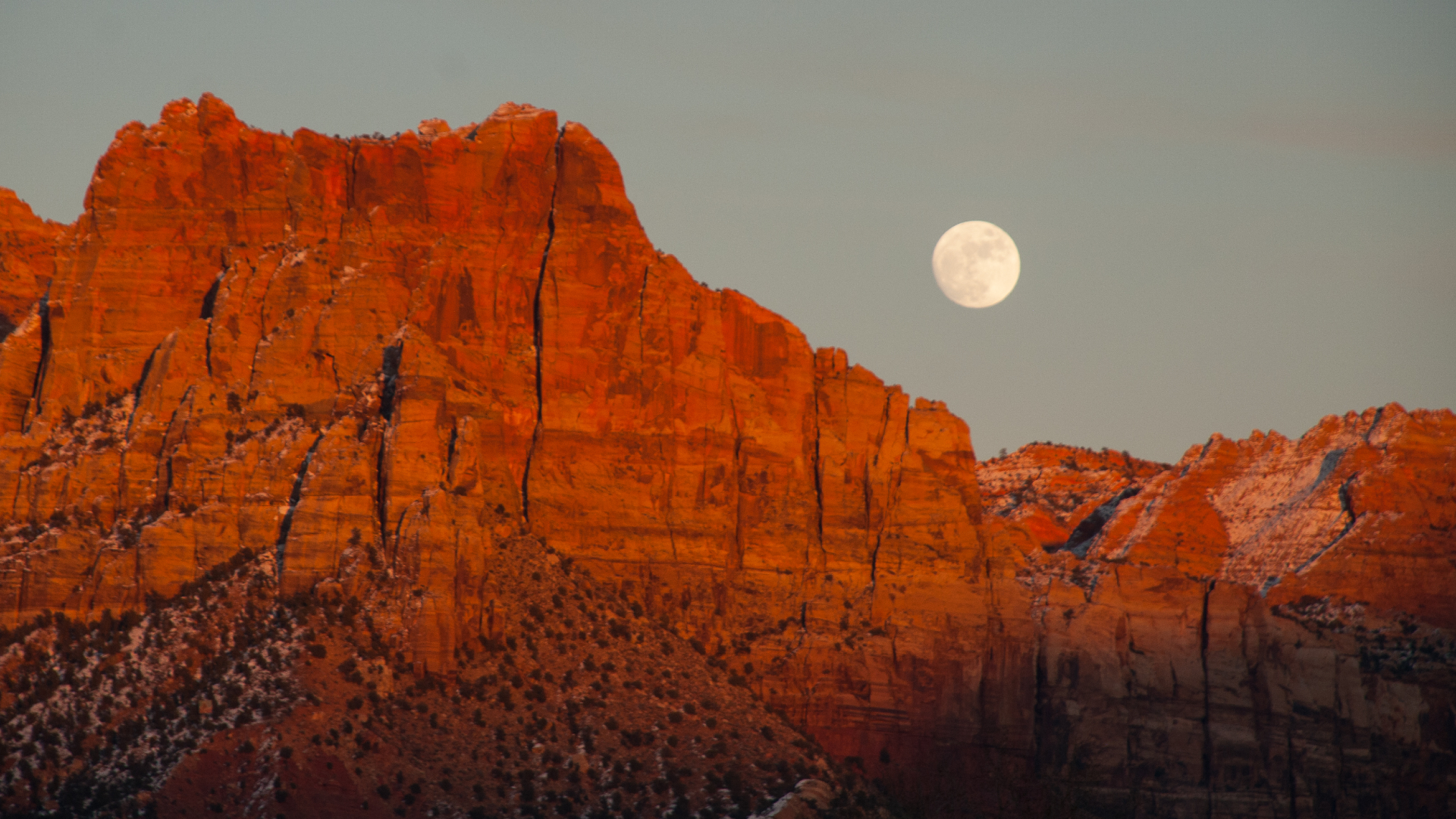
Unfortunately, 2026 will not be a good year to look for the "Quads." Chalk it up to poor timing.
First, the peak of this year's shower, according to Margaret Campbell-Brown and Peter Brown in the 2026 Observer's Handbook of the Royal Astronomical Society of Canada, is predicted for 5 p.m. EST on Jan. 3. That places the maximum during daylight hours for much of North America. But even if the peak were to occur at night, there is an even greater problem.
For on that very same day, the moon will turn full.
As a result, throughout the overnight hours of Saturday, Jan. 3, into Sunday, Jan. 4, the sky will be flooded with brilliant moonlight. The moon will remain above the horizon all night, located in the constellation of Gemini the Twins and not far from the planet Jupiter. That moonlight will squelch all but the very brightest of meteors.
Ordinarily, the Quadrantids are best seen just before dawn — around 6 a.m. local time — when the radiant, the point in the sky from which the meteors appear to emanate, is climbing higher into the northeastern sky.
If you do decide to head out to look for meteors, remember to bundle up! It is, after all, wintertime. And if you can't find someone who would care to share the viewing duties with you, a thermos jug of your favorite hot beverage — coffee, tea or cocoa — makes for a fine companion on a cold night.
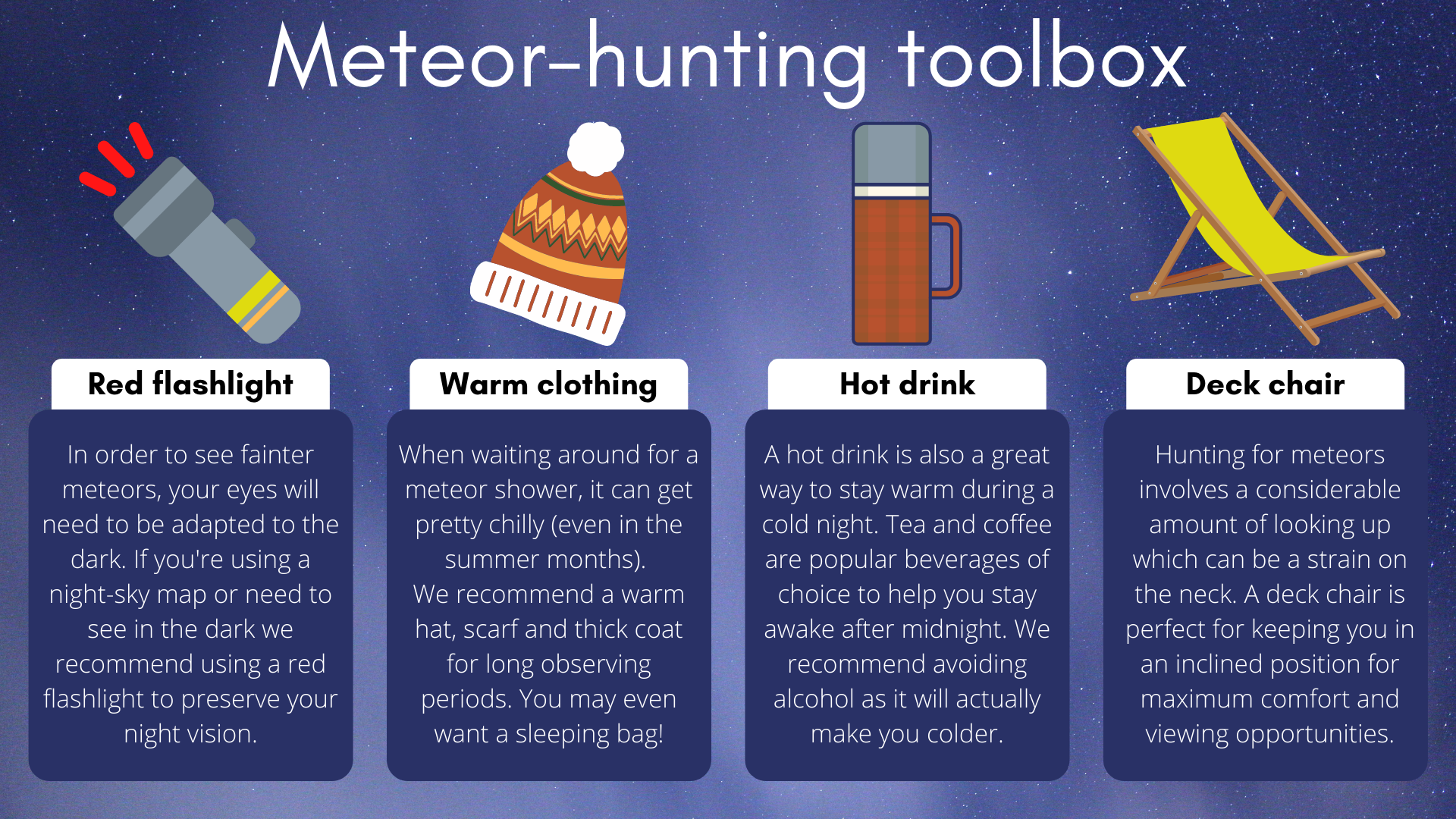
Two years from now, we could have a winner!
But as bad as it is for the Quadrantids this year, it will be a very different story in 2028.
That year, the peak of the shower is set for 5 a.m. EST on Jan. 4, which especially favors eastern North America. And the moon will be at a much more favorable phase: a fat waxing crescent, which will not be in the predawn sky at all and will thus be of absolutely no hindrance to meteor viewing compared to this year. Given clear skies, the "Quads" could turn out to be one of the best meteor displays of 2028.
Mark your calendars!
Joe Rao serves as an instructor and guest lecturer at New York's Hayden Planetarium. He writes about astronomy for Natural History magazine, Sky and Telescope and other publications.
If you're a fan of Star Trek — and let's be real, if you weren't, you probably wouldn't be on this page — you'll probably be interested in the best U.S.S. Enterprise models on the market. Playmobil has enjoyed the title of being the major toy manufacturer with a seriously impressive Enterprise model, but Lego has now released its first-ever Star Trek set. We'll look at design, the features, the extras, the price and everything in between to determine which is best.
It's worth noting that these two sets, despite being models of the same ship, are vastly different. However, if you want to watch the Star Trek movies and TV shows, as well as other sci-fi hits, or you want to check out other top model ships, we recommend reading through the best streaming deals, best Lego Star Wars sets and best Lego space sets. But, to answer the question of which is the best model, U.S.S. Enterprise, read on.
Design
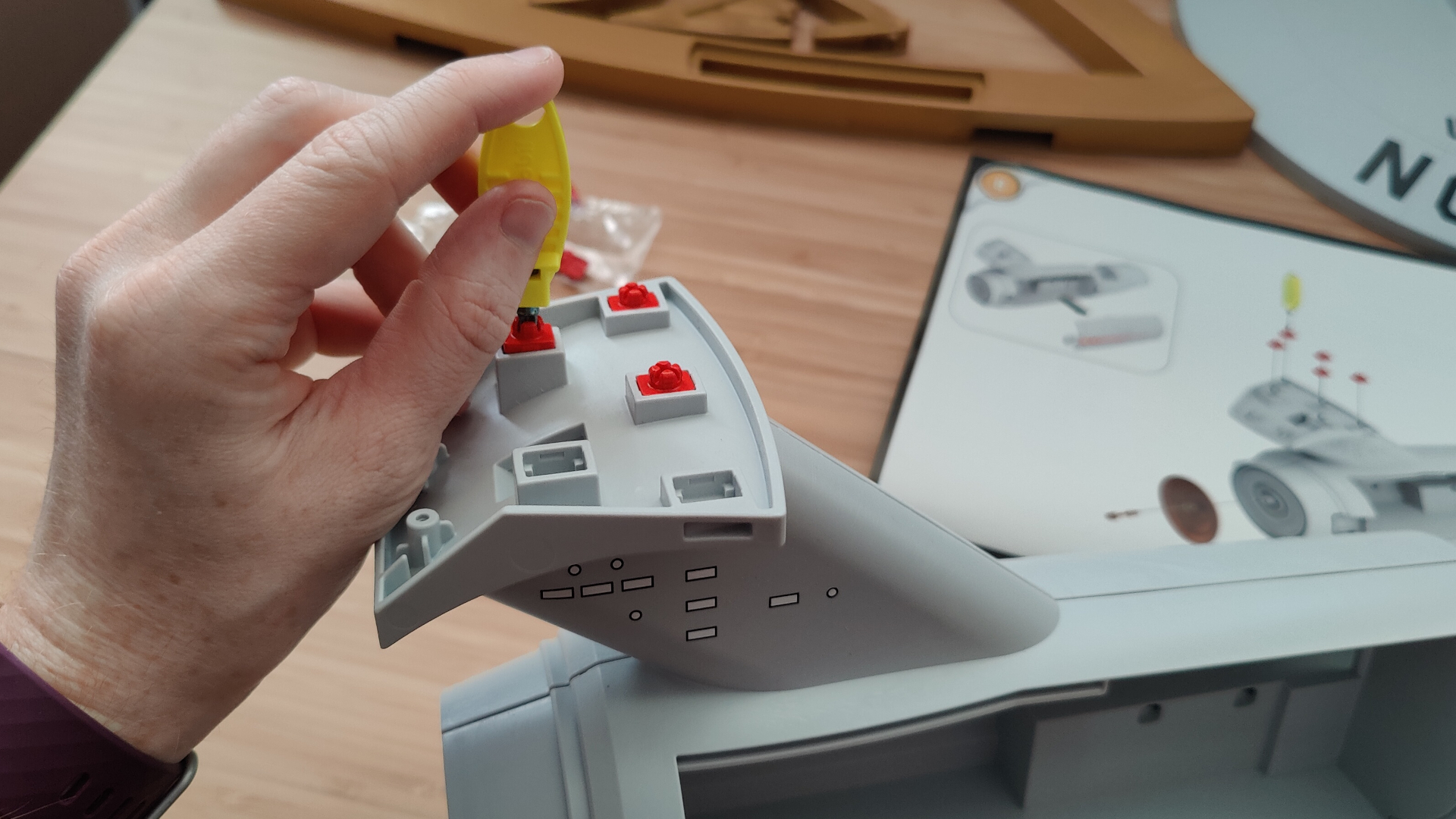
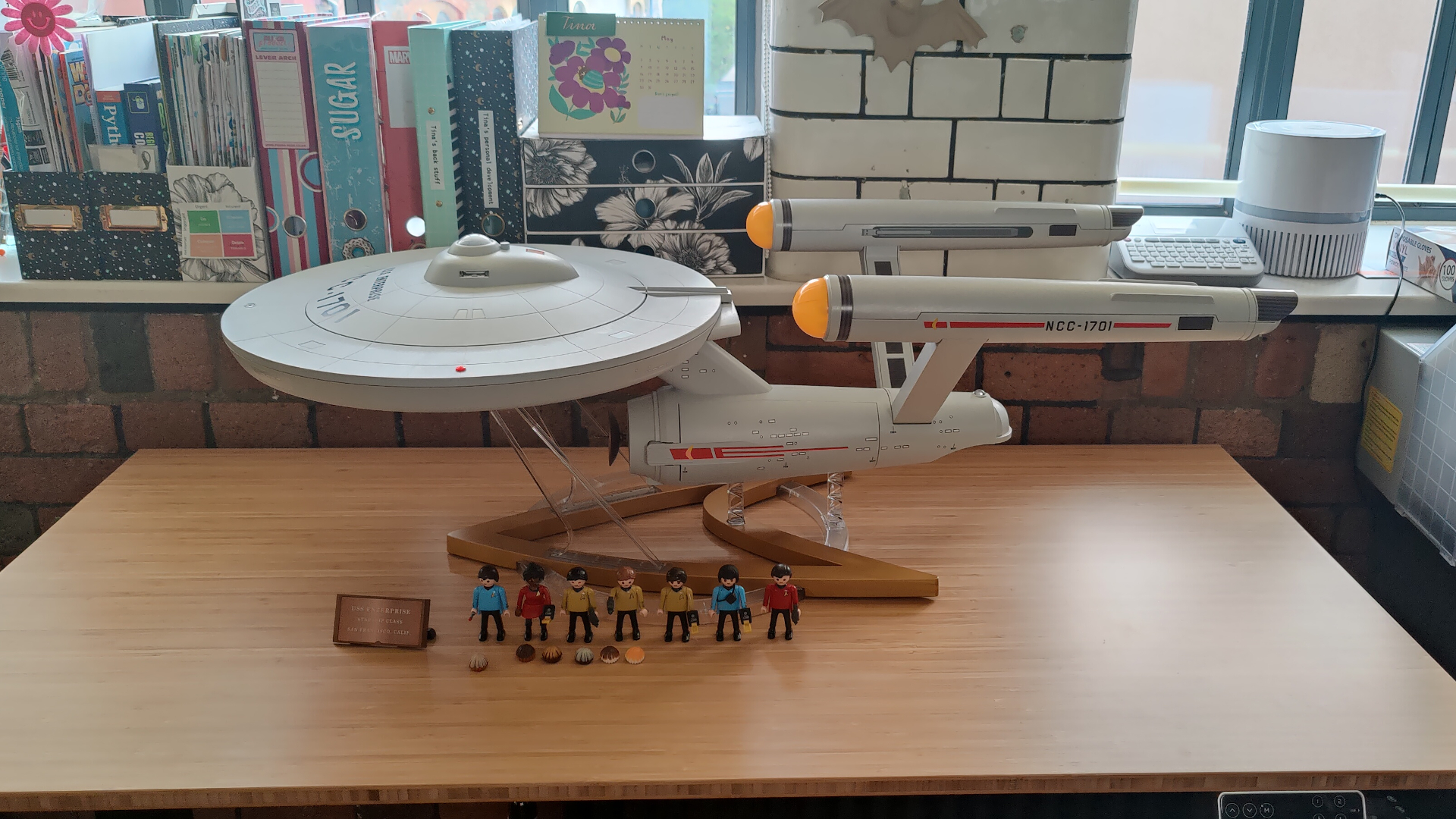
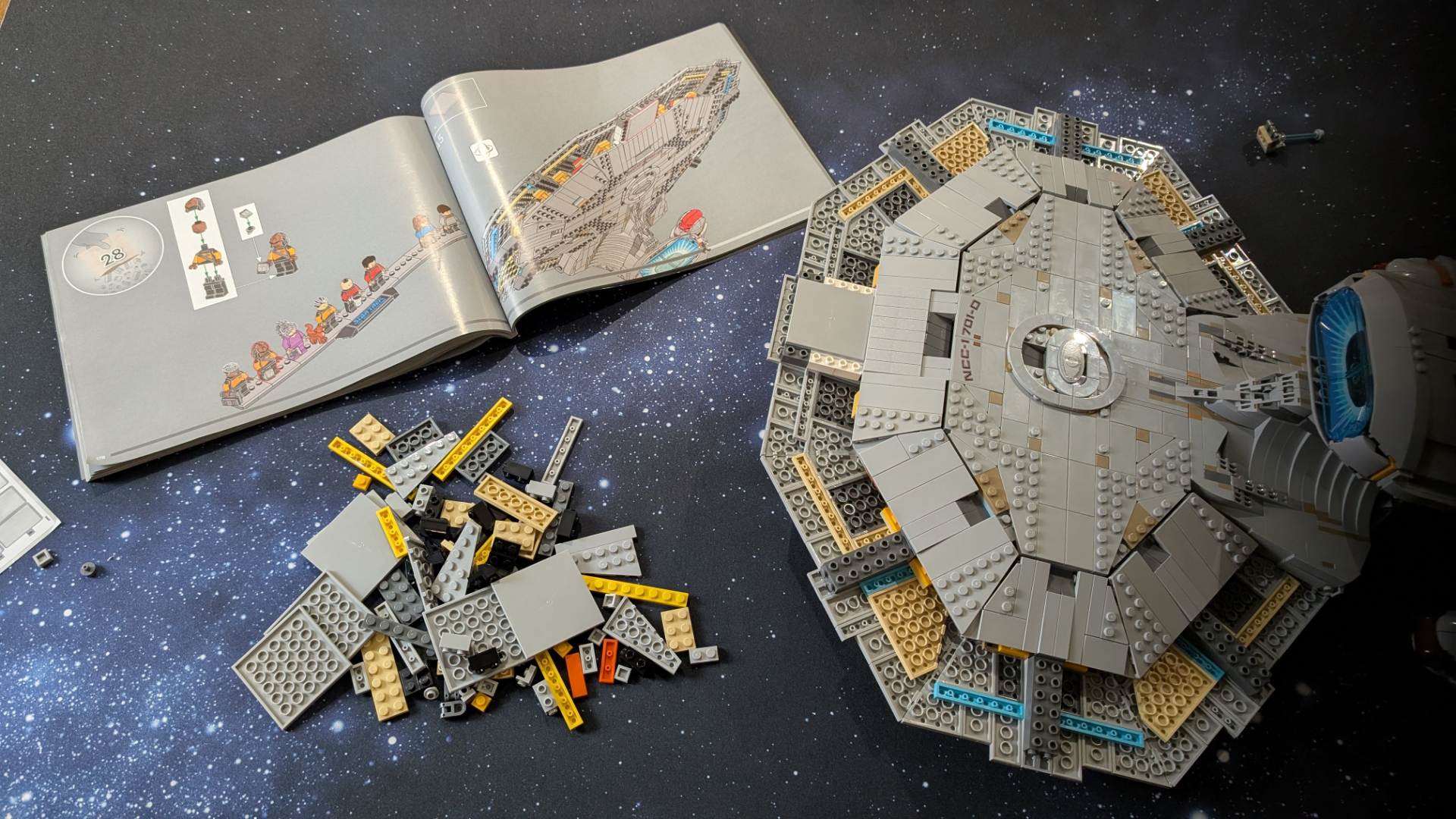

When it comes to comparing the design of the two models, there are several things you can look at, despite the two models replicating the same ship. Firstly, the number of pieces that come with each set that you need to assemble. Lego's set offers you 3,600 pieces of building, while Playmobil offers a meager 150. That's simply because with Lego's set, the idea is to build the ship using lots of little plastic bricks, while the purpose of Playmobil's set is to assemble fewer, larger parts so you can get to playing with and displaying the set, along with the characters.
Naturally, Lego's new set is considerably more challenging and time-consuming to assemble. 3,600 pieces means you need to set aside several hours, if not a couple of days, to build this set. Large parts of it are mirrored, but it doesn't feel boring or repetitive. There are a couple of fiddly and flimsy parts towards the end, but overall it's an enjoyable build. Whereas Playmobil's Enterprise model has larger parts that clip together without any issue. The only fiddly details came from some smaller parts for the interior of the ship and plenty of stickers, but overall it was a relatively quick and enjoyable build.
Both sets are behemoths, although the Playmobil model dwarfs Lego's, measuring at 39.4 x 18.9 x 13.4 inches as opposed to 11 x 19 x 24 inches. Yes, Playmobil's model measures over a meter in length and can be hung from the ceiling, using the hanging wires included, whereas Lego's set comes on an angled stand to display.
Both can be played with, although they make for seriously impressive display items. The interior of the Playmobil can be accessed through a detachable roof, and it features LED lights and sound effects, too. Lego's set doesn't offer you anywhere near the same level of playability and really is designed as a display model for collectors and super-fans only.
Detail and Functionality
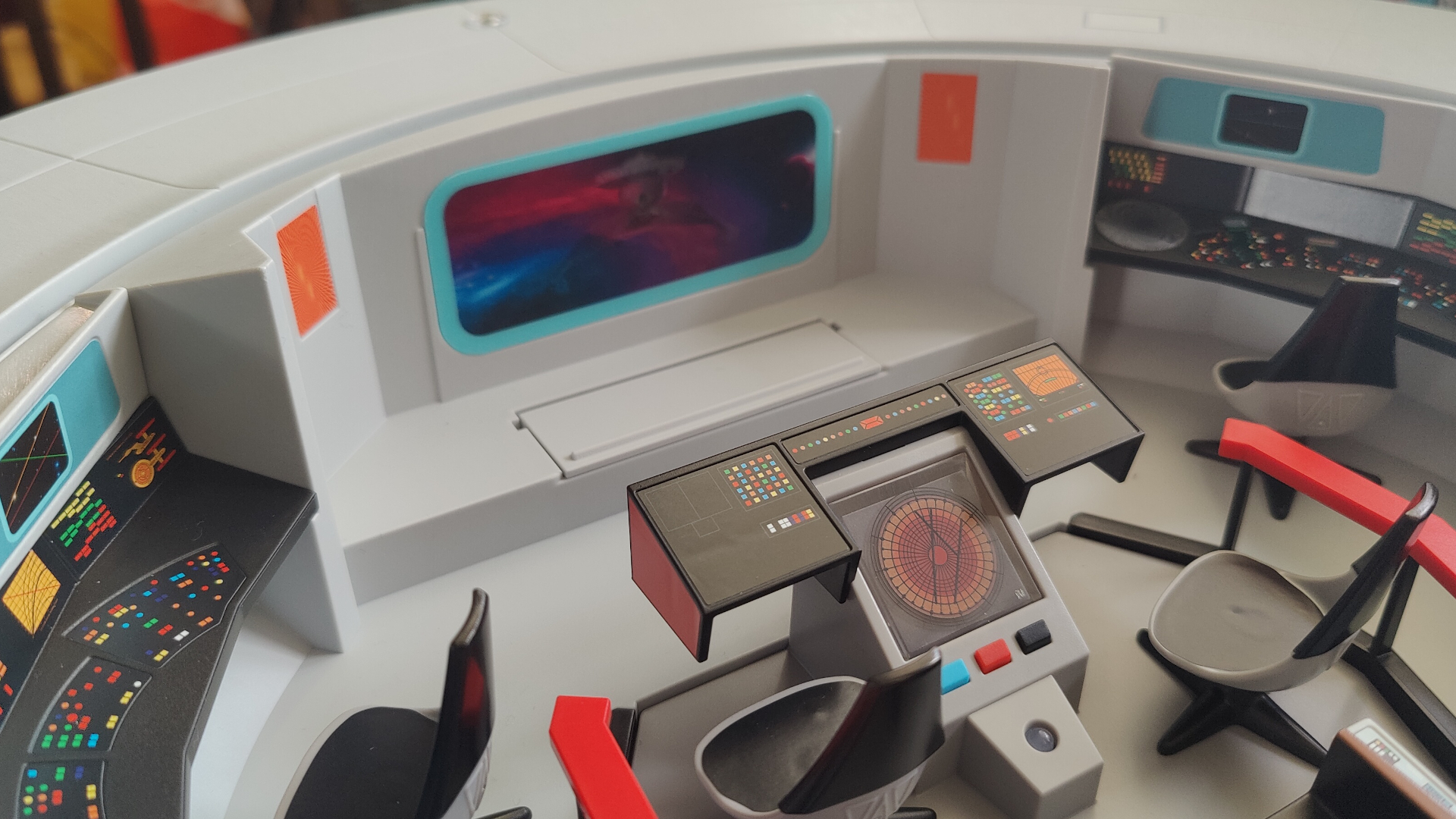

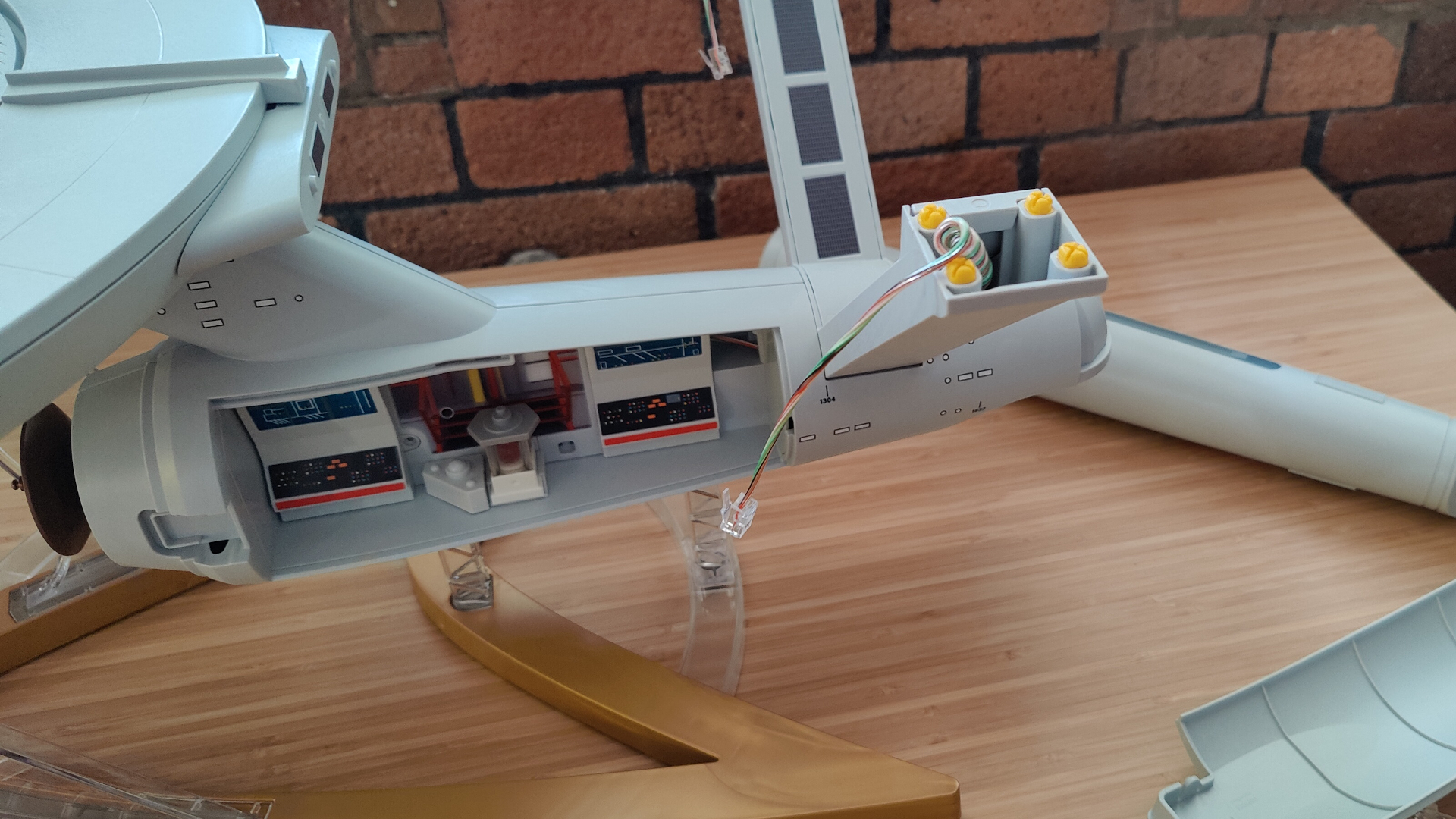

We touched on the playability of the Playmobil Enterprise and the lack of it in the Lego set. The Playmobil set does offer LED light effects as well as sound effects, so you can go boldly where no Playmobil set has gone in your own adventures, and you get an augmented reality app. The LEDs used are multicolor and the sound effects range from lines from fan-favorite characters to warning alerts and more. No such features appear in Lego's set.
That's not to badmouth Lego's set at all, it's an accurate and faithful recreation of the iconic ship. It comes with its own display stand and information plaque, which emblazons the back wall of the ship's bridge and features key facts about the Enterprise. While there are some stickers and printed parts (these include the ship's registration along with emblems and decor), these are great additions and not too much hassle to attach.
Both sets come with figures, or minifigures. In Playmobil's set, you get Captain Kirk, Spock, Uhura, McCoy, Sulu, Scotty and Chekov figures. Lego's differs though, as you get Captain Jean-Luc Picard, Commander William Riker, Lieutenant Worf, Lieutenant Commander Data, Dr. Beverly Crusher, Lieutenant Commander La Forge, Counselor Deanna Troi, Bartender Guinan and Wesley Crusher. They also come with accessories, which include a teacup, trombone with a stand, a phaser, tricorder, engineering case, PADD, bottle, portable tractor beam generator and a cat figure.
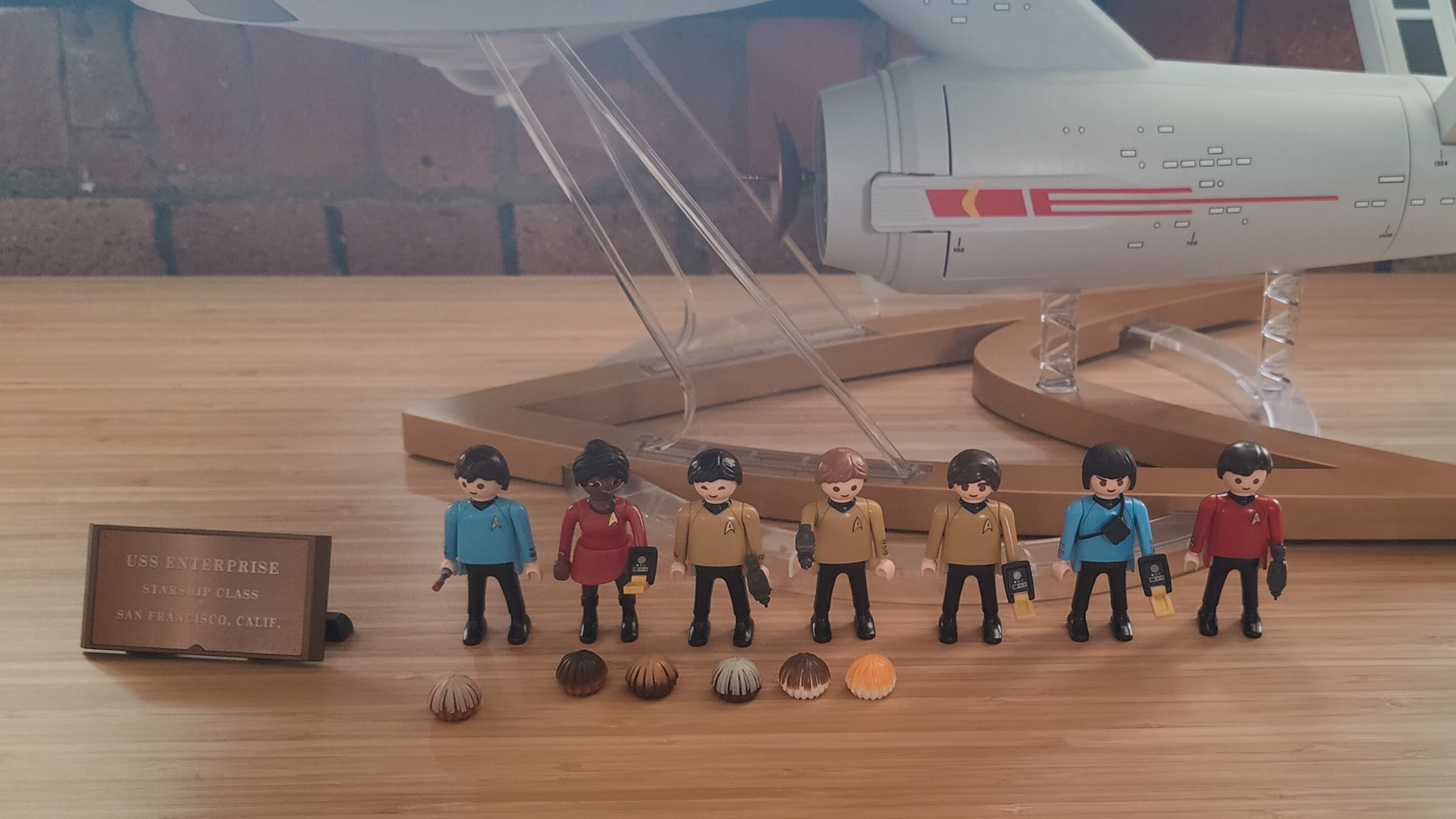
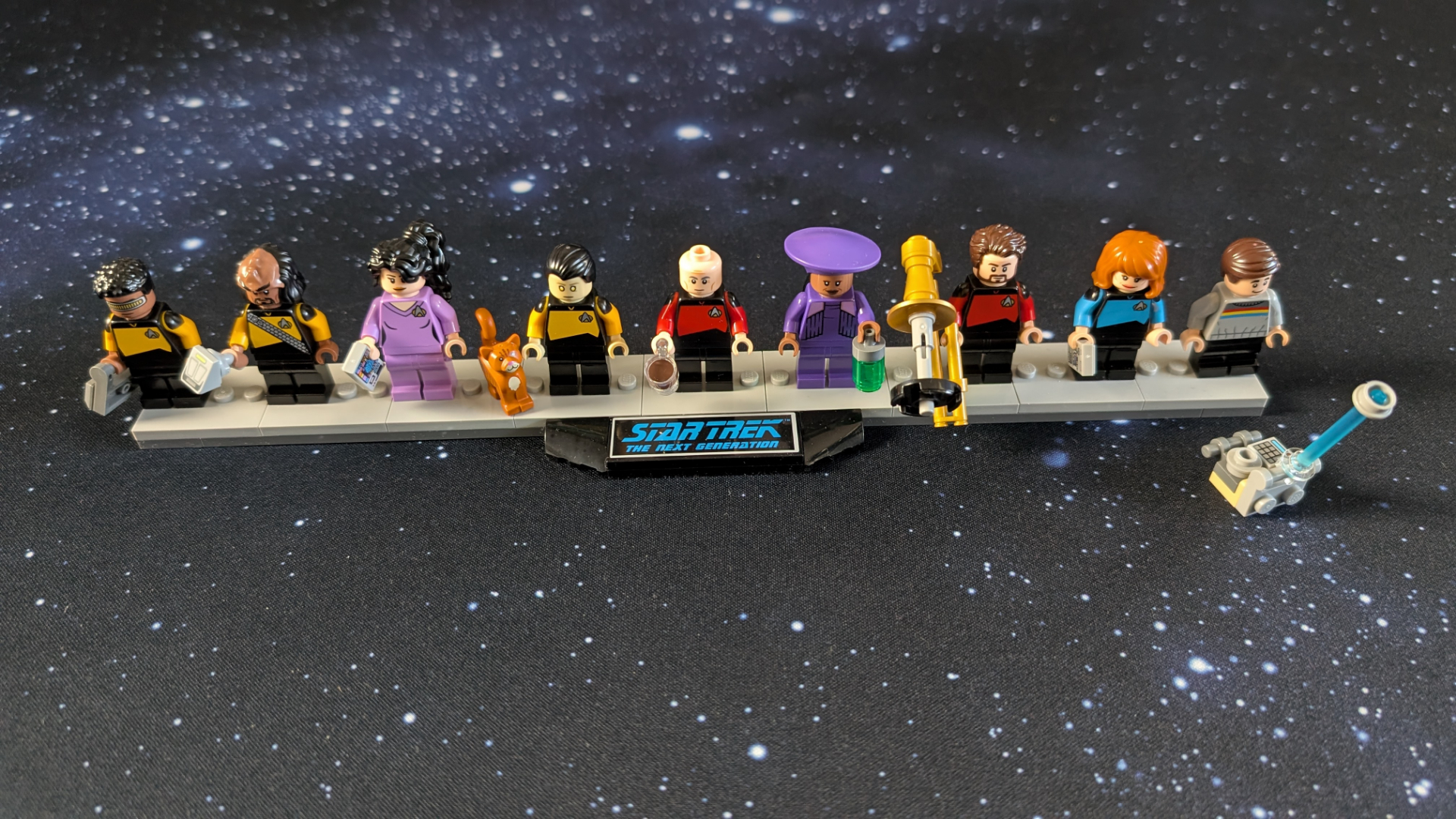
As mentioned in the section above, Playmobil's model also features some fine hanging wires, so your ship can hang from the ceiling and look as if it's venturing across the final frontier. While this isn't a feature of the Lego set, it probably wouldn't be a good idea, as a fall from any kind of height could put you back to square one with building it.
The key difference here is that one is so obviously a display piece and the other is a display piece with some cool playable features. The Lego set is aimed at those aged 18 and above, while the Playmobil set is for Trekkies over the age of 10. Yes, the Playmobil set is sturdier and has more playable features, but the Lego set has such great appeal.
Price
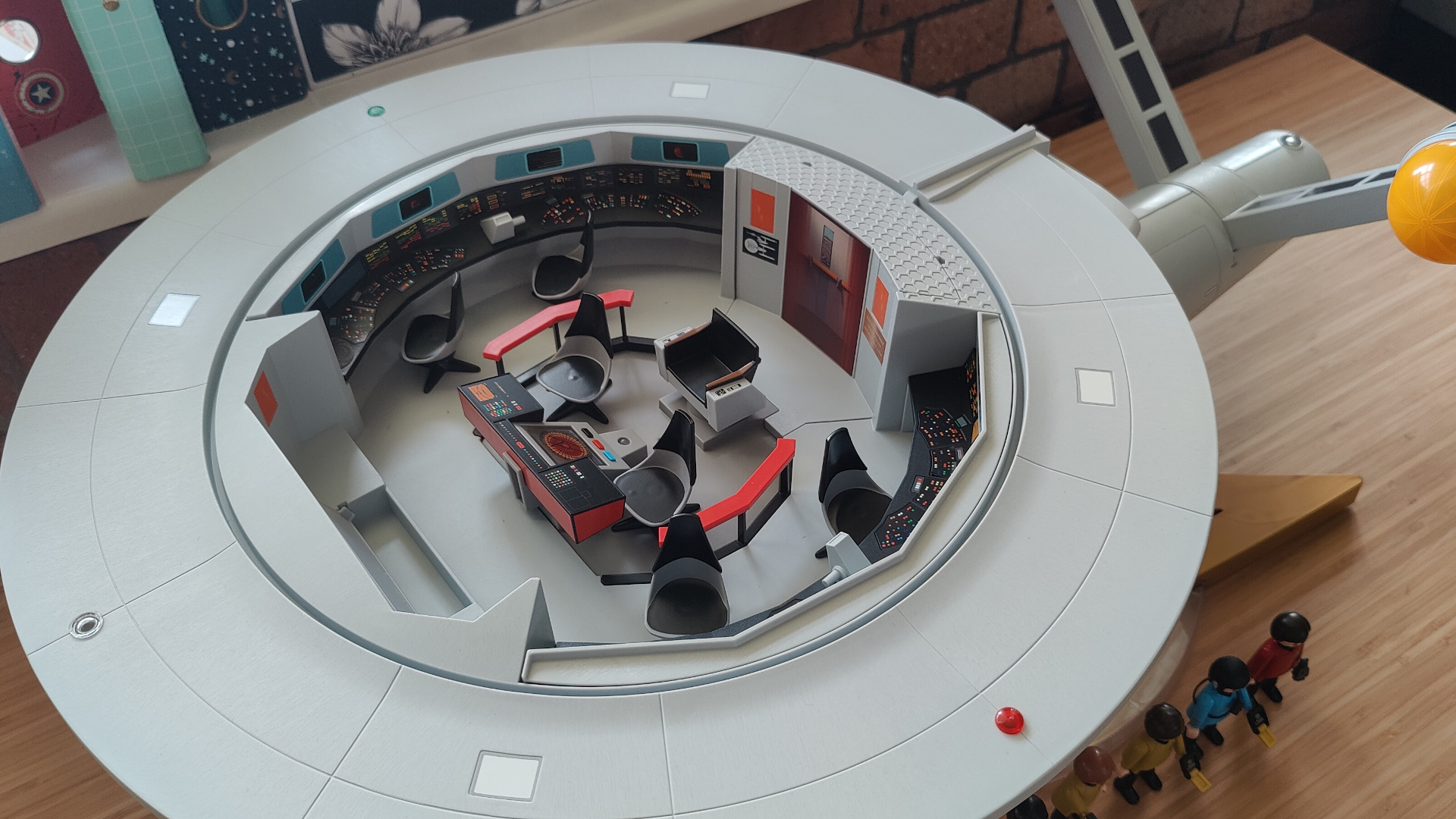
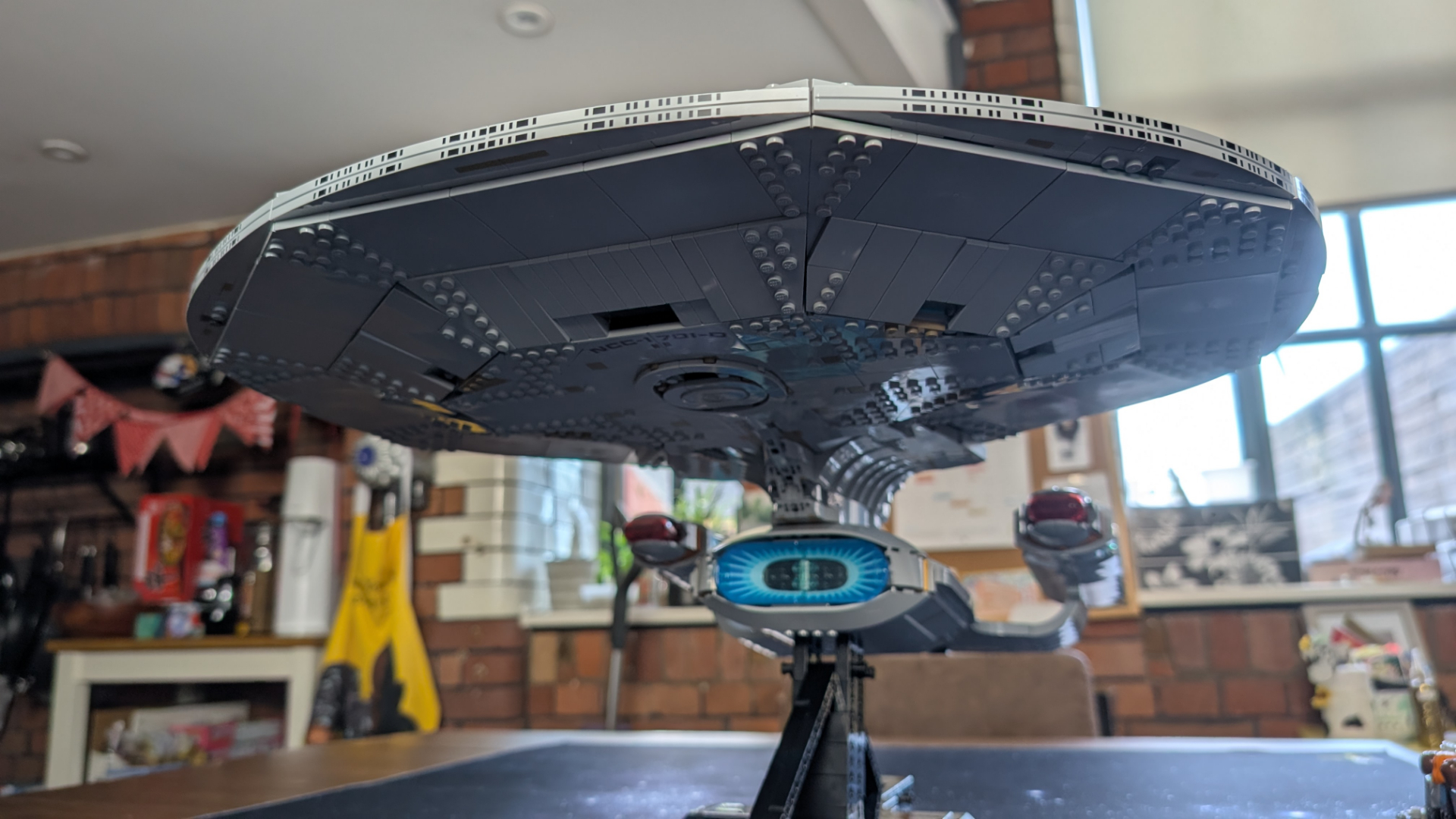
A key factor in deciding if something is worth it, or indeed whether or not you'll actually buy it, is the price. Now, it's worth noting that Playmobil's U.S.S. Enterprise model has been around for a few years now, so it's come down in price since it first hit store shelves.
Playmobil's model first cost $500, which is a lot. It now typically retails for between $250 and $350, going off its price history, which is considerably less.
Lego's brand-new U.S.S. Enterprise will set you back $399.99. This is steep, but you get more than just the joy of showing it off or imagining your own adventures — the experience of building the whole thing is great, and it's not just clipping together some large parts. It's a journey and an experience as opposed to a play and display model.
Verdict
It would be easy to sit on the fence and say they're both good. But that's not why you're here. It's also not why we wrote the article, as tempting as it is. In short, however, it depends on what you want from your set.
If you're looking for playable options and extra effects, the Playmobil model is the better option. There's far less hassle in the building process, it's (now) cheaper, and it features a removable roof along with light and sound effects, as well as an app.
However, if you're a collector, a Lego fan or if you want to proudly display your ship, it's the Lego U.S.S. Enterprise by a country mile. Yes, the Playmobil model is larger, but bigger isn't always better. The satisfaction of the build, the incredible detail on the finished model and it being displayed at an angle really sells the Lego Enterprise as the better model if you're looking for anything other than playability.
]]>Over the decades, a select group of authors and stories have risen above the rest, earning prestigious accolades like the Hugo, Nebula, Locus, and Arthur C. Clarke Awards.
This quiz is your chance to dive into the literary side of sci-fi greatness. You'll encounter questions about iconic novels that reshaped the landscape, short stories that packed a universe into a few pages, and the brilliant minds behind them, from golden age pioneers to contemporary visionaries.
Whether it's Ursula K. Le Guin's philosophical depth, Octavia Butler's bold social commentary, or Ted Chiang's elegant precision, these works have left a lasting mark on speculative fiction.
See how well you score below!
Governments and private companies alike are preparing missions that could redefine how humans live and work in space, deepen our understanding of the solar system and push exploration farther than it's gone in decades.
Over the course of the year, space agencies and commercial providers are targeting a wide range of milestones, including NASA's first crewed Artemis mission beyond low Earth orbit, the debut of commercial space stations, new lunar landers and rockets, asteroid sample-return attempts and the launch or arrival of powerful next-generation space telescopes. Together, these missions reflect a rapidly evolving spaceflight landscape.
Here are the top space missions to watch in 2026.
1) Artemis 2 sends astronauts around the moon
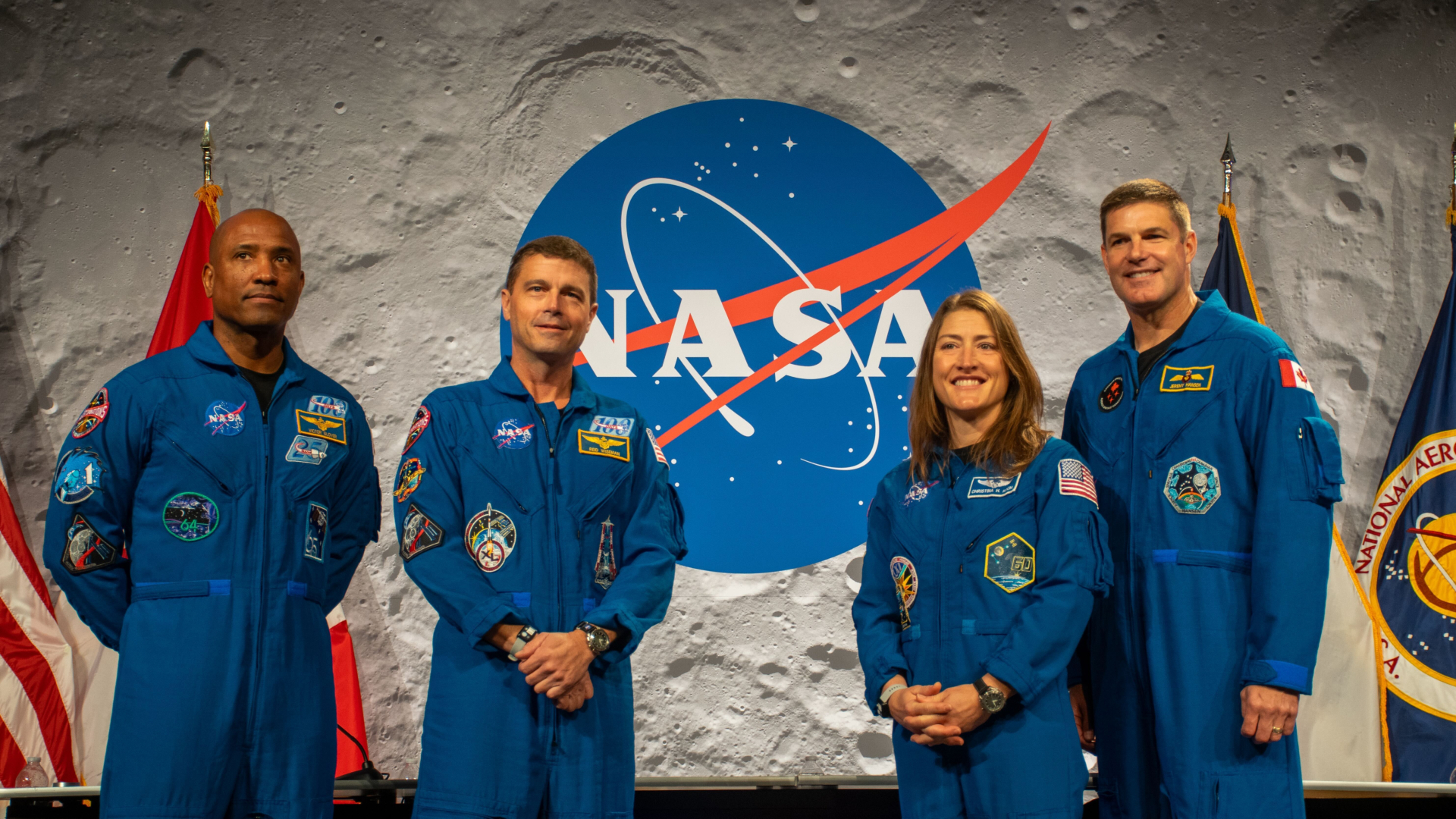
NASA's Artemis 2 mission will carry four astronauts on a roughly 10-day journey around the moon, marking humanity's first crewed mission beyond low Earth orbit since Apollo 17 in 1972.
Flying aboard the Orion spacecraft atop the Space Launch System (SLS) megarocket, Artemis 2 will test life-support systems, navigation and communications in deep space ahead of future lunar landings. The crew includes NASA astronauts Reid Wiseman (commander), Victor Glover (pilot) and Christina Koch (mission specialist), along with Canadian Space Agency astronaut Jeremy Hansen (mission specialist). The mission is currently targeting a launch no earlier than Feb. 5, 2026, though the exact date will depend on technical readiness, with the available launch window extending into April.
Artemis 2 is a critical proving ground for future lunar landings, including Artemis 3. Its success would mark the true beginning of NASA's sustained crewed return to the moon.
2) SpaceX pushes Starship toward Mars-ready milestones
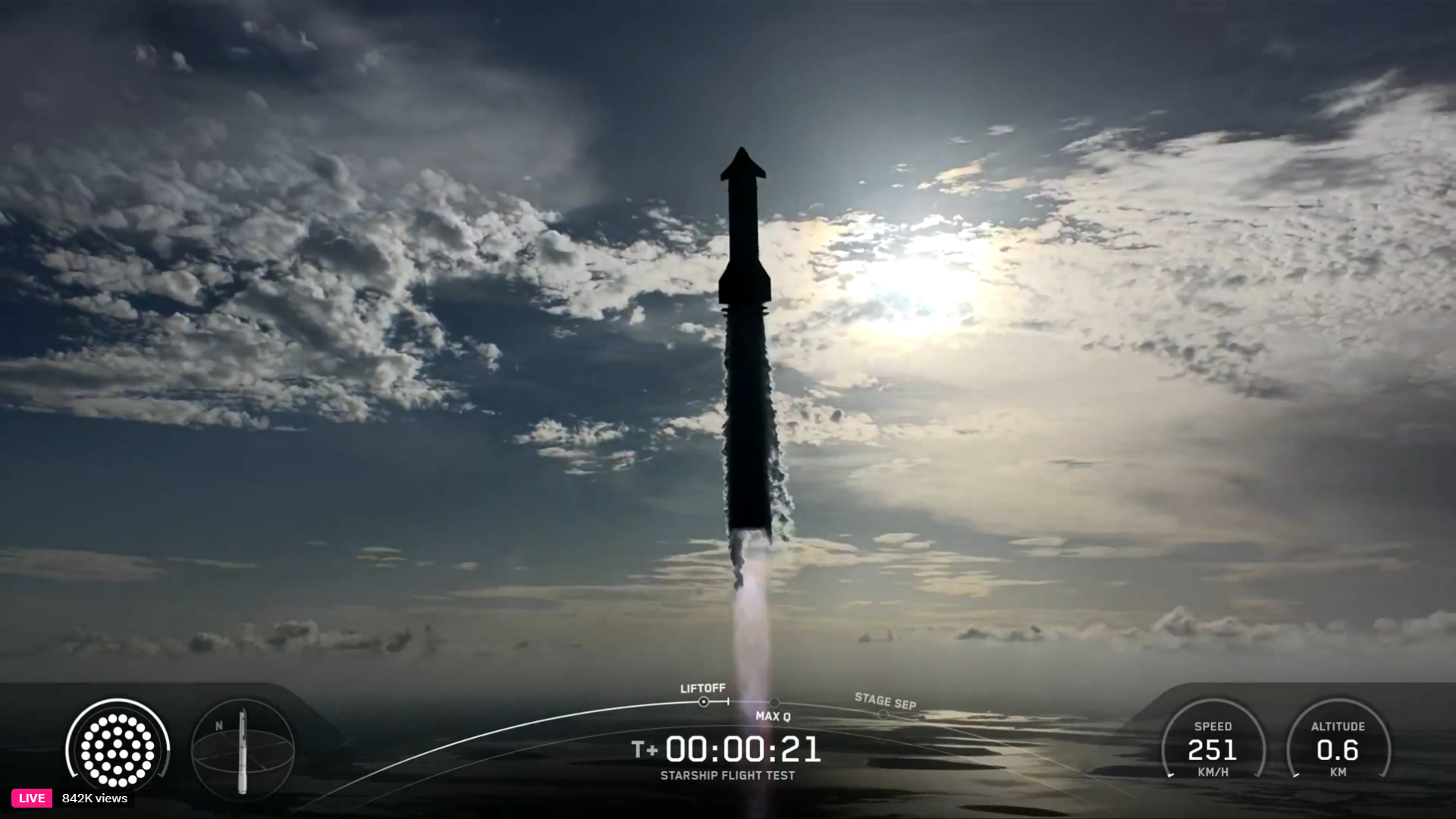
SpaceX hopes to make 2026 a breakout year for its Starship megarocket by flying the vehicle to Earth orbit for the first time and demonstrating in-orbit cryogenic propellant transfer, a critical capability for future deep-space missions, such as journeys to the moon and Mars. While company founder and CEO Elon Musk has suggested a Mars launch attempt in 2026 is possible, he has also acknowledged the odds are roughly "50–50," making orbital operations and refueling demonstrations the more likely near-term goals.
In parallel, SpaceX is working to achieve rapid reuse of both Starship elements — the Super Heavy booster and Ship upper stage. Even without an interplanetary launch, successfully reaching orbit, transferring propellant in space and quickly reusing hardware would represent a major technological leap — and could make 2026 a pivotal year in Starship's path toward enabling sustained human exploration beyond Earth.
3) Blue Origin's Mark 1 lunar lander demonstration
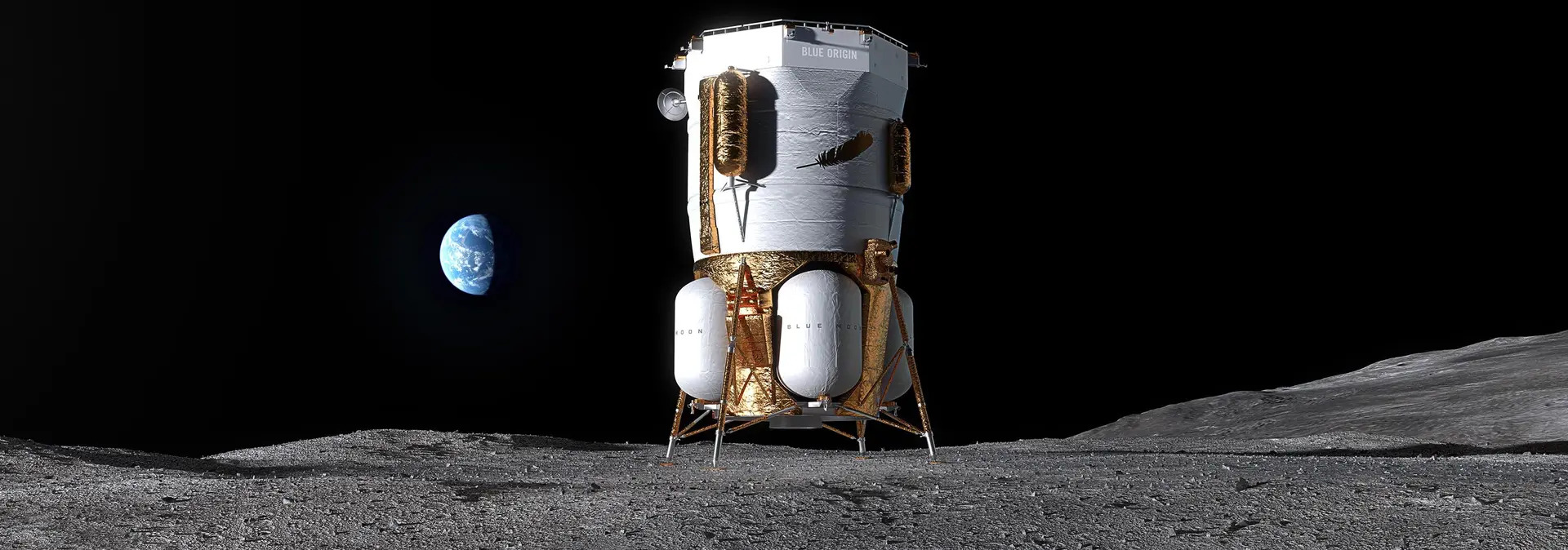
Blue Origin plans to launch its Blue Moon Mark 1 (MK1) lunar lander on a robotic demonstration mission to the moon in early 2026, with the spacecraft targeting a landing near Shackleton Crater at the moon's south pole.
Standing about 26 feet (8 meters) tall, the lander is designed to deliver heavy cargo to the lunar surface and will fly atop the company's New Glenn rocket. MK1 is the largest commercial lunar cargo lander ever built, capable of carrying significantly more payload than any of the vehicles sponsored by NASA's Commercial Lunar Payload Services (CLPS) program. Although uncrewed, the mission will test precision landing technologies and surface operations critical to future lunar infrastructure, marking Blue Origin's first attempt to reach the moon and a major step toward establishing commercial lunar logistics.
Ahead of launch, the company plans to conduct fully integrated ground tests to validate MK1's systems and confirm flight readiness. If all goes according to plan, the mission's payload will include NASA's SCALPSS (Stereo Cameras for Lunar Plume Surface Studies) instrument, which will image the lunar surface during and after descent to study how landing plumes interact with the moon's regolith.
4) Boeing's Starliner-1 mission to the International Space Station
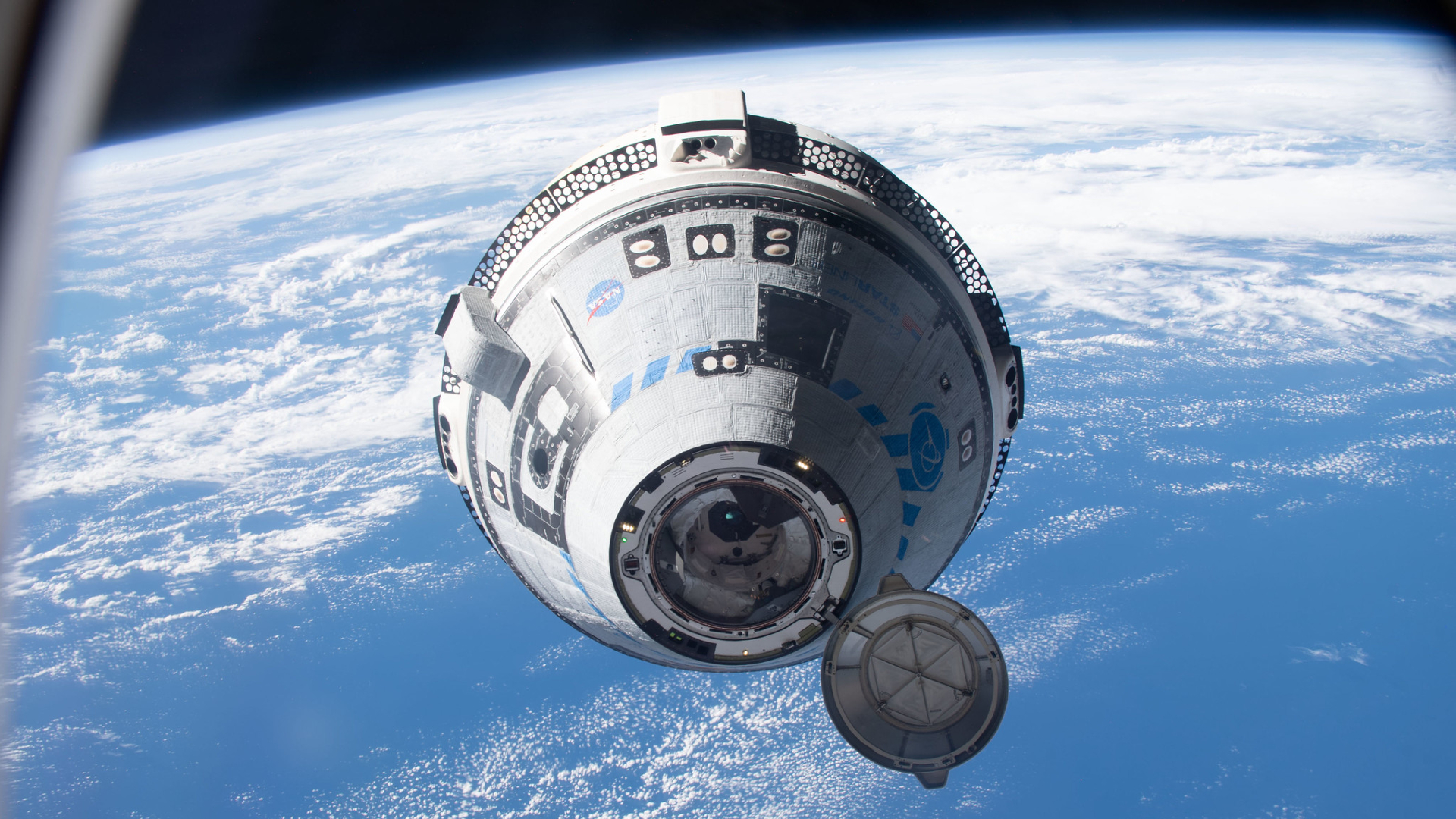
Boeing's next Starliner flight, known as Starliner-1, is now planned as an uncrewed mission to the International Space Station (ISS), with launch targeted for no earlier than April 2026. The change follows issues encountered during Starliner's first crewed flight test in 2024, when thruster problems prevented the spacecraft from returning its astronauts to Earth as planned. (The duo, NASA's Suni Williams and Butch Wilmore, eventually came home aboard a SpaceX Crew Dragon capsule.)
Rather than carrying astronauts, Starliner-1 will focus on validating spacecraft upgrades, testing systems performance and delivering cargo to the orbiting lab as Boeing and NASA work toward full crew certification. NASA has since adjusted Boeing's Commercial Crew contract, emphasizing safety and additional testing before Starliner resumes astronaut flights. The mission remains a critical step toward establishing Starliner as a second operational U.S. crew vehicle alongside Crew Dragon. Successfully completing the flight would help restore long-term redundancy for ISS crew rotations and move Boeing closer to full certification under NASA's Commercial Crew Program.
5) Haven-1 launches first commercial space station
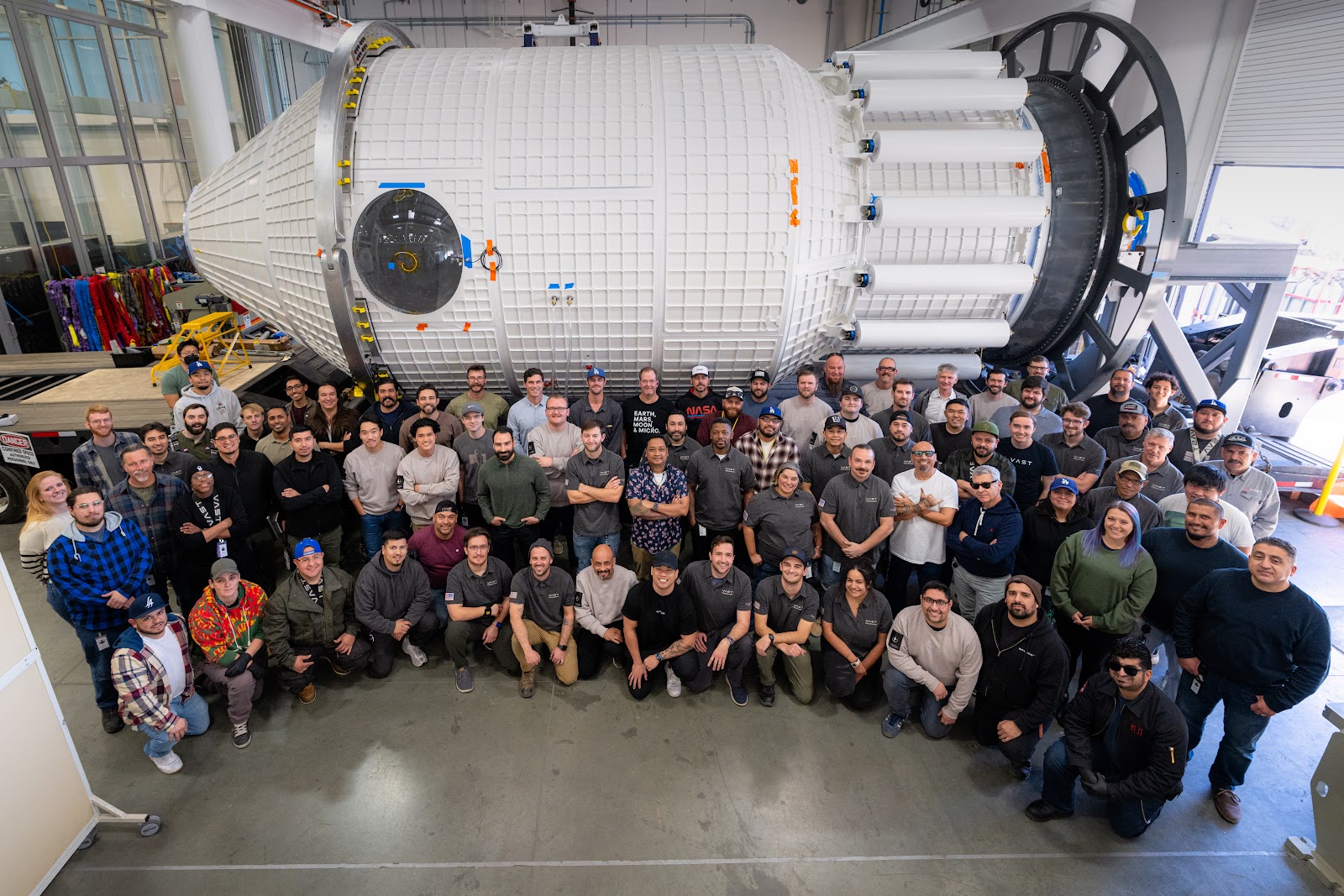
California-based startup Vast plans to launch Haven-1, the world's first privately developed stand-alone space station, no earlier than May 2026.
The single-module station is designed to host short-duration crewed missions of up to 30 days, supporting research experiments, commercial activities and technology demonstrations. Haven-1 will ride into orbit aboard a SpaceX Falcon 9 rocket, with astronauts traveling to and from the station in Crew Dragon capsules. If successful, the mission could herald a new era of commercial space stations, potentially replacing or supplementing the aging ISS in the coming decade.
6) China's Tianwen-2 reaches a 'quasi-moon' asteroid
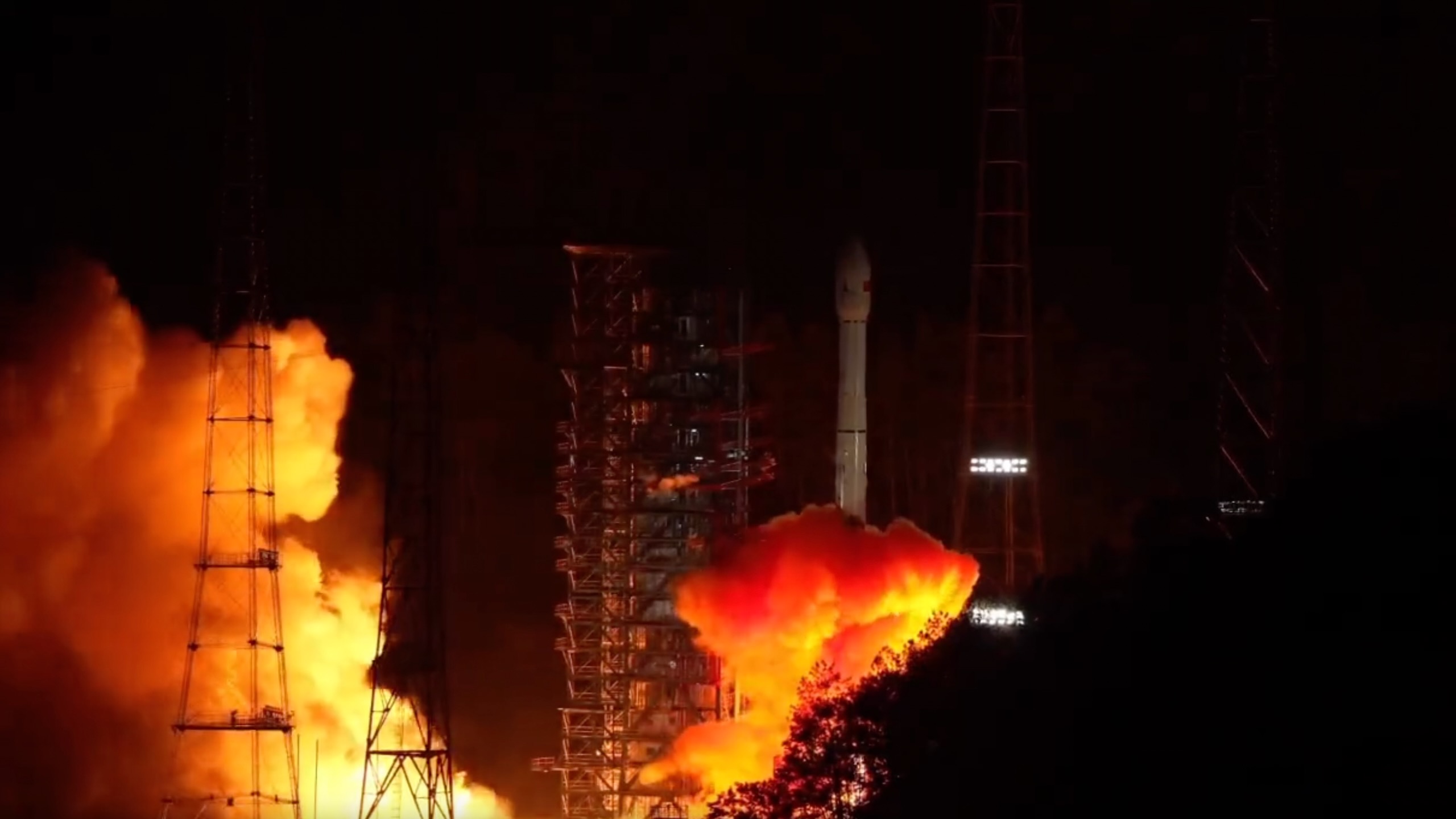
China's Tianwen-2 spacecraft is expected to arrive at the near-Earth asteroid Kamoʻoalewa in July 2026. The tiny object is often called a "quasi-moon" because its orbit around the sun closely tracks Earth's path.
Tianwen-2 will attempt to collect surface samples, which are planned to return to Earth in late 2027, providing rare material for scientists to study the early solar system. Some researchers speculate the asteroid could be a fragment of the moon, making the samples especially valuable, though this hypothesis has yet to be confirmed. After the sample return, Tianwen-2 will continue its journey toward a main-belt comet for future exploration.
7) Rocket Lab debuts its Neutron rocket
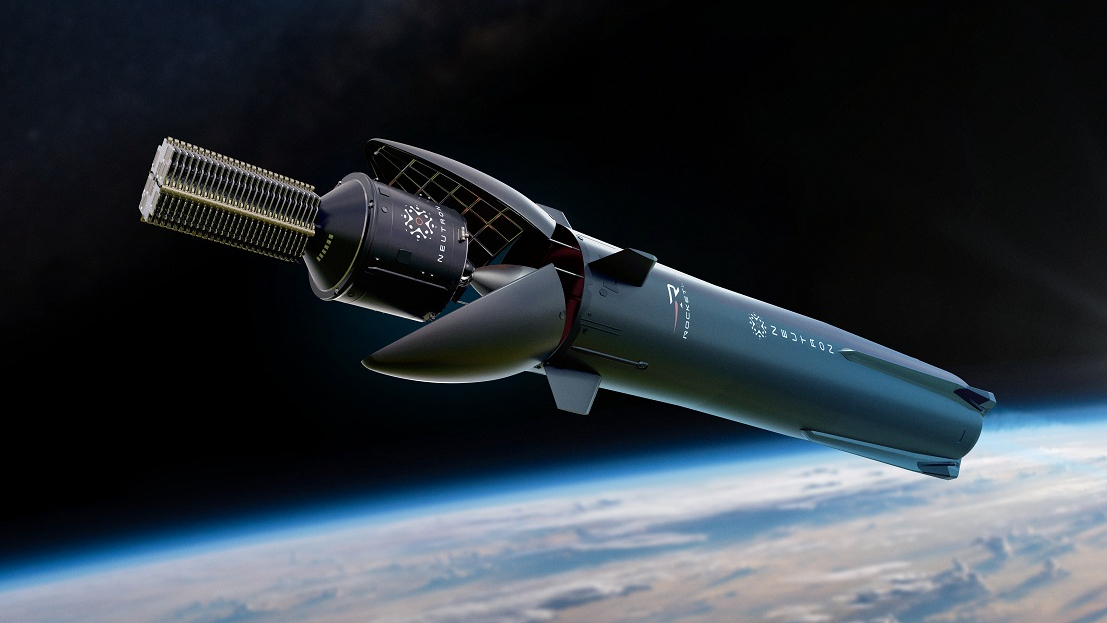
Rocket Lab plans the first launch of its Neutron rocket in mid-2026, marking a major expansion of the company beyond small-satellite launches. Standing roughly 131 feet (40 meters) tall, Neutron is designed to be partially reusable, with the first stage capable of landing vertically for rapid turnaround between flights.
Neutron is intended to deploy large satellite constellations, carry national security payloads and eventually support crewed missions, representing Rocket Lab's entry into the competitive heavy-lift launch market. The rocket's debut has been delayed several times from its original 2024-2025 target as Rocket Lab refined the design and conducted additional testing to ensure reliability. Its upcoming launch will also demonstrate the company's innovative payload fairing, nicknamed the "Hungry Hippo," which opens and closes in orbit to facilitate payload deployment and recovery, underscoring Rocket Lab's ambitions to compete with SpaceX and other major providers.
8) China launches the Chang'e 7 mission to the lunar south pole
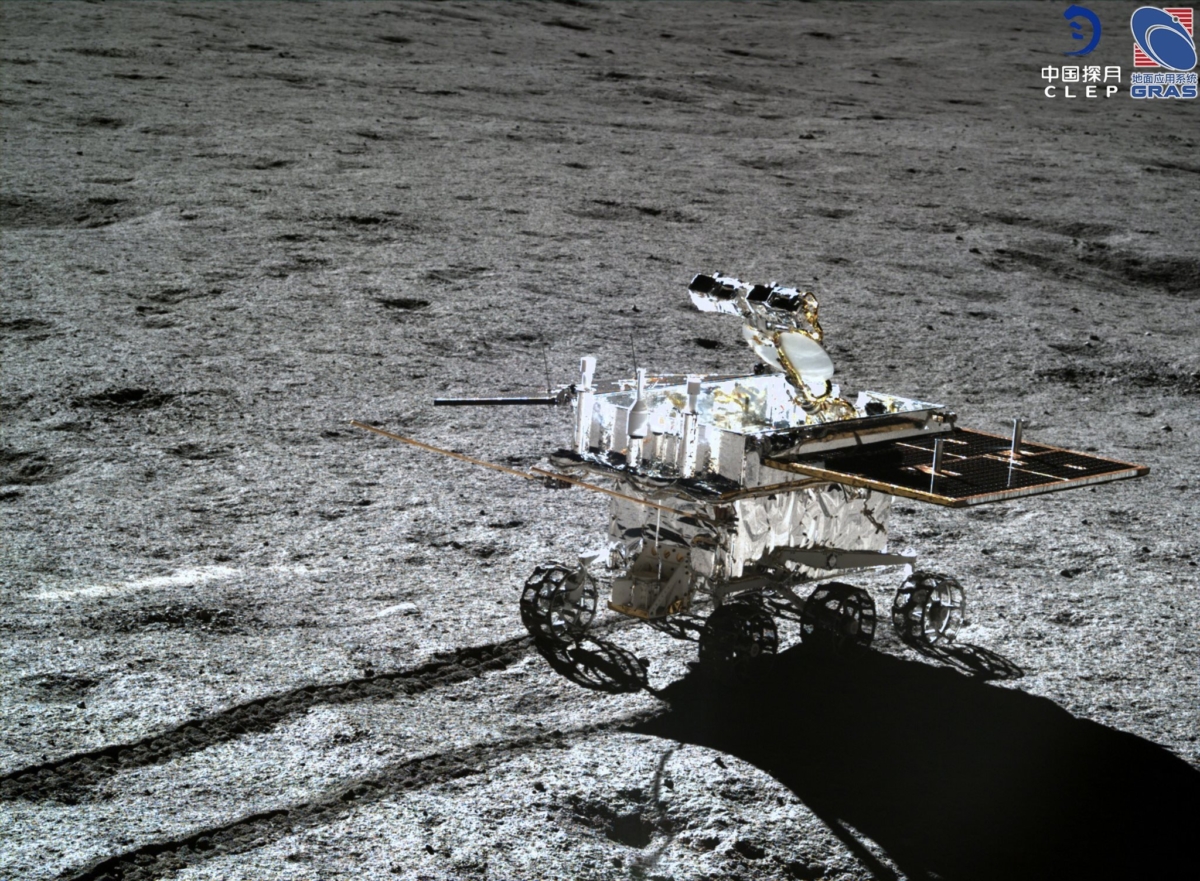
China's Chang'e 7 mission is scheduled to launch in mid- to late 2026, targeting the moon's south pole, a region believed to contain water ice in permanently shadowed craters. The mission features a combination of spacecraft: an orbiter to map the lunar surface, a lander and rover to explore and analyze resources on the ground and a small hopping probe capable of traversing challenging terrain that conventional rovers cannot reach.
Chang'e 7 will also deploy a relay satellite to ensure continuous communication with Earth and to support scientific observations in the polar region. The mission aims to locate and characterize potential water-ice deposits, assess terrain hazards and demonstrate technologies needed for future crewed lunar missions, representing a key step in China's long-term plan for a sustained presence on the moon.
9) ESA's Hera mission arrives at the Didymos asteroid system
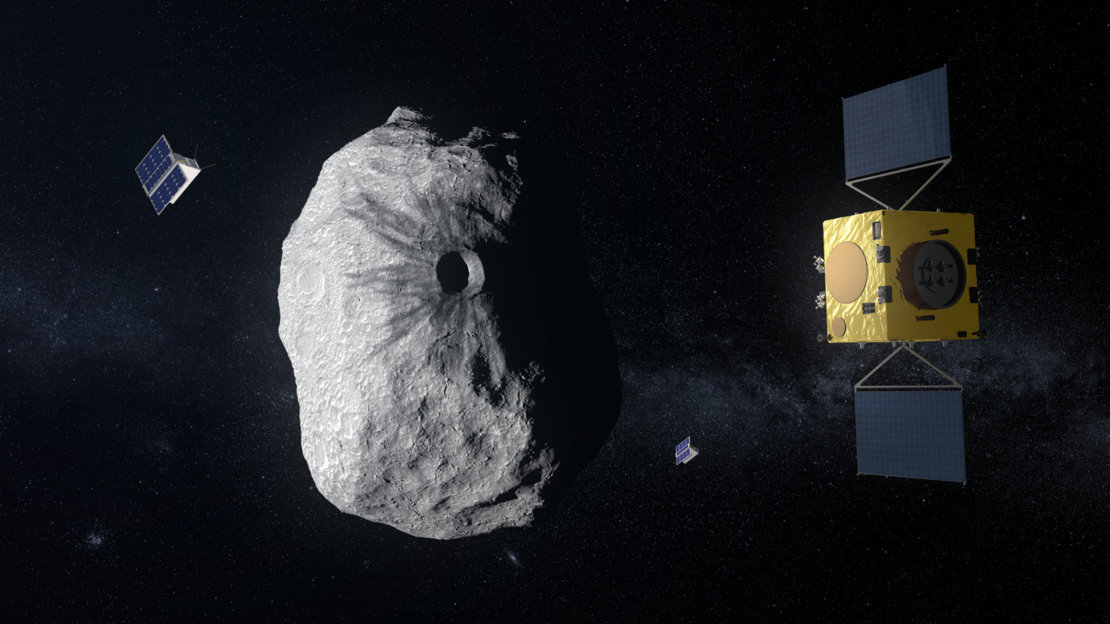
The European Space Agency's (ESA) Hera spacecraft is scheduled to arrive at the binary asteroid system Didymos in November 2026 to investigate the aftermath of NASA's 2022 DART impact, which successfully altered the orbit of the moonlet Dimorphos.
Hera will conduct high-resolution mapping of the impact crater, measure the asteroid's mass and internal structure, and deploy two cubesats for close-up observations of surface properties and debris. By combining these data, scientists will gain critical insight into how kinetic impactors can change an asteroid's trajectory — a key capability for planetary defense against potential Earth-bound threats and validating deflection techniques demonstrated by the DART mission.
10) BepiColombo finally reaches Mercury

After an eight-year journey involving multiple gravity-assist flybys of Earth, Venus and Mercury, ESA and JAXA's BepiColombo mission will enter orbit around Mercury in November 2026. Over the course of its long cruise, the spacecraft has returned valuable science data and close-up images while testing its instruments in the extreme environment near the sun.
Once BepiColombo reaches Mercury, the spacecraft will separate into two science orbiters: ESA's Mercury Planetary Orbiter (MPO), which will study the planet's surface and interior, and JAXA's Mercury Magnetospheric Orbiter (MMO), which will focus on Mercury's powerful and highly dynamic magnetic environment. Together, the orbiters will investigate Mercury's composition, geology, tenuous exosphere and magnetic field, helping scientists understand how the planet formed and evolved so close to the sun.
Operating just tens of millions of miles from the sun, BepiColombo must endure extreme temperatures and intense solar radiation, making it one of the most technically challenging planetary missions ever attempted — and one poised to deliver the most comprehensive view yet of the solar system's innermost world.
11) China launches the Xuntian space telescope
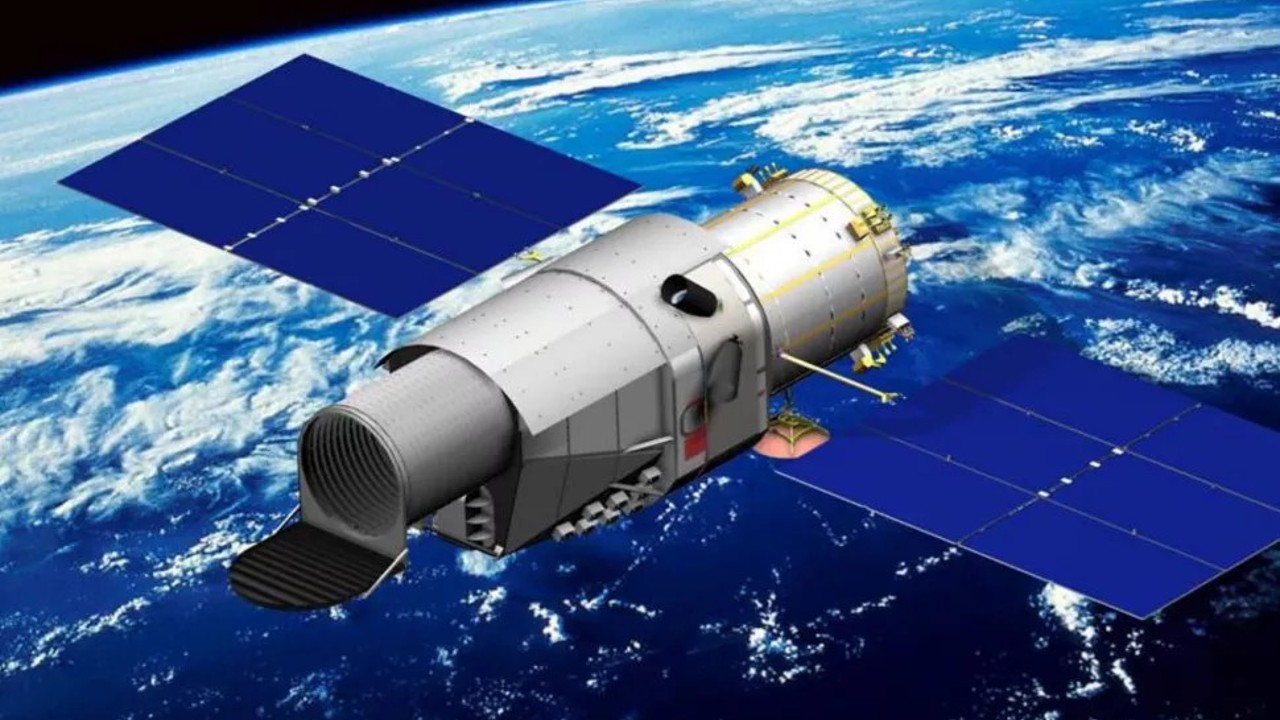
China's Xuntian space telescope, also known as the Chinese Space Station Telescope (CSST), is slated to launch in late 2026. The observatory houses a 2-meter-wide (6.6 feet) primary mirror, giving it light-gathering power comparable to — and in some survey modes surpassing — NASA's Hubble Space Telescope.
Xuntian will operate as an ultraviolet-optical observatory in an orbit that allows it to periodically dock with the Tiangong space station for servicing, repairs and upgrades. With an expected minimum 10-year mission, Xuntian's wide-field survey instruments will map vast regions of the universe, supporting studies of cosmology, dark matter and galaxy evolution, with the potential for mission extensions beyond its initial lifespan.
12) Dream Chaser makes its first orbital flight
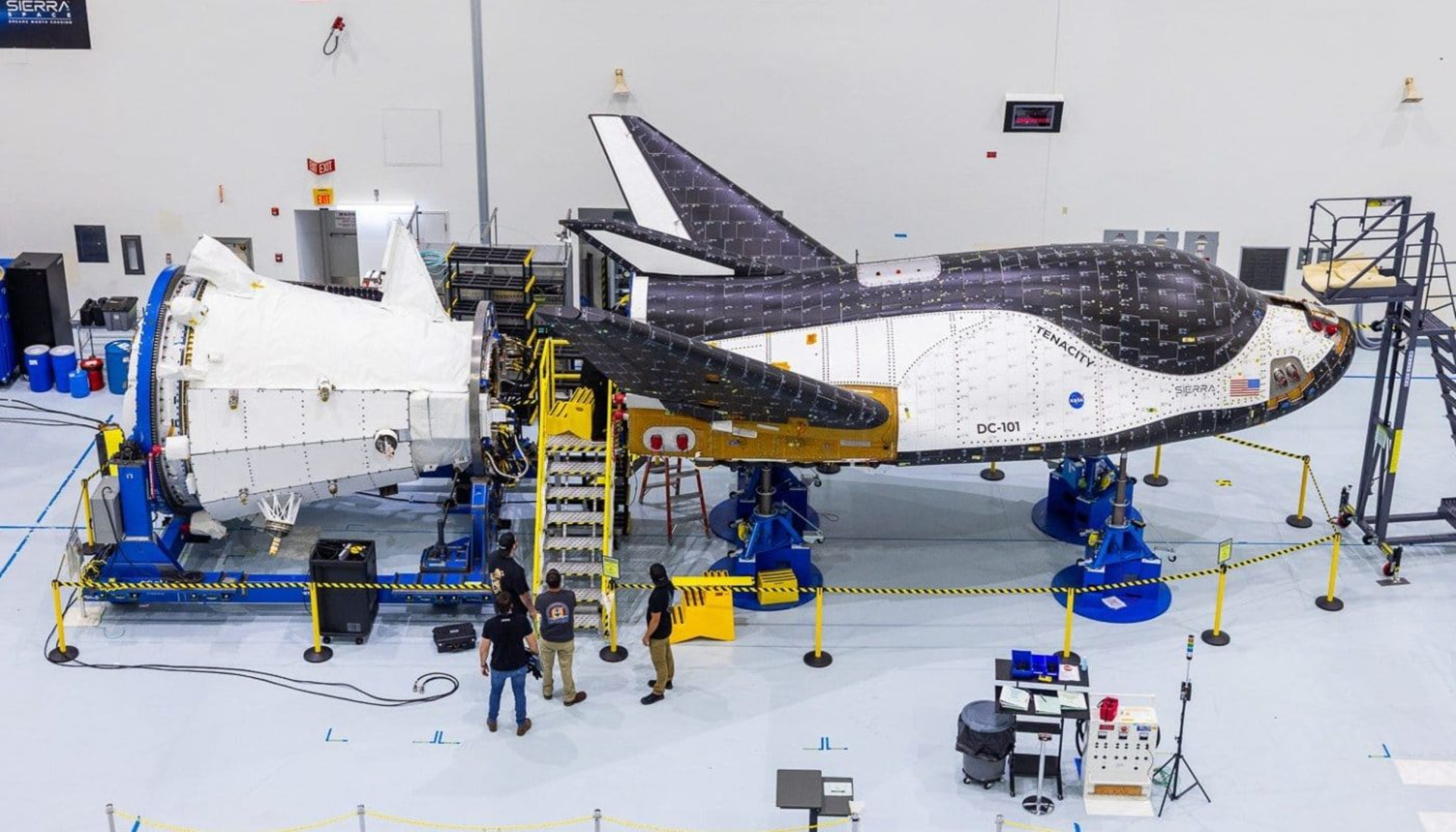
Sierra Space's Dream Chaser space plane is scheduled to make its first flight to orbit in late 2026, marking a major milestone for the reusable spacecraft after years of development and delays. The uncrewed mission will test Dream Chaser's ability to launch atop a conventional rocket, operate autonomously in orbit and return to Earth with a runway landing similar to a conventional aircraft.
Dream Chaser is designed to provide a gentler reentry than capsule-based spacecraft for delivering more delicate scientific experiments and time-sensitive cargo from space. The vehicle is intended to support future cargo resupply missions to the ISS, and, if all goes according to plan, Sierra Space ultimately plans to develop a crewed version capable of carrying astronauts.
13) NASA's Nancy Grace Roman Space Telescope launches
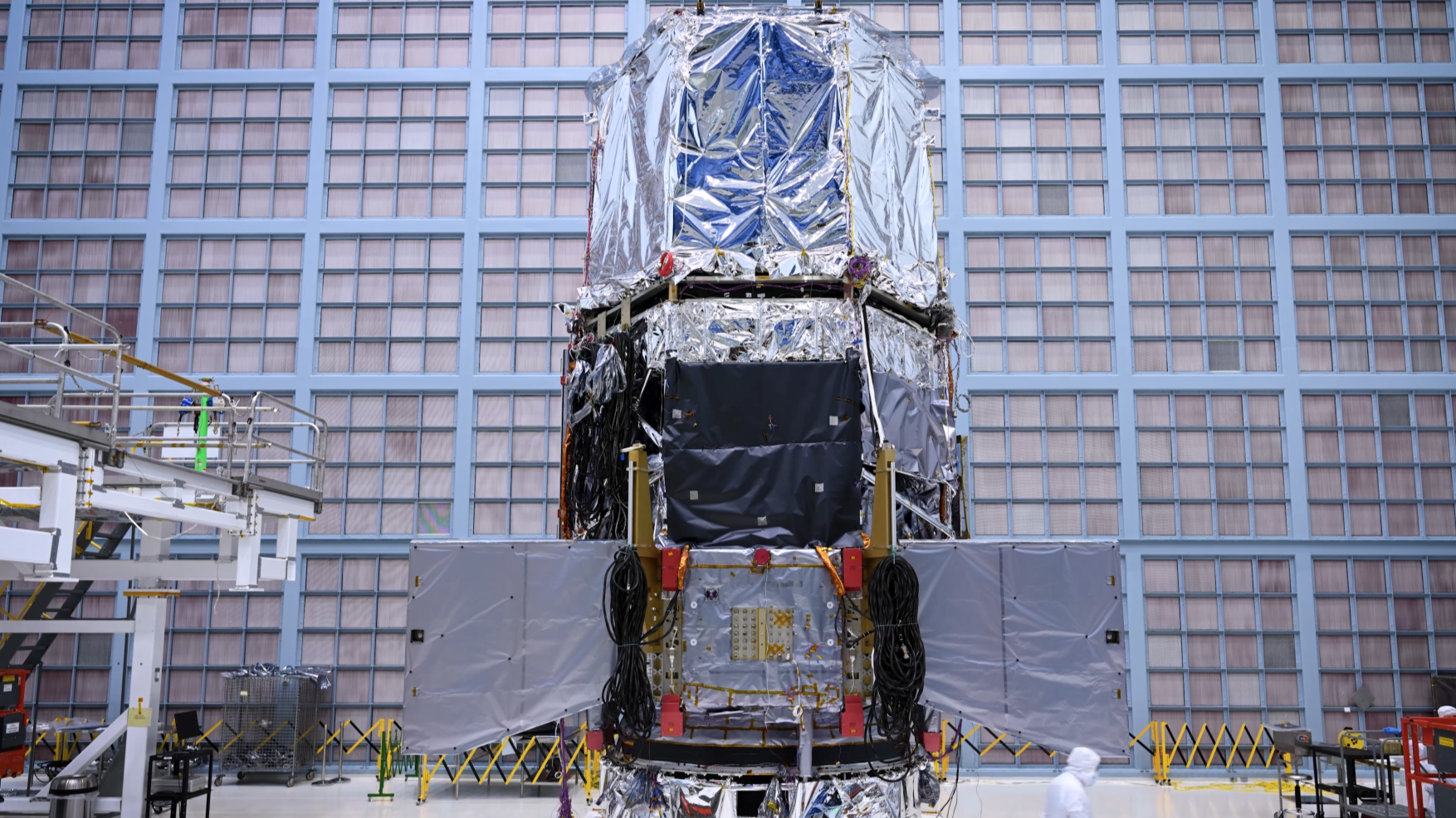
NASA's Nancy Grace Roman Space Telescope is expected to launch in fall 2026, though the mission schedule allows for a margin extending into 2027. Roman will feature a field of view about 100 times larger than Hubble's, enabling massive surveys of galaxies and stars, and making it one of NASA's most powerful space observatories to date.
The space telescope's primary science goals include studying dark energy, mapping dark matter and discovering thousands of exoplanets via gravitational microlensing, in which a massive foreground object bends the light of a background star, temporarily magnifying it like a lens.
Recently, NASA completed the full assembly of Roman's major components — joining the spacecraft and telescope segments in its largest clean room at Goddard Space Flight Center in Maryland — a major milestone that sets the observatory up for final environmental testing and launch preparations this summer.
]]>Although all of these events will be visible to the naked eye, a nice pair of binoculars and a good beginner telescope can significantly enhance your experience.
Here are 15 must-see skywatching events to mark on your calendar for 2026.
1. Jupiter at opposition: Jan. 10, 2026 (all night)
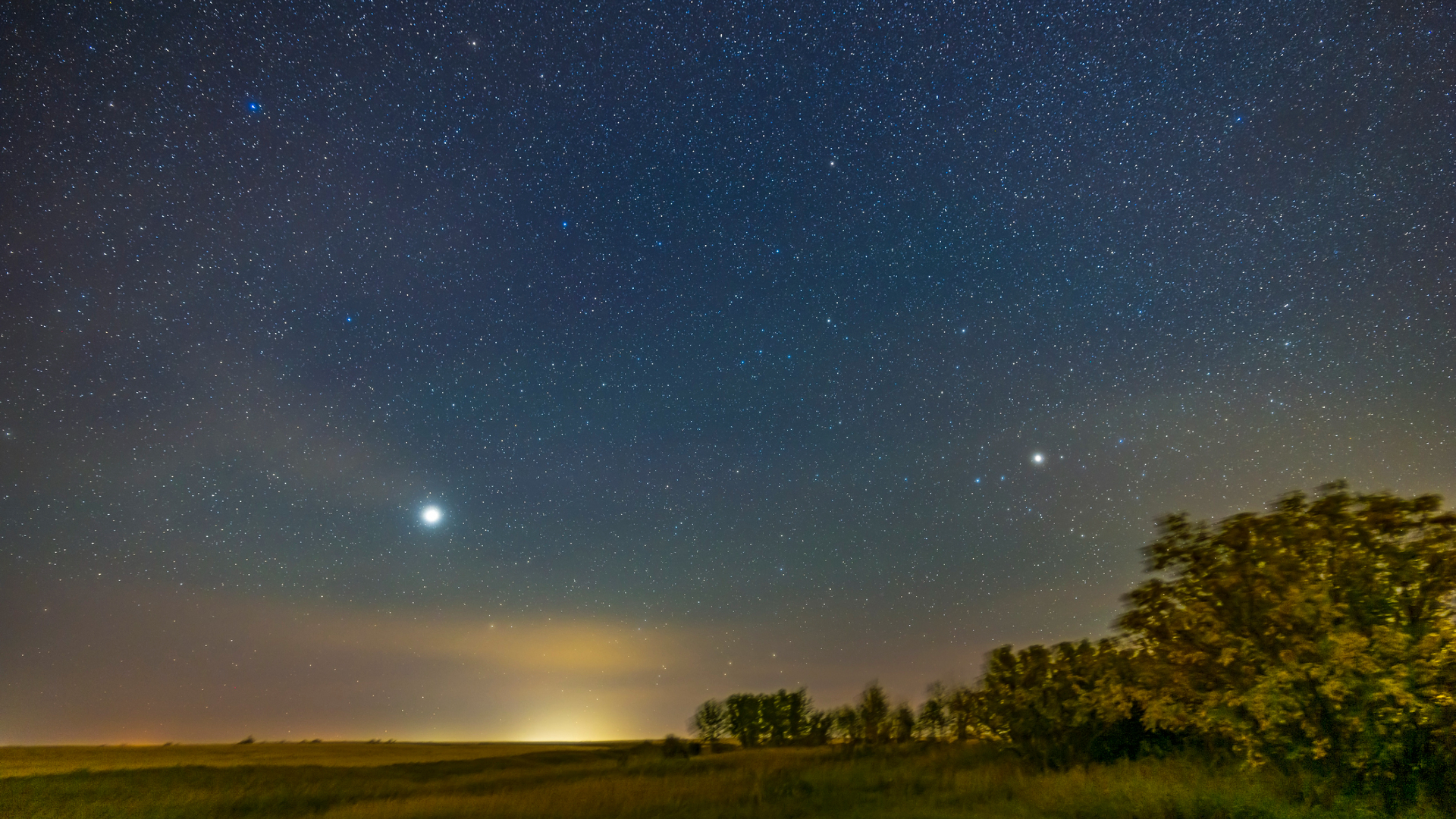
Jupiter will dominate the night sky in early 2026. In early January, the gas giant will align with Earth and the sun to reach its full phase, called opposition. This happens once every 13 months, and it's the best time to observe the giant planet. That's partly because it's the brightest it will be all year but also because it rises in the eastern sky at sunset and sinks in the west at sunrise.
2. "Blood moon" total lunar eclipse: March 2-3, 2026 (night to early morning)
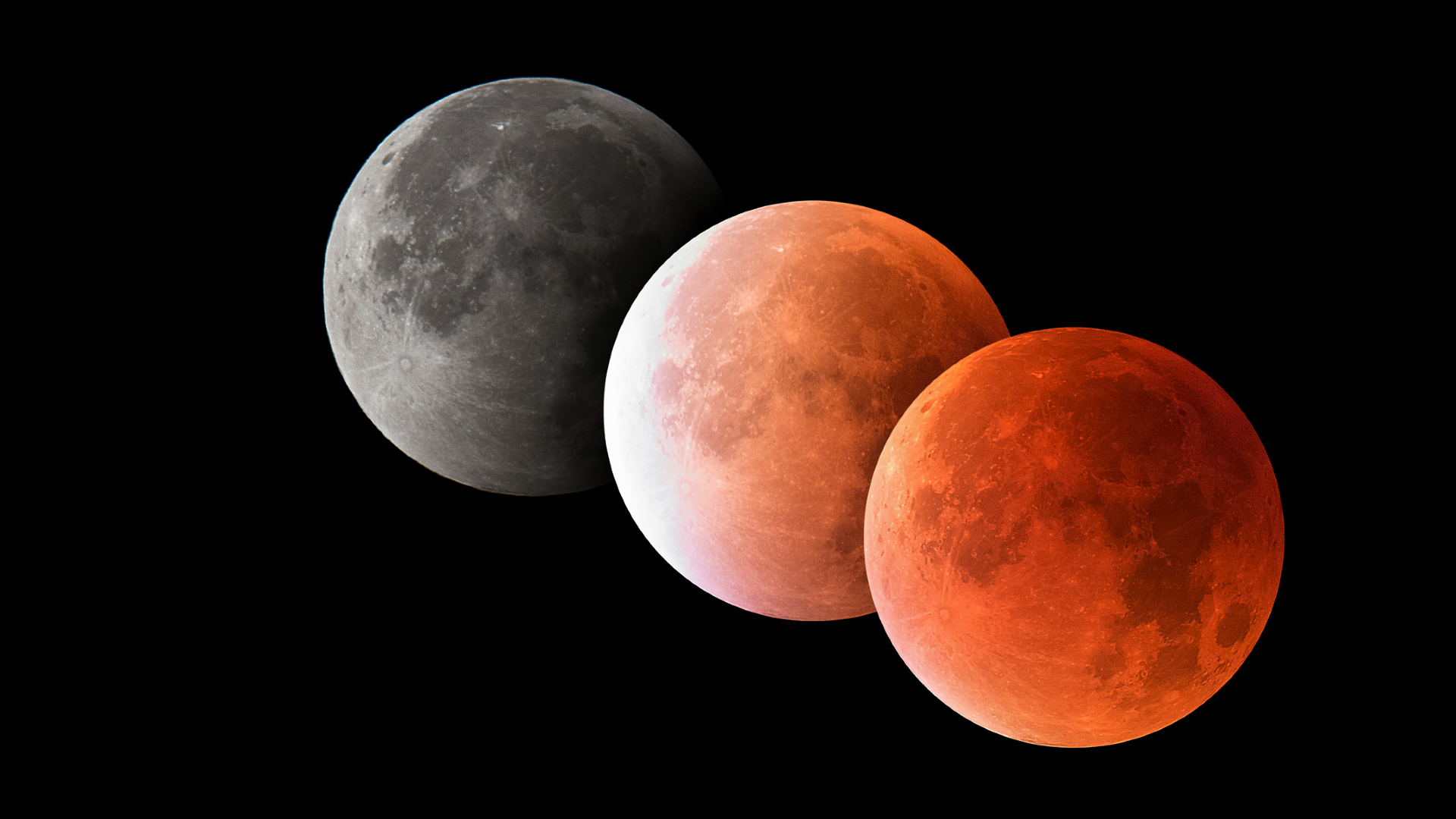
During the first and only total lunar eclipse of 2026, March's full Worm Moon will pass through Earth's shadow, making it appear as a reddish-orange "blood moon" for 58 minutes. The March 2026 total lunar eclipse will be visible across western North America, Australia, New Zealand, East Asia and the Pacific. It will be the last total lunar eclipse until a rather special one on New Year's Eve 2028-2029. In North America, totality will occur on the night of March 2 or early morning hours of March 3, depending on the time zone.
Related: March 2026 total lunar eclipse: Everything you need to know about the next 'blood moon'
3. Close conjunction of the moon, the Pleiades and Venus: April 19, 2026 (after sunset)
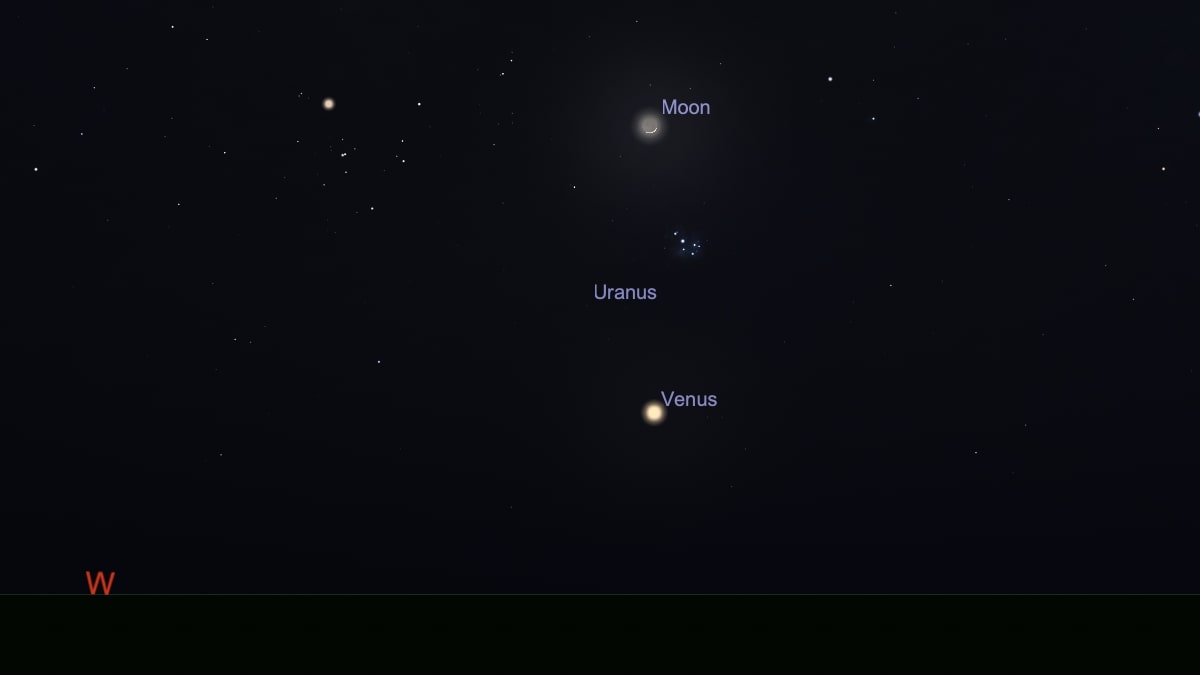
4. Eta Aquarid meteor shower: May 5-6, 2026 (before midnight)
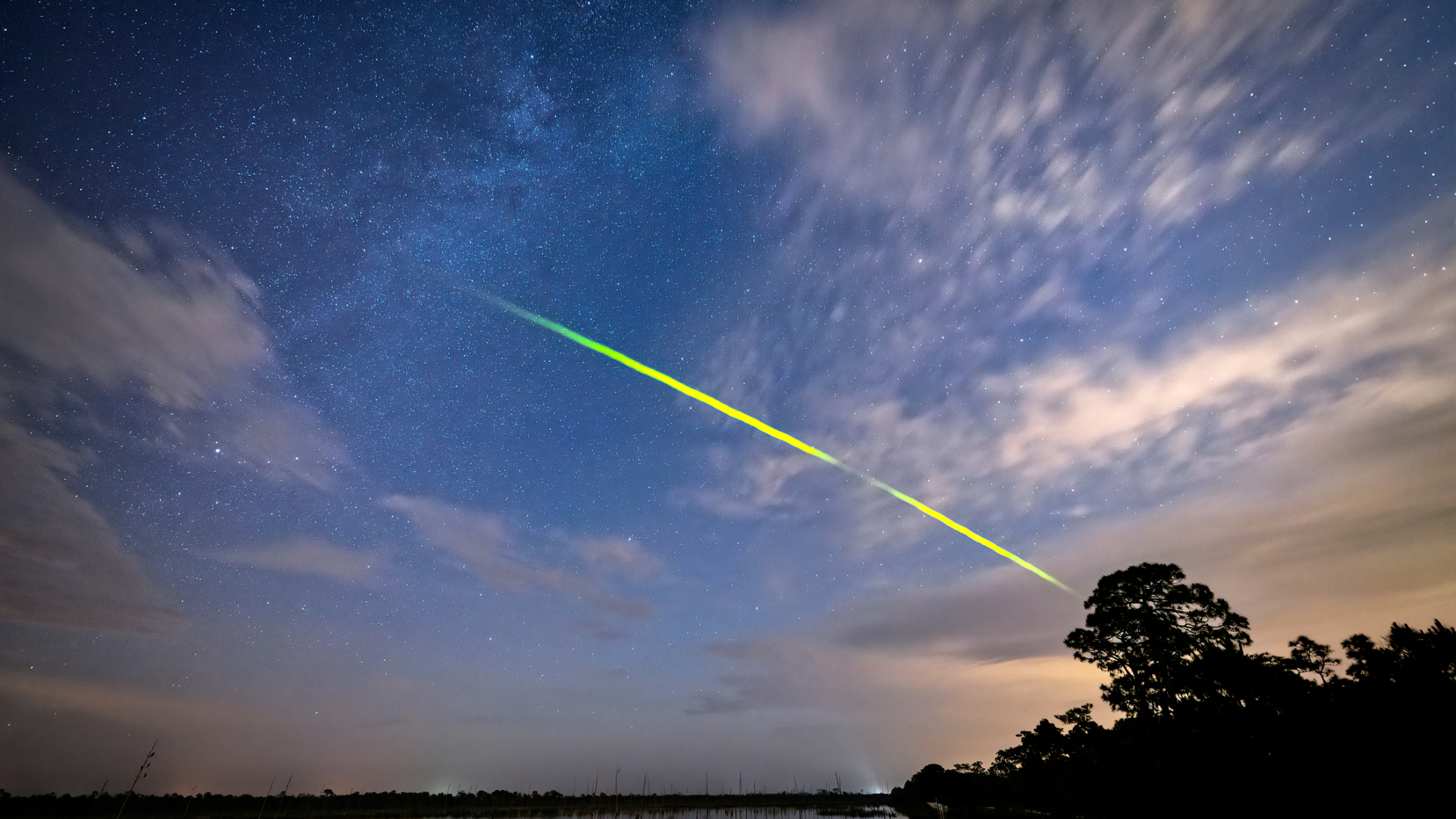
The Eta Aquarid meteor shower produces up to 50 meteors per hour, making it one of the most prolific meteor showers of the year and the clear highlight of spring's "shooting star" season. The last-quarter moon rising around midnight makes early evening the best time to see the Eta Aquarids (also spelled Eta Aquariids), which are caused by the debris from Halley's Comet left in the inner solar system, although the best views will be from the Southern Hemisphere.
5. Conjunction of Jupiter, Venus and Mercury: June 9, 2026 (after sunset)
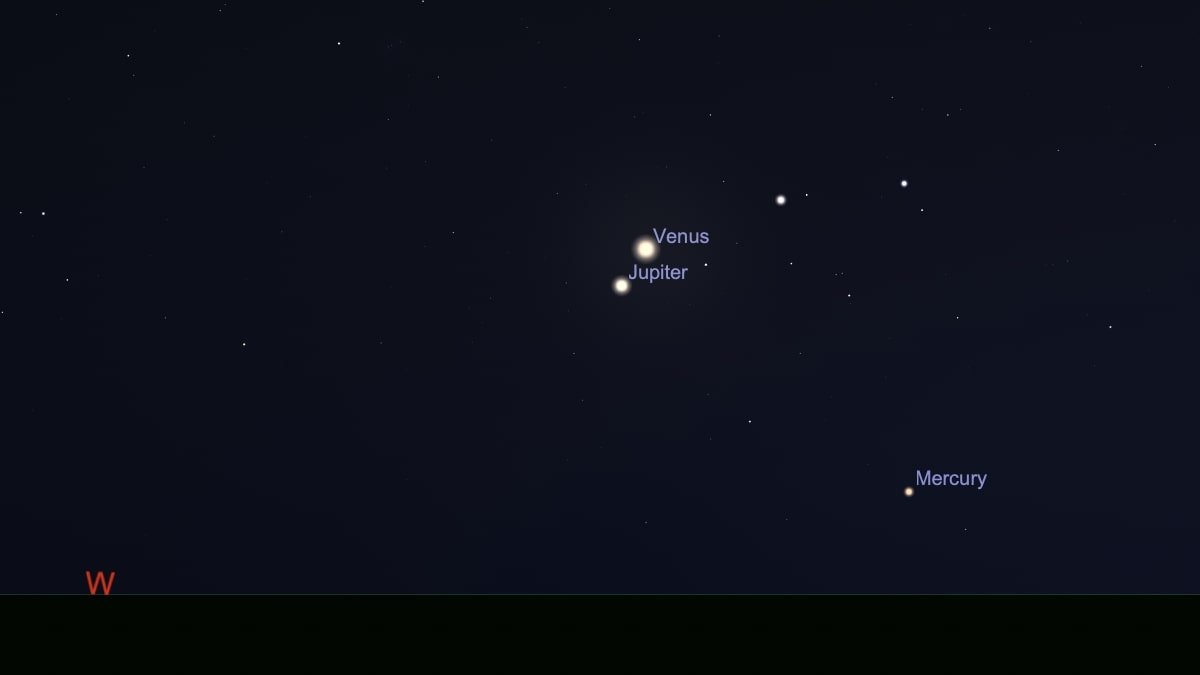
The two brightest planets in the solar system, Venus and Jupiter, will shine together for a few evenings, getting as close as 1.5 degrees — about the width of a finger held at arm's length against the sky. The duo will be visible in the western sky just after sunset, with the best view on June 9. As a bonus, Mercury will make a rare appearance below the two bright planets.
6. Total solar eclipse: Aug. 12, 2026 (daytime)
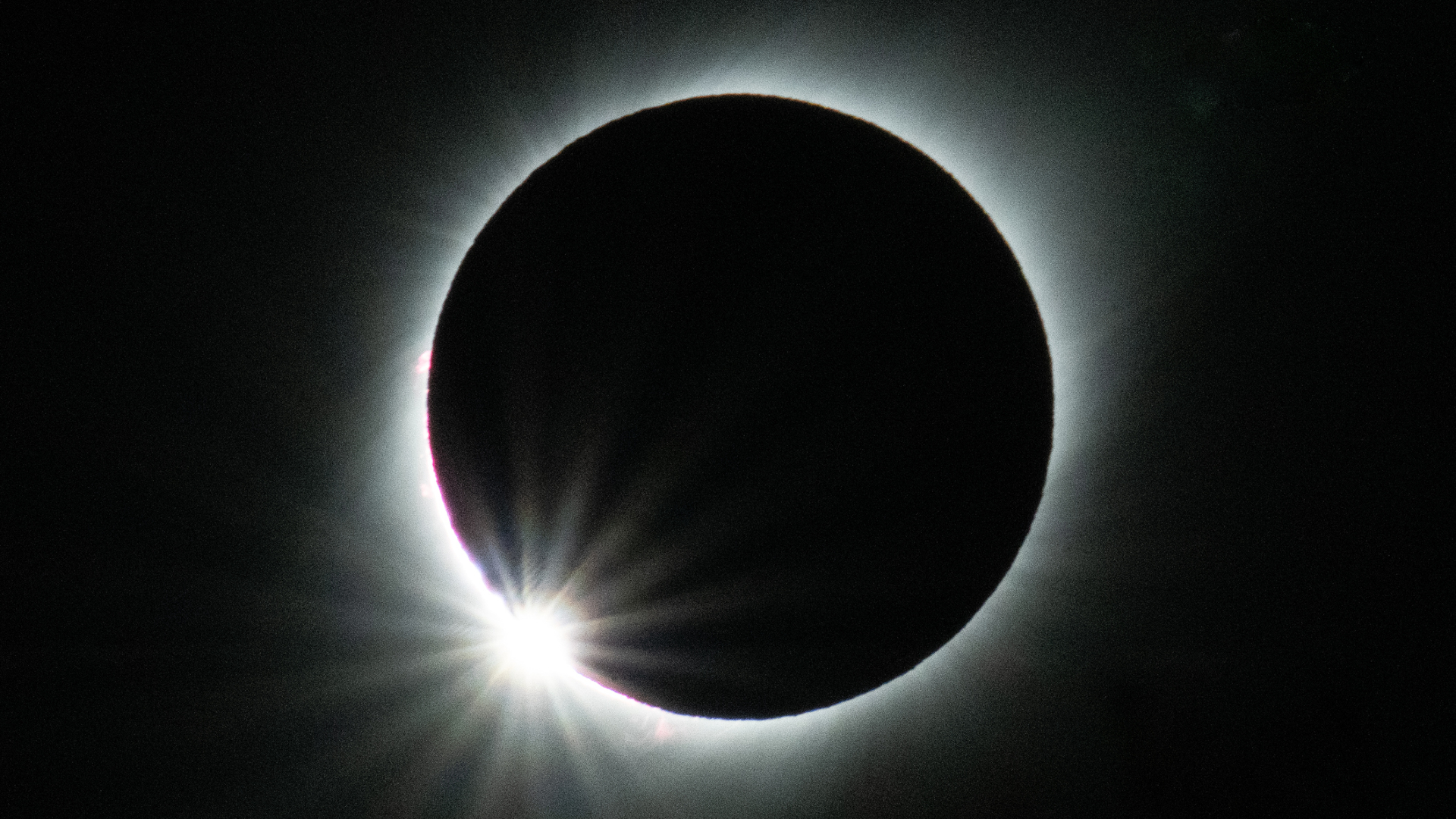
The celestial highlight of the year will be the total solar eclipse on Aug. 12, 2026, which will be seen from eastern Greenland, western Iceland and northern Spain. As the first total solar eclipse in mainland Europe since 1999, it is bound to be busy, especially because it falls during the European holiday season. Iceland has not seen a total solar eclipse since 1954, and Spain has not since 1906. (Spain will also see one in 2027.) The Mediterranean will be busy with cruise ships for a close-to-sunset totality, but maximum totality will occur for 2 minutes, 18 seconds off the coast of Iceland. A partial solar eclipse will be visible in parts of Europe, northwestern Africa, Canada, Alaska and the northeastern U.S.
Related: Total solar eclipse 2026 — Everything you need to know
7. Perseid meteor shower: Aug. 12, 2026 (night)
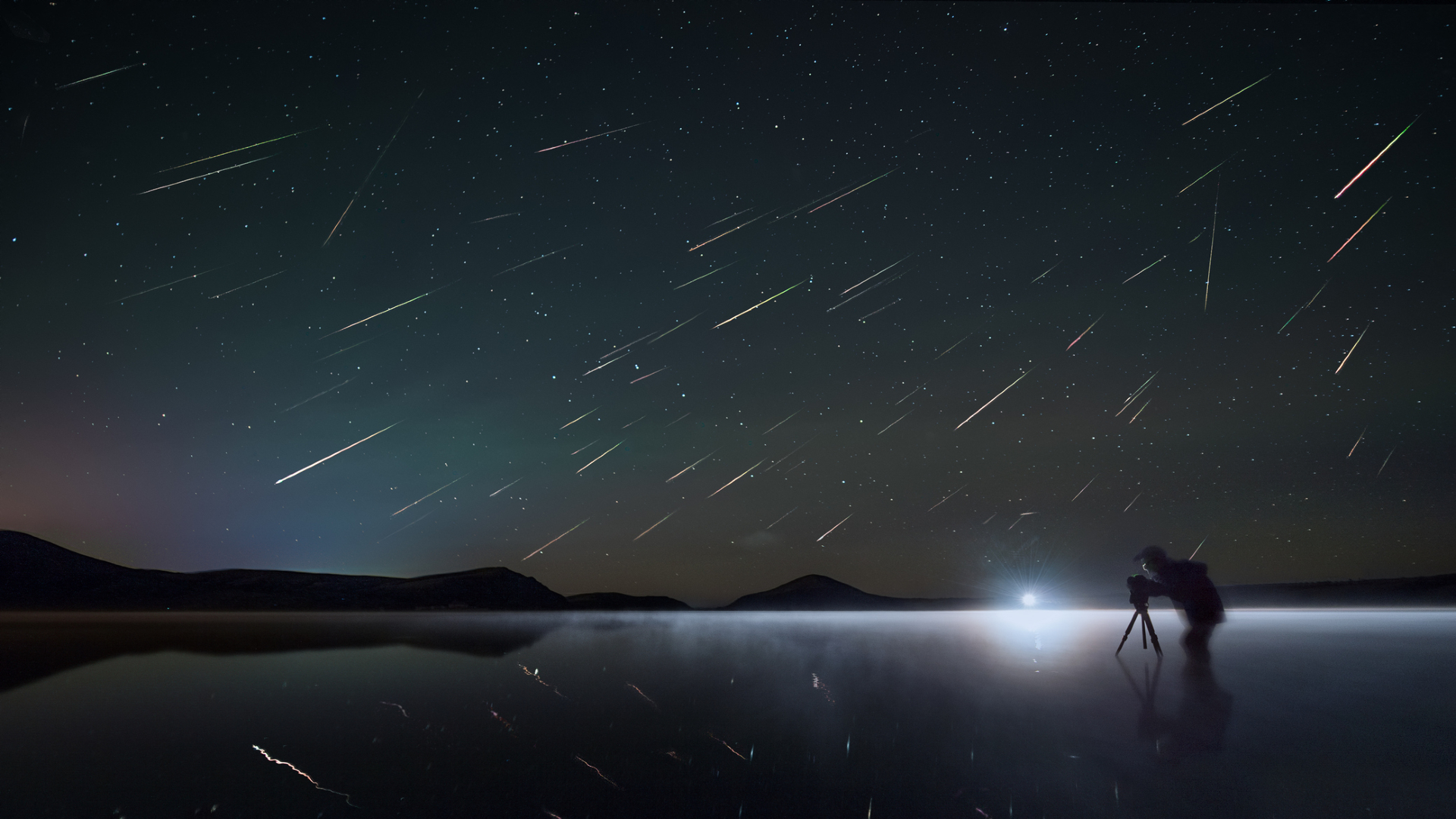
The Perseid meteor shower was pretty much a washout in 2025, with the peak night blighted by moonlight. Happily, the Northern Hemisphere's favorite display of "shooting stars" will fare much better in 2026. In fact, the peak night, Aug. 12-13, will occur just hours after a total solar eclipse, which, by definition, can happen only during a new moon. Eclipse chasers in Spain, in particular, could see two of astronomy's most spectacular events on the same day. About 60 to 120 Perseid meteors are expected to radiate from the constellation Perseus, but they may appear anywhere in the night sky from late night to predawn.
8. Venus as the "evening star": Aug. 15, 2026 (after sunset)
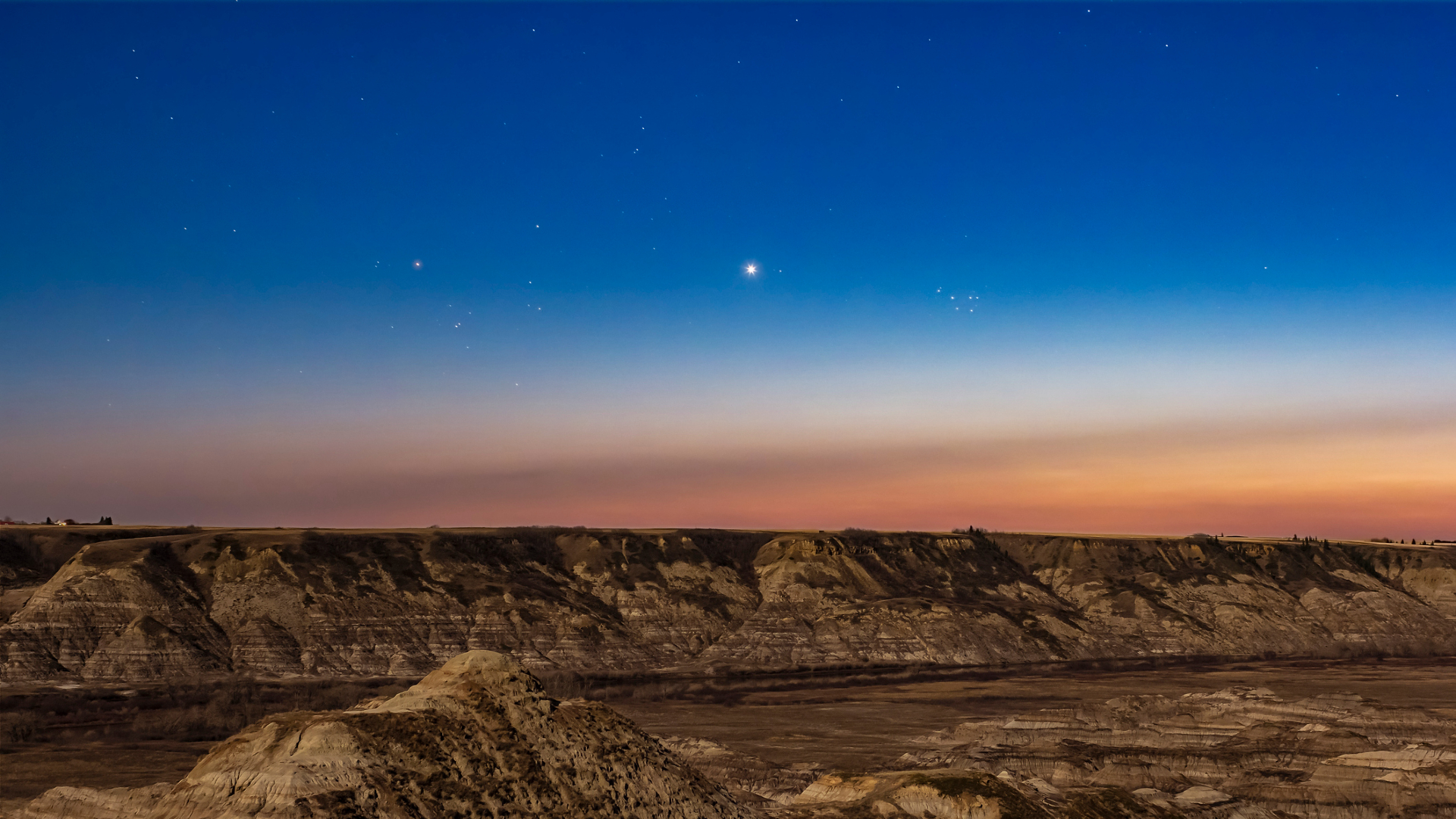
Because it's an inner planet as seen from Earth, Venus alternates between being visible before sunrise and after sunset. In 2026, it will appear as the "evening star," reaching its farthest distance from the sunset in August. After that, Venus will gradually sink in the sky; it will become half-lit by the sun in August, before reaching its brightest in late September, when it will be low on the horizon.
9. Partial lunar eclipse: Aug. 27-28, 2026 (night)
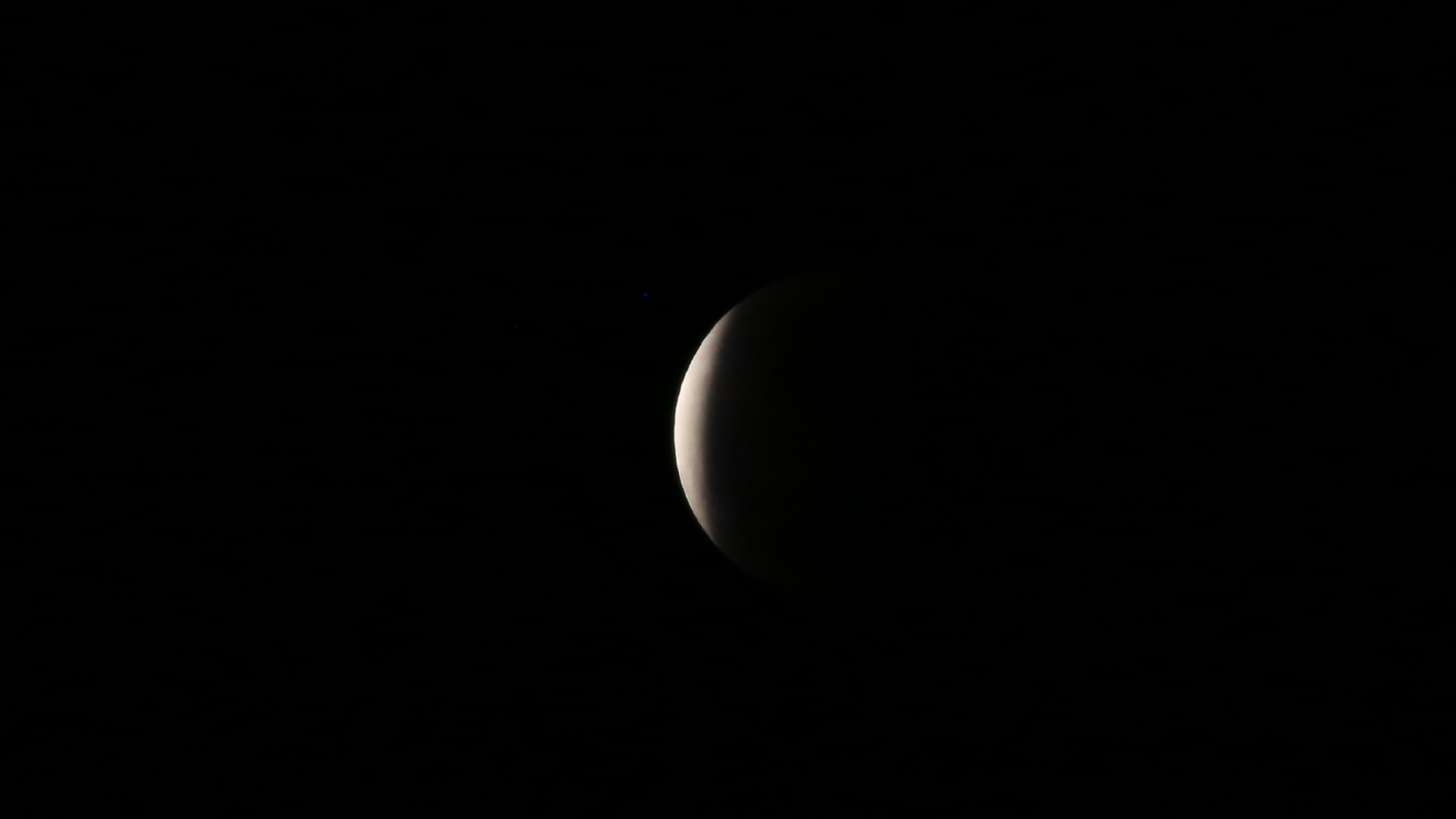
It won't quite be a "blood moon," but the August 2026 lunar eclipse is as close as it comes. It will be a very deep partial lunar eclipse, with over 96% of the moon entering Earth's shadow, although it will not become total. For observers on Earth's night side in North America, South America, parts of Europe and Africa, the chief sight will be the edge of Earth's shadow creeping across the lunar surface, and perhaps a hint of red as totality is approached but then snatched away.
10. Saturn at opposition: Oct. 4, 2026 (night)
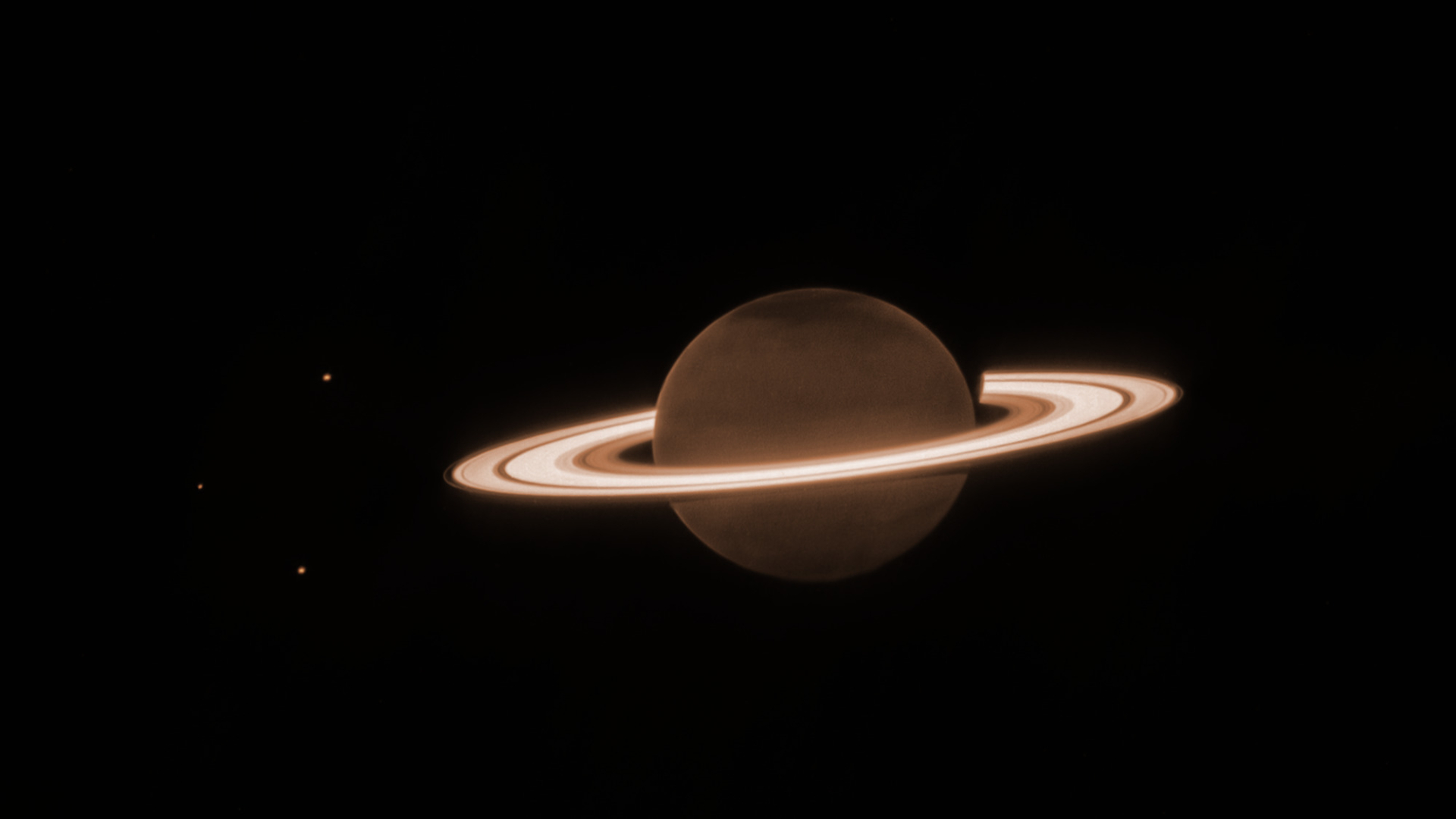
Earth passes between Saturn and the sun once each year. At that time, the ringed planet is closer, and thus bigger and brighter, from our point of view. In 2026, that will happen in October. Look for Saturn's golden glow in the east after dark from August onward, with notable conjunctions with the moon on Sept. 27, Oct. 24, Nov. 20 and Dec. 18.
11. Close conjunction of the moon and Mars: Oct. 5, 2026 (before sunrise)

Just one day after Saturn peaks in brightness, Mars and a 32%-illuminated waning crescent moon will meet in the early-morning sky, with only about 1 degree between them. Just beneath the pair will be the beautiful Beehive Cluster (Messier 44) and Jupiter.
12. Conjunction of Jupiter and Mars: Nov. 14-15, 2026 (before sunrise on Nov. 15)
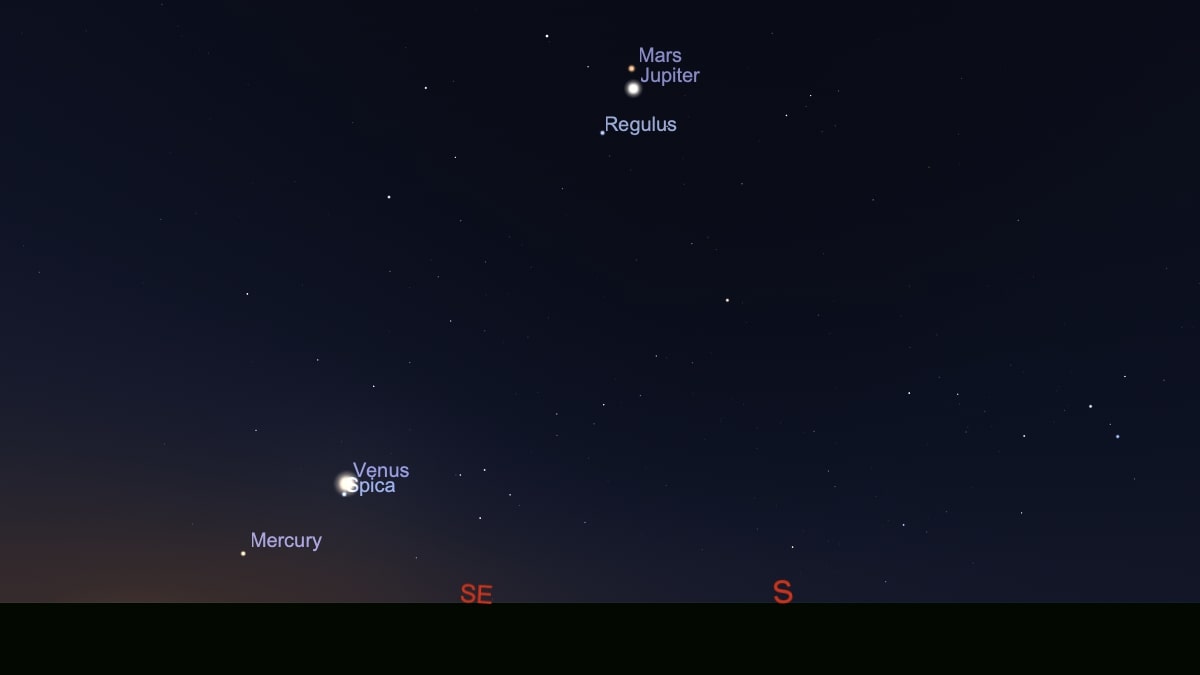
There will be plenty of opportunities to see the planets together in 2026, but this close conjunction of the fourth and fifth planets from the sun is likely to be the highlight. Mars and Jupiter will appear closest — just 1 degree apart — in the predawn sky on Nov. 15, though, to the naked eye, they'll appear very close for a few evenings before and after that. Venus and Mercury will also be on display, with the former in shining close with bright star Spica.
13. Christmas supermoon: Dec. 24, 2026 (dusk)

November 2025 may have seen the biggest full moon since 2019, but in December 2026, our natural satellite will go one step further by getting closer to Earth than at any point since 2018. The moon's orbit is elliptical, so some full moons appear bigger and brighter from Earth. These are known as supermoons, and there will be three of them in 2026 — on Jan. 3, Nov. 24 and Dec. 23. Catch them at moonrise for the full "moon illusion" effect.
14. Leonid meteor shower: Nov. 17-18, 2026 (night)
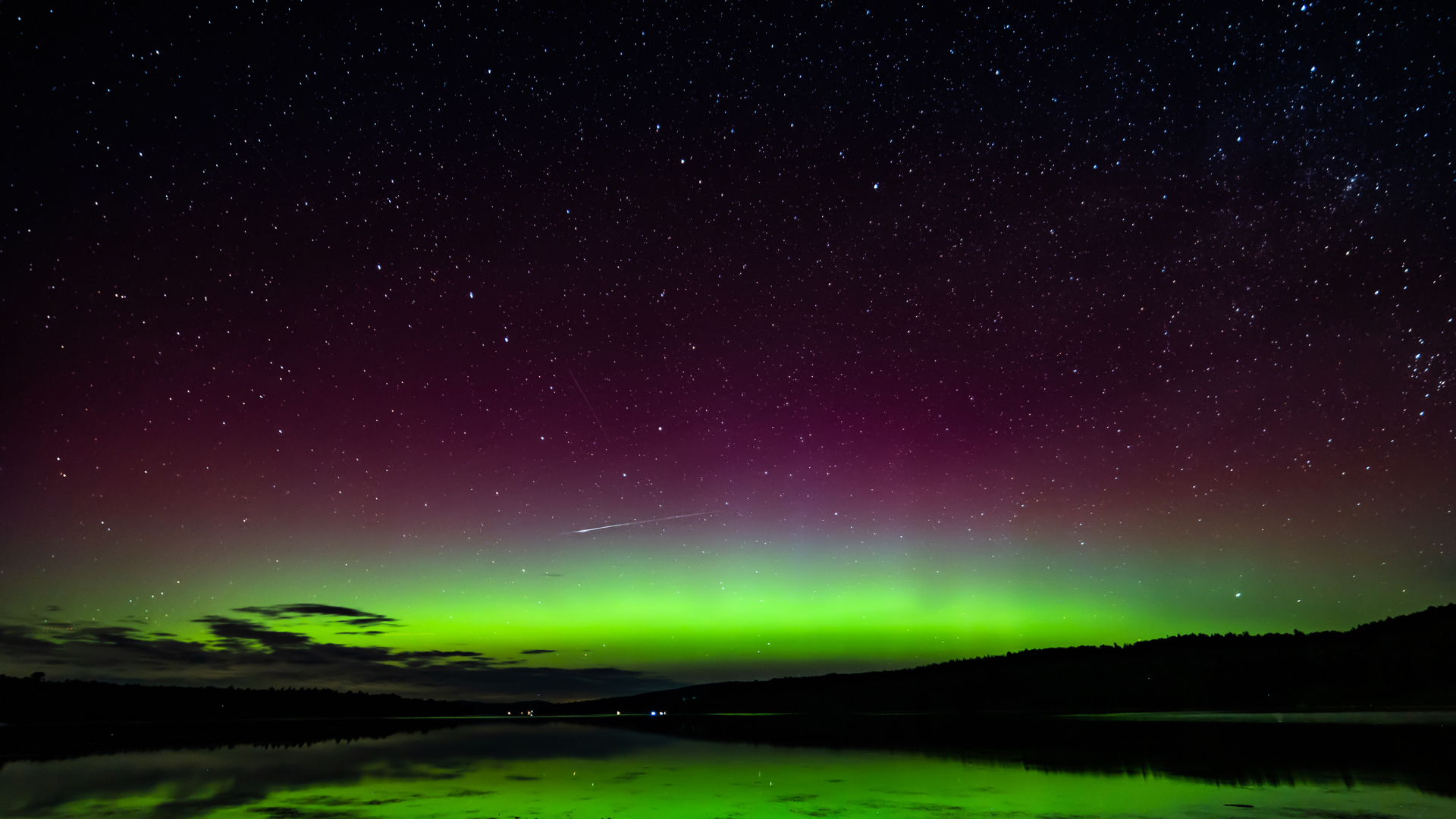
2026 should be a good year for the Leonid meteor shower, a display of particularly fast-moving "shooting stars" from Comet Tempel-Tuttle. This year, the peak coincides with a near-first-quarter moon, which means dark, moonless skies after midnight — exactly when about 15 meteors per hour are expected. The Leonids tend to storm roughly every 33 years, with the next possibility around 2032 to 2033.
15. Geminid meteor shower: Dec. 13-14, 2026 (night)
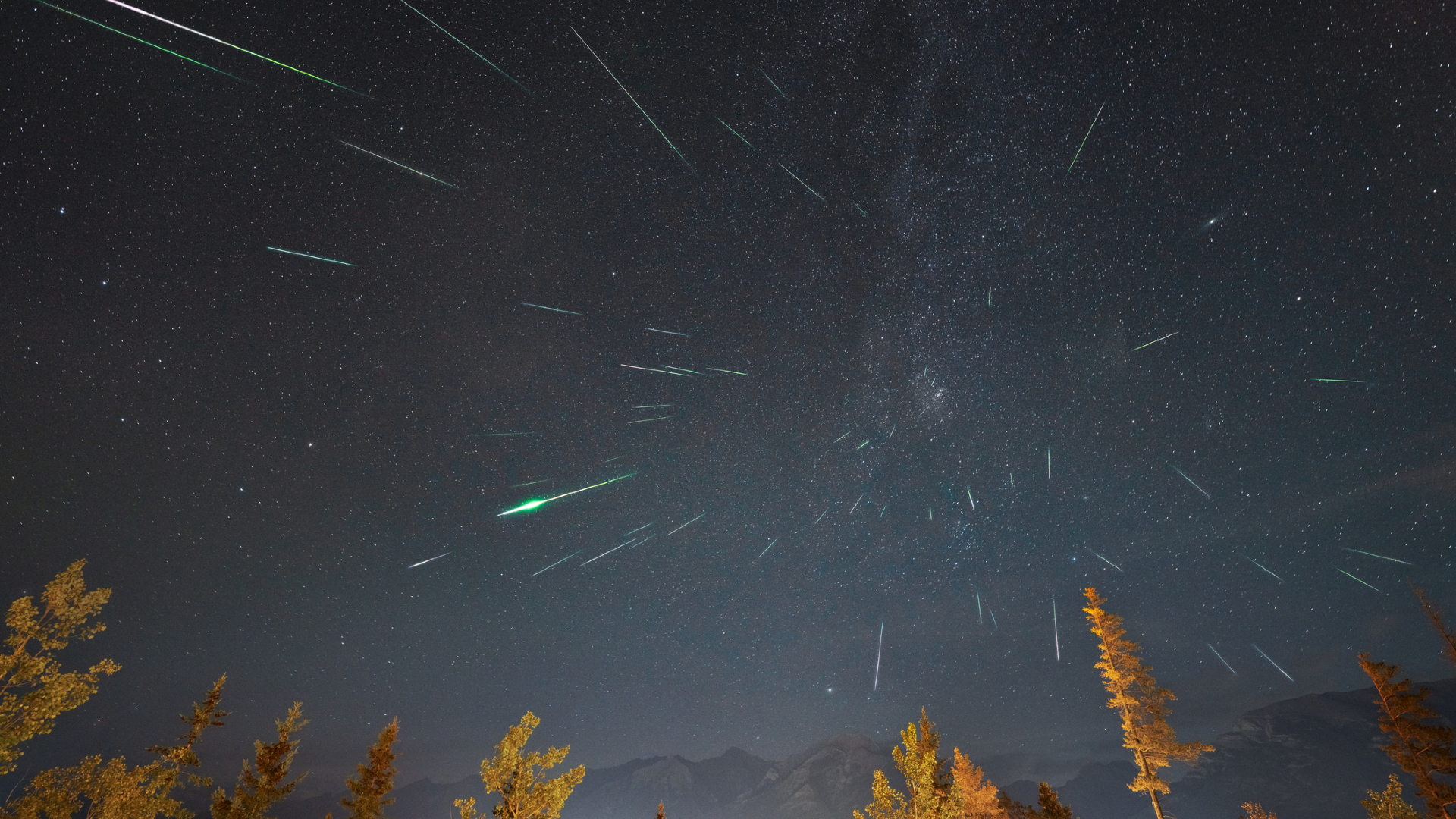
We obsess over the Perseids in August, but it's December's Geminids that bring the most "shooting stars," albeit in much colder temperatures in the Northern Hemisphere. Expect up to 120 bright and colorful meteors per hour under optimum conditions during the peak of the Geminid meteor shower. The cause of this annual event is a mysterious asteroid called 3200 Phaethon.
Jamie Carter is the author of "Stargazing In 2026: 50 Things To See In The Night Sky From North America."
What is it?
Long Range Discrimination Radar (LRDR) is a cutting-edge ground-based radar system designed to detect, track and discriminate long-range ballistic missile threats with high precision. With its higher precision, the system can better tell the difference between something dangerous (like an intercontinental ballistic missile) and things that aren't dangerous (like debris). That sorting task is what the "discrimination" in its acronym refers to.
LRDR has been in the works for years. In late 2021, the Missile Defense Agency marked the radar's initial tests in Alaska, kicking off the long process of testing, training and integration into the larger missile defense network.
Where is it?
The LRDR is located at Clear Space Force Station in Alaska.
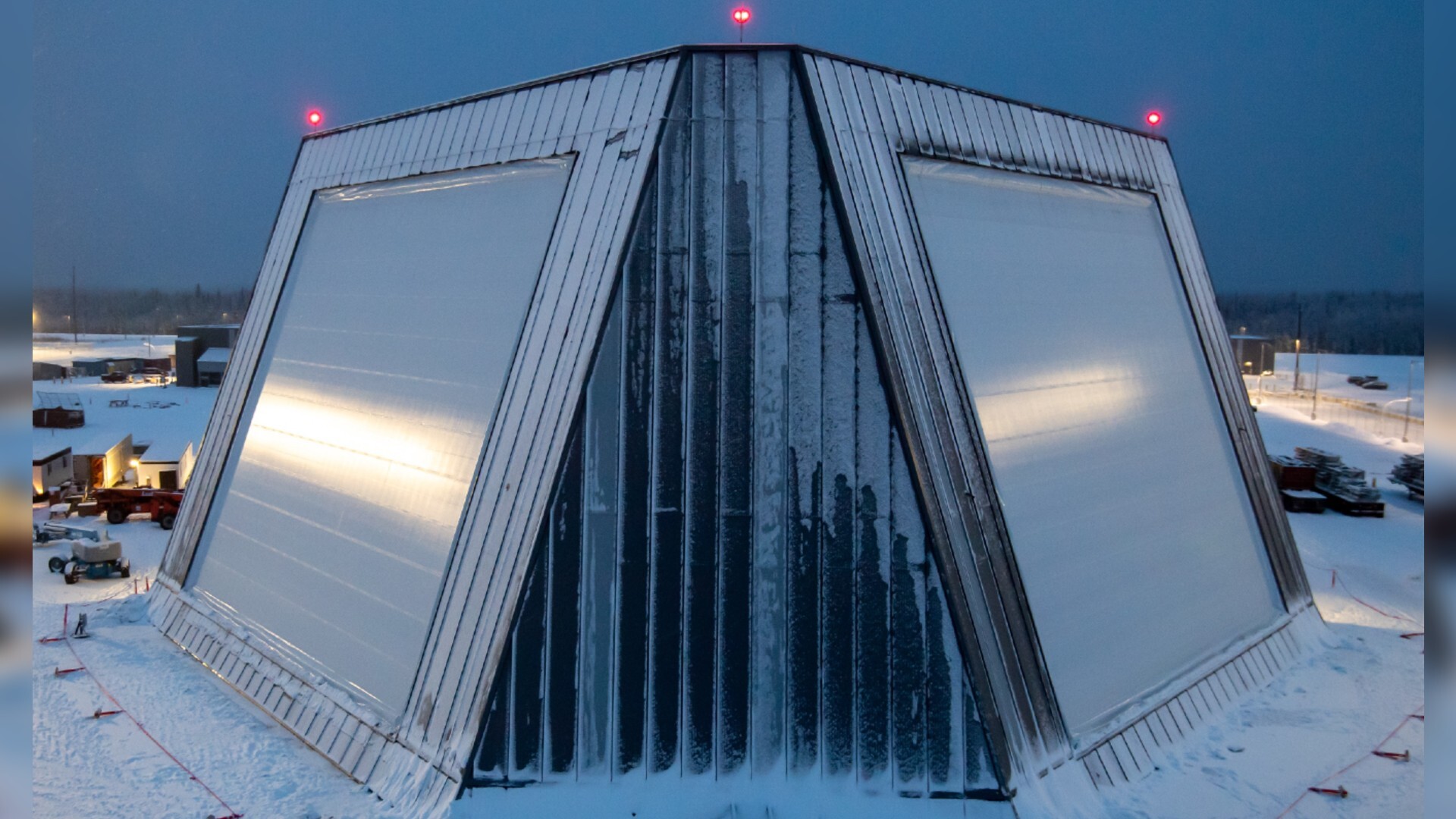
Why is it amazing?
Missile defense isn't just about seeing something, it's also about knowing what you're seeing in time to respond. LRDR is designed to provide more precise tracking and discrimination data which the Space Force says can improve interceptor precision and shorten reaction times.
Now controlling LRDR, the Space Force emphasizes that the system will be continuously monitoring our skies and atmosphere, making the system a key sentinel in the U.S. missile defense strategy.
Want to learn more?
You can learn more about radar systems and the U.S. Space Force
]]>This guide breaks down the major planetary events of the year, from conjunctions to oppositions to close planet-star encounters.
Related: Night sky tonight live blog
Mercury
Mercury, the smallest of the planets visible to the naked eye, appears as an evening star in the western sky, setting about an hour after the sun. As a morning star, it rises about an hour before the sun in the eastern sky. To view the planet, a clear, unobstructed view of the horizon is essential. Mercury usually appears as a bright "star" with a yellowish or ochre tint.
Visibility windows in 2026
- Evenings: Feb. 5–26; June 1–22; Sept. 28–Oct. 19
- Mornings: March 27– April 17; July 26– Aug. 16; Nov. 13– Dec. 4
When will it be at its best?
- Evening: Feb. 5–26
- Morning: Nov. 13– Dec. 4
On the evening of Feb. 18, about 30 minutes after sunset, Mercury will sit just 1 degree above a slender waxing crescent moon low in the west-southwest.
Venus
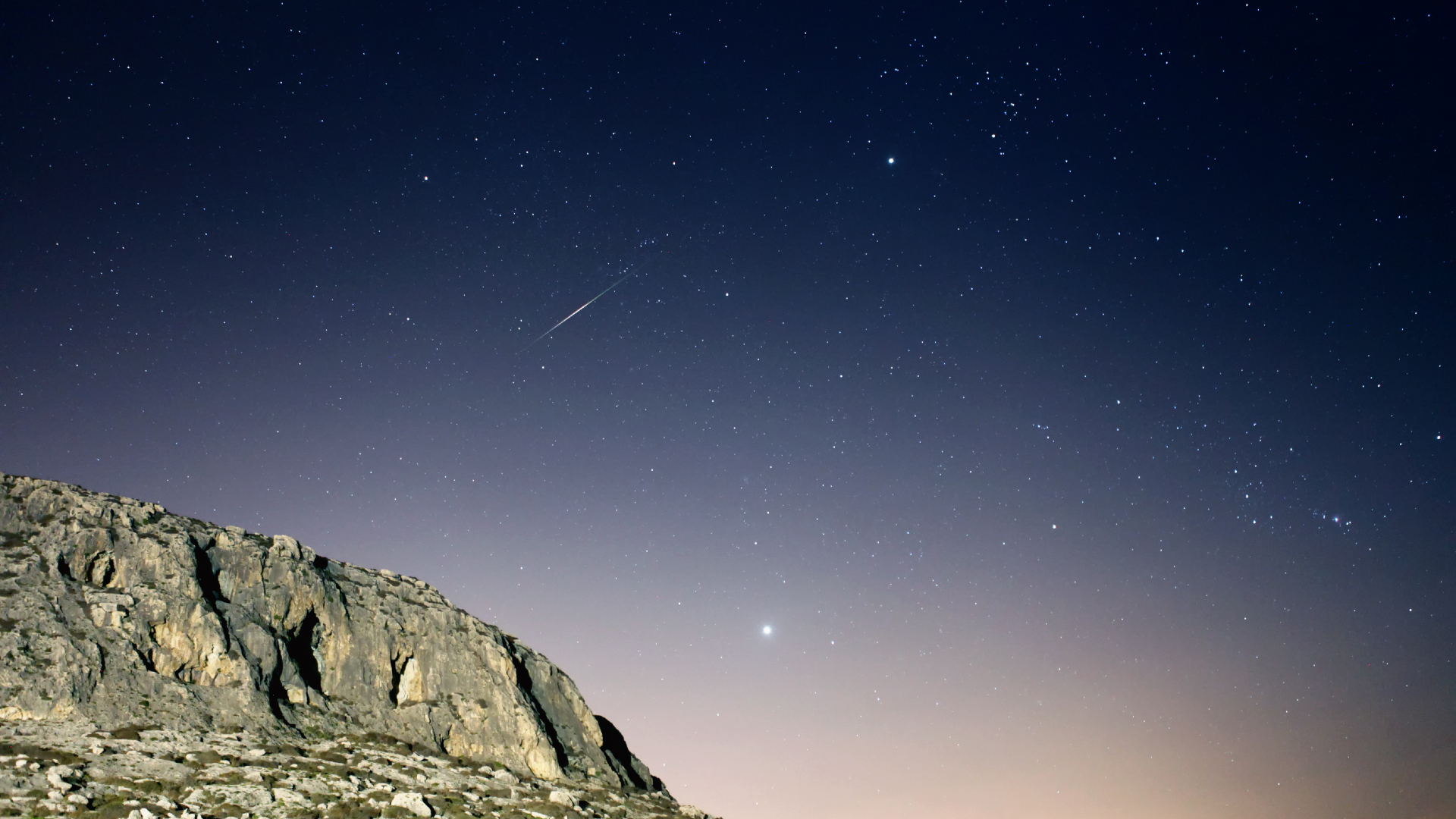
Venus, with its nearly circular orbit and a diameter only 400 miles (640 kilometers) smaller than Earth's, shines with a brilliant, steady silvery light.
Visibility windows in 2026
- Evenings: March 8– Oct. 14
- Mornings: Nov. 3– Dec. 31
When will it be at its best?
Venus reaches greatest brilliancy in the evening sky on Sept. 19 and in the morning sky on Nov. 29. In late September through mid-October, and again through most of November, Venus will show a striking crescent phase in telescopes and steady binoculars.
Notable conjunctions:
- March 8: Venus passes 1 degree to the upper right of Saturn.
- June 9: Venus passes 1.6 degrees to the upper right of Jupiter — a brilliant sight in the west-northwest 45 minutes after sunset.
- Nov. 7 (morning): Shortly before sunrise, look low to the east-southeast for Venus, a crescent moon, and the star Spica, all fitting within 2.5 degrees.
Mars
Mars, long associated with Ares, the Greek god of war, shines like a star with a yellowish-orange hue and can vary considerably in brightness.
Visibility in 2026
- Mornings: March 18- Dec. 31
When will it be at its best?
This is an "off" year for Mars. The planet begins 2026 lost in the sun's glare and reaches solar conjunction on Jan. 9, sitting on the far side of the solar system about 223 million miles from Earth.
Mars begins to reappear in the third week of March, rising before sunrise among the faint stars of Aquarius. It moves into Taurus for the first half of summer, shining only around magnitude +1.3.
Sky highlights:
- Sept. 25: Castor and Pollux point directly toward Mars.
- Oct. 11: Mars passes through the Beehive Cluster in Cancer — an attractive sight in binoculars.
- Nov. 26: Mars passes 1.7 degrees above Regulus in Leo, creating a dramatic color contrast.
- By late December, Mars brightens to magnitude –0.1 and will rival Arcturus in both color and brightness.
- Feb. 19, 2027: Mars reaches its next opposition, so it steadily approaches Earth late in 2026.
Notable conjunctions:
- April 20: Mars aligns closely with Saturn and Mercury.
- July 4: Mars passes just 0.1 degree south of Uranus, offering a superb guidepost for locating Uranus.
- Nov. 16: Mars passes 1.2 degrees to the upper left of Jupiter.
Jupiter

Jupiter, the giant planet with a diameter about 11 times bigger than Earth's, shines with a bright silver-white luster.
Visibility windows in 2026
- Mornings: Jan. 1–9; Aug. 19– Dec. 31
- Evenings: Jan. 10–July 7
Jupiter reaches opposition on Jan. 10 and shines brightest from Jan. 1–22 at magnitude –2.7 in Gemini. It enters Cancer on June 22 and Leo on Sept. 24, where it remains through year's end.
On June 9, Jupiter pairs with Venus in a stunning "double planet" display low in the west-northwest at dusk.
Oct. 6 lunar occultation
On the morning of Oct. 6, observers across most of North America (excluding the far West) and northern Cuba will witness a spectacular lunar occultation of Jupiter. A waning crescent moon will slide directly in front of Jupiter, hiding it for up to an hour depending on location. Jupiter disappears behind the bright limb and reemerges dramatically from the moon's dark side.
Saturn
Saturn shines as a yellowish-white "star" of moderate brightness. Its famous rings, invisible to the naked eye, turned edge-on in 2025 and were nearly impossible to see for weeks. They are now slowly opening up again.
Constellation path in 2026:
- Starts in Aquarius (to Jan. 14)
- Enters Pisces (Jan. 14– April 8)
- Moves through Cetus (April 9– June 2)
- Back into Pisces (June 3–Sept 4)
- Back into Cetus (from Sept. 5 onward)
Visibility windows in 2026
- Evenings: Jan. 1–March 8; Oct. 4–Dec. 31
- Mornings: April 12– Oct. 3
Saturn reaches opposition on Oct. 4 and is brightest Sept. 24–Oct. 9.
Notable conjunctions:
- Feb. 15: Saturn sits less than 1 degree from Neptune, though Neptune is much fainter.
- Apr. 20: Saturn aligns with Mars and Mercury.
Uranus
Uranus can be glimpsed with the naked eye under very dark skies by keen-eyed observers. At magnitude +5.6, it is easily found with binoculars; small telescopes show a tiny greenish disk.
Uranus spends all of 2026 in Taurus.
Visibility windows in 2026
- Evenings: Jan. 1–May 5; Nov. 25– Dec. 31
- Mornings: June 9–Nov. 24
Uranus reaches opposition on Nov. 25 and is brightest Oct. 24–Dec. 30.
On July 4, Uranus sits only 0.1 degree north of Mars, making Mars an ideal pointer to the seventh planet. Mars will outshine Uranus by a factor of about 158.
Neptune
Neptune remains in Pisces throughout 2026. At magnitude +7.8, it is visible only in binoculars or a telescope and appears bluish-gray.
Visibility windows in 2026
- Evenings: Jan. 1–March 6; Sept. 25–Dec. 31
- Mornings: April. 8– Sept. 24
Neptune reaches opposition on Sept. 25 and is brightest July 28–Nov. 24.
On Feb. 15, Neptune lies less than 1 degree to the upper right of Saturn, though Neptune is only about 1/525 as bright.
Joe Rao serves as an instructor and guest lecturer at New York's Hayden Planetarium. He writes about astronomy for Natural History magazine, Sky and Telescope and other publications.
]]>Image stabilization (IS) makes stargazing with binoculars a smooth, shake-free experience. Whilst observation wobbles are more commonly associated with higher magnifications, IS is a useful feature for binoculars of any magnification. Lower magnification models like the Canon 10x42 IS WP L are good for starhopping across constellations and getting a wide view of star fields. Higher magnification models, such as the Fujifilm TS-L 1640 and Canon 18x50 IS are better for getting steady close-up views of star clusters and galaxies.
Our favorite models
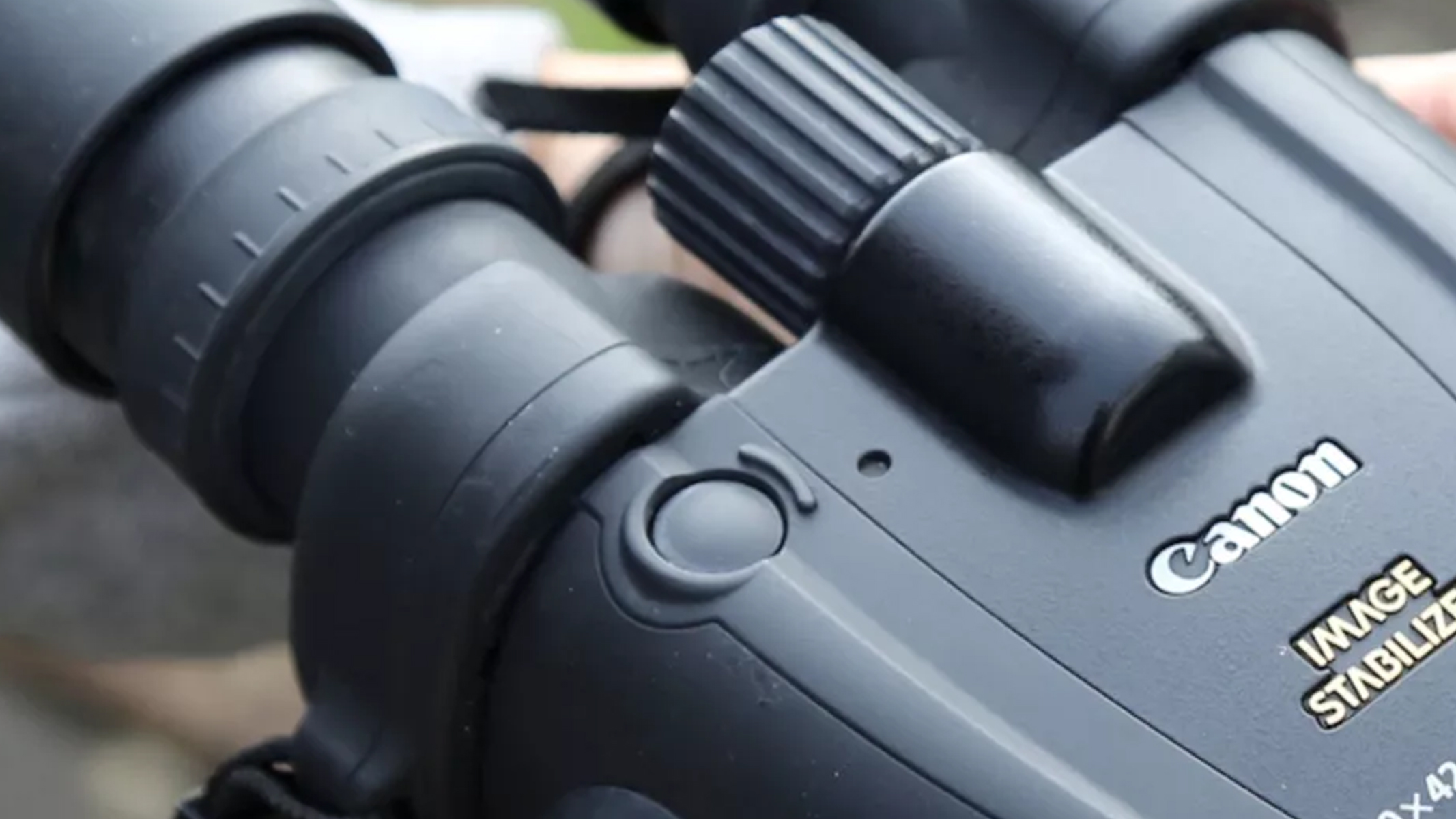
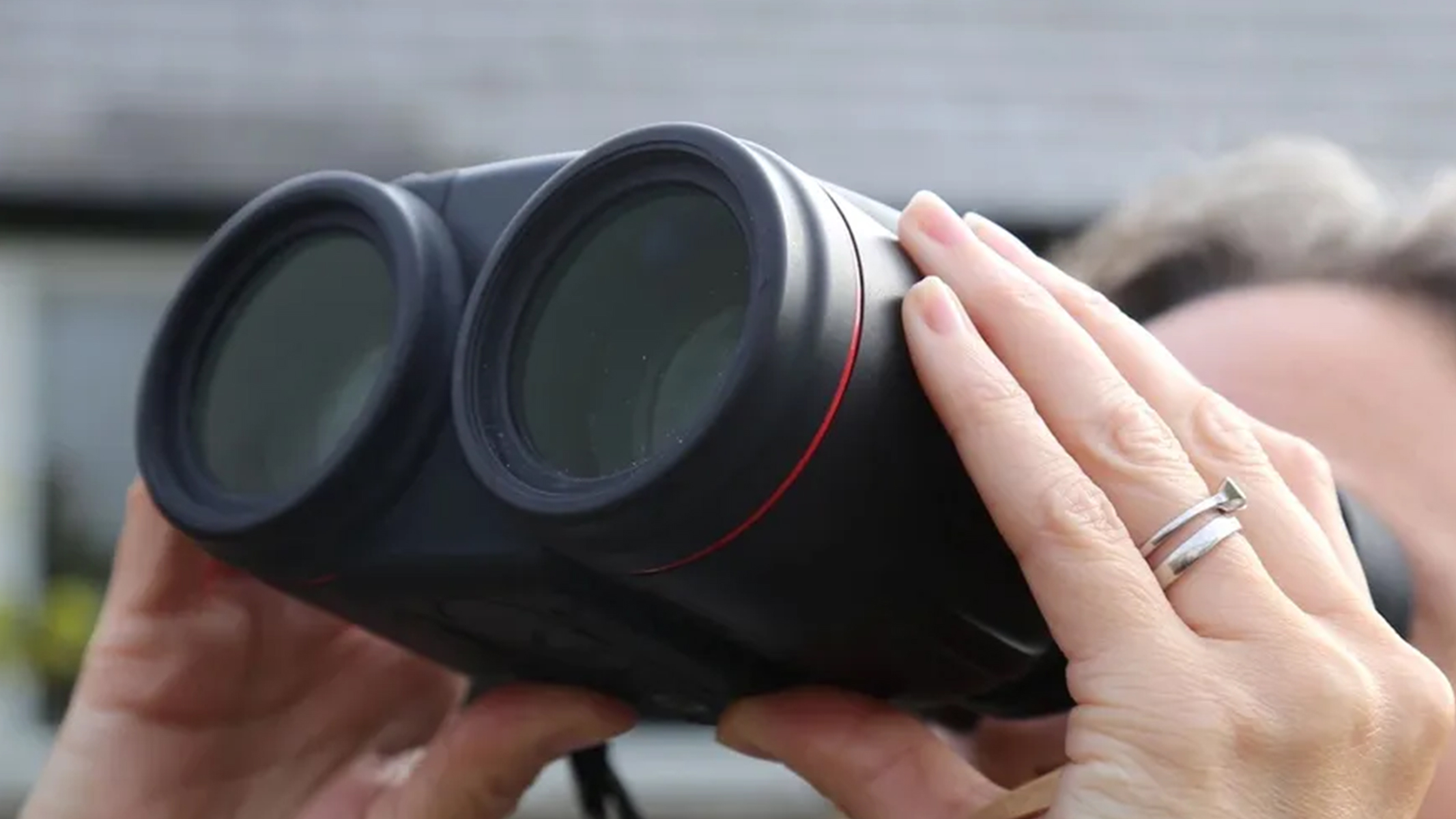
We have tested a range of image stabilized (IS) binoculars from the big optics companies and we rate them highly, often giving four or five-star ratings in our expert reviews.
Canon has a huge range of IS binoculars and they cater to a wide range of needs with magnifications ranging from 8x to 18x. We tested out their 10x42L IS WP binoculars and gave them a huge five stars for their bright and colorful images, delivered by lens coatings and advanced optical elements. They offer an image correction angle of 0.8 degrees, and whilst this can counteract small movements, it can struggle with excessive wobbling and shaking.
On the matter of image-stabilization angle, Fujifilm has blown most of the competition out of the water. Depending on the model, they offer a huge three or six-degree correction angle and can counteract stronger movements. We tested the TS-L 1640 binoculars for observing star clusters and think they delivered the smoothest handheld observation we have seen. Their three-degree correction angle meant panning and tilting were shake-free, and at a magnification of 16x, we were able to see night sky objects up close and in steady detail.


Nikon offer a more compact answer to image-stabilized binoculars with their Stabilized 12x25 S binoculars. We gave them five stars in our review and thought they were an amazing compact addition to the image-stabilized binoculars market. We observed constellations and asterisms with them, and they provided much more detailed views than naked-eye viewing. They also come at a hugely affordable price point, on sale for just under $700 at the time of writing.



Benefits of using image stabilized binoculars
Image stabilization (IS) makes for an amazing stargazing experience with your binoculars, and it is hard to go back to using non-IS binoculars after trying a pair. Where wobbles would start to make high magnification binoculars unusable without a tripod, IS makes these magnifications entirely usable with handheld observations. This is very useful for stargazers without telescopes who want to observe deep space objects that require powerful magnification, like star clusters, nebulas and galaxies.
They are also a great option for people who travel a lot to go stargazing, as they are much lighter than carrying a telescope and a tripod around. It makes stargazing much more accessible and easy because all you need to do is grab your image-stabilized binoculars to have steady views of the night sky.
Things to consider before buying image stabilized binoculars

If you want a pair of image-stabilized (IS) binoculars, we would advise considering a few things first. It goes without saying that binoculars with IS are much more expensive than their non-IS counterparts of the same magnification and objective lens diameter. And whilst IS models are lighter and smaller than a full telescope set-up, the addition of batteries and the stabilization system can make these models heavier than regular binoculars.
You should also think about what you would use the binoculars for. If you were serious about deep-space observation, a telescope would be worthwhile, as they can gather much more light and can be used for detailed astrophotography with astrocams. If you travel a lot and are serious about stargazing, or even wildlife observation, IS binoculars would be a worthwhile investment. If you rarely use binoculars or don’t travel a lot, then it might not be worth forking out the extra for image stabilization.
Some models with stronger image stabilization are actually geared towards serious marine use, and you might not even need that much stabilization if you rarely set foot on a boat or unstable surface. High-end models can reach prices between $1500 and $2000, depending on the specs, so if you are a casual binoculars user, your money might be better spent elsewhere, like on a telescope or camera.
Verdict

If you have the budget for it and are an avid binocular user, we would recommend image-stabilized (IS) binoculars for one of the best observation experiences available. What used to be shaky stars become slow and detailed views of objects in the night sky. They are also great for wildlife observation and bird watching, with the image stabilization allowing easier tracking of moving subjects.
They do come at a serious premium though when compared to regular binoculars or even telescopes. For the same money or less, you could get Unistellar’s smart Envision binoculars with AR overlay or even a budget smart telescope like the ZWO Seestar S50 or S30. Careful consideration is needed when putting down this amount of money on optics, but if you are in the market for a binoculars upgrade or really need the sturdiest views of the stars, IS binoculars won’t let you down.
]]>From pinpointing water resources on the moon to shielding crews from harmful radiation and managing abrasive dust, researchers described how new results from in-service missions are addressing practical challenges of exploration at a press briefing Dec. 17 at the American Geophysical Union (AGU) meeting in Louisiana.
The scientific work highlighted at the briefing comes as NASA prepares for a renewed push in human exploration. On Dec. 18, President Donald Trump signed an executive order directing the agency to return astronauts to the moon by 2028 and begin building the "initial elements" of a permanent lunar base by 2030, with newly sworn-in NASA Administrator Jared Isaacman leading the effort.
At the AGU briefing, scientists said they are helping support those ambitions by adapting tools and datasets originally developed for Earth to support future moon and Mars missions.
For instance, Gina DiBraccio, a heliophysicist and acting director of the Solar System Exploration Division at NASA's Goddard Space Flight Center in Maryland, discussed a decision-support tool initially designed to track space weather near Earth that has been extended to incorporate data from Mars missions, helping astronauts assess radiation risks in near real time from the Martian surface.
The dashboard integrates data from multiple Mars missions, including NASA's MAVEN orbiter, Curiosity and Perseverance rovers, with additional data sources planned, DiBraccio said. The project is envisioned as an all-in-one display astronauts could access on a tablet, allowing crews to monitor space weather events such as solar flares and determine whether protective measures are needed.
"It's really one of the first steps of tools that astronauts will be able to use to understand and assess space weather from the surface of Mars," DiBraccio said.
Other long-running missions at Mars are also producing critical datasets for understanding radiation hazards, scientists said.
Shannon Curry, MAVEN's principal investigator at UC Boulder, highlighted a newly completed catalog of Martian space weather events compiled from the now-silent orbiter data spanning a full solar cycle from 2014 through 2025. The catalog allows scientists to quantify radiation levels in orbit — some of which can penetrate Mars' thin atmosphere and reach the surface — during periods of both low and high solar activity.
"This really informs, over a full solar cycle, what we can expect to see, and when we can expect to see it," Curry said.
Scientists also stressed the importance of pinpointing water resources on the moon, particularly near the lunar south pole, where NASA plans to land astronauts under its Artemis program.

"The challenge right now is that the datasets don't actually agree exactly where the water is," Bethany Ehlmann, the director of the Laboratory for Atmospheric and Space Physics (LASP) at the University of Colorado Boulder, told reporters during the briefing.
"We know broadly it's in the south pole, we know broadly there are few craters of interest," she said. "But it's like saying, 'There is water in the city of New Orleans — somewhere.'"
A new imaging spectrometer NASA selected in July could help address that uncertainty, she said. The instrument, which could be used in moon orbit, is designed to act as "enhanced eyes" for astronauts and scientists by mapping water and minerals, and identifying science-packed sites for collecting samples.
Another focus of the briefing was lunar dust, a persistent challenge during the Apollo era. Fine, abrasive particles damaged spacesuits and equipment, and Apollo 17 astronaut Harrison "Jack" Schmitt famously suffered the first recorded case of extraterrestrial hay fever after exposure to moon dust.
"I think dust is probably one of our greatest inhibitors to a nominal operation on the moon," Apollo 17 commander Gene Cernan said during a post-mission debrief. "I think we can overcome other physiological or physical or mechanical problems except dust."
Scientists are now tackling that challenge through new instruments and missions.
One of them, DUSTER — short for Dust and Plasma Environment Surveyor — has been selected for NASA's Artemis IV mission. Led by Xu Wang of the University of Colorado Boulder, the $24.8 million project will deploy a suite of instruments on a rover to record dust and plasma conditions near the lunar surface and assess how they respond to human activity.
Another instrument the team is developing is a Compact Electrostatic Dust Analyzer (CEDA), designed to measure key properties of lunar dust, Wang said. The instrument is designed to operate either on the surface or aboard orbiting spacecraft and to survive hard landings regardless of orientation.
"Dust is everywhere on the moon," Wang told reporters on Wednesday. "You can't go around it. You have to deal with and live with it."
Work is also underway to understand whether Mars' localized magnetic fields could provide astronomers limited natural protection from radiation. Initial modeling based on orbital observations suggests crustal magnetic fields locked into Martian rocks could offer shielding over distances of a few miles.
To map those regions in greater detail, teams are working to further miniaturize magnetometers that could be mounted on aerial vehicles, such as small drones similar to NASA's now-retired Ingenuity helicopter, enabling surface surveys at much finer resolution than is possible from orbit, according to Jared Espley, a space scientist at NASA Goddard who is involved with the research.
Together, the work underscores how robotic missions are critically shaping the future of human exploration, scientists said.
"It's really not a question of robotic exploration or human exploration," Ehlmann said. "It is an 'and' — it's robotic and human exploration and how we do these best together."
The Star Wars universe has had a quiet year with the second season of Andor on Disney Plus and… Well, that's about it. With sets typically based on current TV shows and movies, Lego hasn't had a great deal of new material to work with, which is perhaps why we’ve seen so many reimagined models. A new Death Star, a new Grogu, AT-S, we could go on.
Still, re-designed sets are no bad thing. The new UCS Death Star is like nothing we've seen before, and this year's Grogu With Hover Pram offers something completely different from 2020's The Child. There are some surprisingly unique designs, too, like a Star Wars logo for the first time, and a brick-built Wicket the Ewok.
It's hard to call 2025's Lego Star Wars releases anything but a success overall. Below, we'll go into more detail about the best Lego Star Wars sets from the year and exactly what made them a success.
Playsets

There's one thing to be said about the Lego Star Wars playsets of 2025: They've been expensive. Outside of battle packs and microfighters, the cheapest set released this year was $29.99 (A 92-piece 4+ Mando and Grogu's N-1 Starfighter). Pocket-money priced sets have simply not existed this year, with the majority of playsets costing upwards of $69.99 — some substantially more.
There’s the 815-piece Republic Juggernaut, for example, with a $159.99 price tag that rivals some Ultimate Collector's Series sets. Made up of 813 pieces, it's a rather unique set thanks to its 10 large wheels. And thanks to steering that works simply by tilting the model, it's a fun set to play with.

There's also the 976-piece Battle of Felucia Separatist MTT, another set with a price tag of $159.99. Based on The Clone Wars, this blue and gray vehicle comes with an army of Battle Droids and Commando Droids featuring plenty of moving parts, stud shooters and opening panels to access the interior.
Neither of them is a bad set, but it does make us wonder what the cut-off price should be for a playset. It's a lot of money for something that children will roll and swoosh around. More reasonably, we've had the $54.99 Force Burner Snowspeeder, the only set to release this year under Lego's fun 'Rebuild the Galaxy' sub-theme. There was also the 707-piece Jango Fett's Starship, which cost $69.99 — a nice alternative for those who didn't want to pay for the larger UCS version.
A smattering of other sets finish off the round-up of Lego Star Wars playsets from 2025, including Ahsoka's Jedi Interceptor for $44.99 and a $69.99 Rebel U-Wing Starfighter. There are some decent sets in here, but it's hard not to be a little disappointed with the lack of sub-$40 sets.
Display sets

Where playsets have lacked a little in 2025, Lego Star Wars display sets have certainly shone. These sets have come in a range of shapes and sizes, with surprisingly reasonable prices in some cases. Not all sets carry an 18+ age rating, with some builds being more family-friendly than others (including the excellent Grogu and Hover Pram, which we rated very highly at the beginning of the year).
It's been a great year for mid-size ships, with three more of these added to Lego's line-up: Kylo Ren's Command Shuttle, Home One Starcruiser and Acclamator-Class Assault Ship. Carrying a price tag of just $49.99, we think the Acclamator-Class Assault Ship is one of the best Lego Star Wars sets of the year, packing in a great amount of detail in a small, manageable package.
The Brick-Built Star Wars Logo has also been a pleasant surprise, and a set we thoroughly enjoyed building this year. Its MSRP is just $59.99, which feels reasonable enough, but we've frequently seen it discounted, too. While it might not be the most exciting set ever designed, it's a great addition to any Star Wars display or makes for a great backdrop.
Lego Star Wars helmets have had a good year, after a two-year hiatus between March 2023 and March 2025. They came back with a bang, with three helmets making it onto shelves: Kylo Ren, Jango Fett and AT-AT Driver. A great selection, with the standout being the AT-AT Driver thanks to its unique design and colorful injection of red.
That's far from it, either. We've also had a strong selection of 10+ and 12+ age-rated display models, some of which we've never seen before. We've already mentioned Grogu with Hover Pram, but we also got a model of K-2SO, Chopper, a Battle Droid with STAP and, of course, a brick-built Wicket the Ewok.
Ultimate Collector's Series sets

2025 has been a momentous year for UCS sets, for more than one reason. First, we've had three Ultimate Collector's Series sets in 12 months – that's the first time it's happened since 2002. Second, one of the sets (the Death Star) is a record-breaker on two counts: it's the largest Star Wars set ever released, in terms of piece count, and it's the most expensive Lego set to date.
But first, let's talk about the two smaller UCS sets. First was Jango Fett's Firespray Class Starship, released in May. Costing $299.99, it's very much a mid-priced set, and being similar to Boba Fett's Starship (and Slave 1 before it), it isn't the most elusive or attractive set on the market. Following it in August came the AT-ST Walker. Again, not the most innovative set — we've had several AT-STs before — but it's the first time we've had an UCS version. And with a price tag of $199.99, it's one of the most reasonably priced Ultimate Collector's models we’ve had in years. A big win for people who don't have a huge Lego budget but still want something aimed at adult collectors.

And for the people who do have a huge Lego budget? That's where the $999.99 Death Star comes in. We have mixed feelings about this set. On the one hand, it's hugely impressive due to its side. On the other hand, it's far too expensive and the fact that it's only a cutaway of the Death Star, rather than a complete sphere, gives us pause. Is it as good as 2016's Death Star? It's down to personal opinion, really.
Overall, it's safe to say we've been spoiled on the UCS front this year, with something to suit practically all budgets. We're intrigued to see if we'll get three sets in 2026, or if Lego will go back to delivering the standard two.
Festive specials

We had to mention the fantastic Gingerbread AT-AT Walker, which was released alongside this year's festive sets. Costing $59.99 and being made up of 697 pieces, it not only offers excellent value for money, but it's one of the most fun Lego Star Wars sets we've seen in a while. This gingerbread-colored AT-AT is decorated with holiday lights and white strips made to look like icing — it's simply adorable.
Of course, we also got an obligatory Star Wars Advent calendar for 2025. Its price has remained steady at $44.99, as it has been for a number of years, although its value is questioned by how much you like the minifigures and miniature builds included in any given year. This year, the standout minifigures are a unique printed C3PO and Jawa wearing a holiday sweater.
In summary
It’s been a very strong year for Lego Star Wars, particularly for grown-ups and collectors. For Star Wars fans with an excess of disposable cash, the Ultimate Collector's Series Death Star is surely a must-have. But even for fans with more limited income, the wide range of display models available has made 2025 a very good year indeed.
It's perhaps not been a great year for playsets, with the best playsets costing almost as much as a lower-priced UCS set. There have been very few sets under $40, aside from a smattering of battle packs and Microfighters, but we see those every year. Hopefully, Lego strengthens its offerings at the bottom end of its price range for next year.
Overall, though, we can't be too disappointed. The good certainly outweighs the bad, with some truly unique sets landing on shelves over the last 12 months. We can't pick a favorite, but we do have a soft spot for Grogu, and the Acclamator-Class Assault Ship is still one of the best value sets we've seen this year.
]]>After seven years away, "Star Wars" returns to the big screen with "The Mandalorian and Grogu", while "Supergirl" takes James Gunn's new-look DC Universe into outer space. Denis Villeneuve makes a third trip to Arrakis in "Dune: Part Three", and — in what's likely to be the biggest release of the year — Robert Downey Jr reunites with the Marvel Cinematic Universe for "Avengers: Doomsday".
It's not all about ongoing sagas, however, as Ryan Gosling saves the world in "Project Hail Mary", and Steven Spielberg deals with UFOs (sound familiar?) in his latest, as-yet-untitled project. We'll also find out what happens when Prince Adam holds aloft his magic sword and yells, "By the power of Grayskull!"
Project Hail Mary
Release date: March 20, 2026 | Cast: Ryan Gosling, Sandra Hüller, Milana Vayntrub, Ken Leung
Screenwriter Drew Goddard worked wonders with his Oscar-nominated adaptation of Andy Weir's "The Martian", and a decade later he's back to bring the author's most recent novel to the screen. In "Project Hail Mary", our sun is one of many stars afflicted by a mysterious plague, prompting humanity to launch a mission to fix the problem before it kills all life on Earth.
Ryan Gosling plays the teacher turned reluctant astronaut who has the fate of an entire planet on his shoulders. Luckily, he's not alone in the cosmos as an alien engineer, nicknamed Rocky, has arrived at Tau Ceti with a similar agenda. If they can work out how to communicate, this could be the start of a beautiful friendship…
The Super Mario Galaxy Movie
Release date: April 3, 2026 | Cast: Chris Pratt, Anya Taylor-Joy, Charlie Day, Jack Black, Keegan-Michael Key
It may not have been a big hit with the critics but the first "The Super Mario Bros Movie" was a massive power-up compared to the risible Bob Hoskins version from the '90s. Indeed, its mega box office take — second only to "Barbie" in 2023 — proved that Hollywood is, at long last, getting a feel for turning videogame icons into movie stars.
This inevitable sequel riffs on the titular Wii game, blasting Mario, Luigi, Princess Peach, and Toad into outer space to face off against Bowser Jr. Chris Pratt, Anya Taylor-Joy, Charlie Day, Jack Black, and Keegan-Michael Key respawn in their roles from the first movie. Benny Safdie (director of UFC biopic "The Smashing Machine") comes on board as Bowser's malevolent offspring, while Captain Marvel herself, Brie Larson, becomes Nintendo royalty as alien princess Rosalina.
Mortal Kombat II
Release date: May 8, 2026 | Cast: Karl Urban, Adeline Rudolph, Jessica McNamee, Josh Lawson
It's a case of mid-'90s déjà-vu as two giants of the beat-'em-up videogame world renew hostilities on the big screen. "Street Fighter" lands in October, but first to the punch is "Mortal Kombat II", the more sci-fi of the duo and a sequel to the 2021 reboot.
That movie was more successful than expected, and this follow-up adds "The Boys" star Karl Urban to the fight card for round two. He stars as '90s action movie star Johnny Cage, a reluctant conscript in a "war for the fate of your world", forced to use his martial arts skills to protect Earthrealm (that's us) from the evil alien forces of Shao Kahn.
Sonya Blade Kano, Jax, and Scorpion all return to the arena, while fans of the game will recognise big-screen newcomers like Kitana (Adeline Rudolph) and Jade (Tati Gabrielle).
The Mandalorian and Grogu
Release date: May 22, 2026 | Cast: Pedro Pascal, Sigourney Weaver, Jeremy Allen White
It's telling that the movie chosen to bring "Star Wars" back to theaters for the first time since 2019's "The Rise of Skywalker" is a follow-up to a TV series. While "Episode IX" was a major disappointment, "The Mandalorian" has been a crowd-pleasing jewel in the Disney+ crown, the one show that — for its first couple of seasons, at least — everybody loved.
The titular duo's promotion to the big screen sees them ditching the bounty hunting to help the New Republic hunt down rogue Imperials. "The Fantastic Four: First Steps"' Pedro Pascal is back as Din Djarin, joined by Sigourney Weaver as a New Republic colonel, and "The Bear"'s Jeremy Allen White voicing Jabba the Hutt's nephew, Rotta.
Don't be surprised, however, if Imperial nasty Grand Admiral Thrawn (Lars Mikkelsen) shows up in "The Mandalorian and Grogu", having already made his big comeback in the "Ahsoka" season 1 finale.
Masters of the Universe
Release date: June 5, 2026 | Cast: Nicholas Galitzine, Jared Leto, Camila Mendes, Alison Brie, Idris Elba
Aside from Frank Langella's scenery-devouring performance as bony big bad Skeletor, the first live-action "Masters of the Universe" movie lacked the requisite power of Grayskull. The lucrative toy line was already in decline by the time the film landed in 1987, while the Earth-set, Dolph Lundgren-fronted adaptation bore little relation to the popular cartoon series.
Expect a rather more faithful adaptation second time out, as toy giant Mattel looks to He-Man and co to follow in Barbie's box-office conquering footsteps. Director Travis Knight has prior experience of transferring action figures to the big screen with "Transformers" spin-off "Bumblebee", and he's assembled a big-name cast for the trip to Eternia, including Alison Brie as Evil-Lyn, Idris Elba as Man-at-Arms, and Jared Leto as Skeletor. Meanwhile, British actor Nicholas Galitzine wields the Sword of Power as He-Man.
Supergirl
Release date: June 26, 2026 | Cast: Milly Alcock, Matthias Schoenaerts, Eve Ridley, David Krumholtz, Emily Beecham
Both hail from Krypton and have a penchant for capes, but that's where the "Superman" / "Supergirl" similarities end. While Clark Kent took the easy route to Earth, the cynical, hard-drinking Kara Zor-El went the long way round, growing up among her fellow Kryptonian survivors in Argo City.
The new film (directed by "Cruella"'s Craig Gillespie) is based on Tom King and Bilquis Evely's 2021-2022 comic-book series "Woman of Tomorrow", and — according to the official synopsis — sees Supergirl embarking "on an epic, interstellar journey of vengeance and justice." See? Very un-Superman.
Expect a whistlestop tour of DC's version of outer space, as Kara (played by "House of the Dragon"'s Milly Alcock) wisecracks her way across various alien planets with crowd-pleasing pooch Krypto. Former Aquaman Jason Momoa gets a new DC role as alien bounty hunter Lobo.
Disclosure Day
Release date: June 12, 2026 | Cast: Emily Blunt, Josh O'Connor, Colin Firth, Eve Hewson, Colman Domingo
"Close Encounters of the Third Kind", "ET", "War of the Worlds"… Whether they're friendly or hostile, Steven Spielberg knows a thing or two about alien visitations. But with "Disclosure Day" (the title's only just been revealed), he's been taking a leaf out of "Super 8" collaborator JJ Abrams' book, and playing his cards extremely close to his chest.
A bit of mystery from one of Hollywood's greatest entertainers is something to be cherished, of course, and the first trailer teases without giving much away. The gist, however, seems to be that extra-terrestrials make contact with a selected few, before promising to go public to the entire world — good luck dealing with the ramifications of that one, human race!
Spielberg's bringing a quality cast along for the ride, with Emily Blunt taking the lead as a Kansas City weather presenter who starts talking alien live on air. She's joined by Josh O'Connor, Colin Firth, Eve Hewson, Colman Domingo, and Wyatt Russell. Regular Spielberg wordsmith David Koepp ("Jurassic Park", "War of the Worlds", "Indiana Jones and the Kingdom of the Crystal Skull") is on screenplay duties, working from the director's own story.
Toy Story 5
Release date: June 19, 2026 | Cast: Tom Hanks, Tim Allen, Joan Cusack, Greta Lee, John Ratzenberger
No, the toys aren't blasting off to outer space, but this fifth instalment does feature around 50 confused Buzz Lightyears — all of them on a similar voyage of "you are a child's plaything" self-discovery as Pixar's original (not-)flying toy. Meanwhile, pull-string cowboy Woody is back in the fold after joining Bo Peep on a mission to rehome lost toys, as the playroom dynamic gets shaken up by the arrival of a frog-faced tablet named Lily Pad (voiced by "Tron: Ares"' Greta Lee).
If you're wondering if we need another "Toy Story", it's worth remembering that many said the same thing before the third and fourth movies, and they turned out pretty well. Also, Andrew Stanton (a man who knows a thing or two about the franchise, having co-written every movie so far) is on board as director.
Avengers: Doomsday
Release date: December 18, 2026 | Cast: Robert Downey Jr, almost every MCU actor you can think of, and a few surprises
It's well over six years since the brilliant "Avengers: Endgame" wrapped up Marvel's Infinity Saga in style. Multiverses and numerous Disney+ TV shows have made the MCU rather more unwieldy in the interim, but hopes are high that this fifth outing for Earth's Mightiest Heroes can restore the record-breaking franchise to past glories.
Directors Anthony and Joe Russo know a thing or two about epic superhero team-ups — they previously called the shots on "Captain America: Civil War" and the last two "Avengers" films — but even they might have their work cut out wrangling "Doomsday"'s epic cast. As well as MCU regulars like Chris Evans, Chris Hemsworth, Paul Rudd, and Anthony Mackie, the roster features X-Men veterans Patrick Stewart, Ian McKellen, Kelsey Grammer, and James Marsden.
And then there's the return of Robert Downey Jr, who swaps Iron Man's armor for another metal mask in his new role as Latverian troublemaker Dr Doom.
Related: Marvel movies in order: chronological & release order
Dune: Part Three

Release date: December 18, 2026 | Cast: Timothée Chalamet, Zendaya, Florence Pugh, Rebecca Ferguson, Robert Pattinson
For a book series that was once considered unfilmable, Frank Herbert's "Dune" is proving to be remarkably adaptable. After turning the first novel into two films, director Denis Villeneuve is wrapping up his desert trilogy with a film inspired by Herbert's follow-up, "Dune Messiah".
This time out, Fremen chosen one Paul Atreides is juggling his new role as emperor of the known universe with the ongoing battle to maintain control of Arrakis and its valuable spice. Paul's decision to marry Princess Irulan at the end of "Part Two" is sure to have some major ramifications, particularly as a significant time jump looks likely — the book's set 12 years after its predecessor.
Most of the original cast return, along with "The Batman" star Robert Pattinson (reportedly playing the villainous Scytale). "Dune: Part Three" might, however, blink first and shift its release date to avoid a Barbenheimer-style clash with that big Marvel team-up — though we will admit that "Avengers: Dunesday" has a rather nice ring to it…
]]>Price: $229.99 / £199.99
Model number: 10360
Number of pieces: 2417
Dimensions: 27 x 63 x 53.5cm (10.5 x 25 x 21-inches)
Recommended age: 18+
I'm a huge fan of the Space Shuttle programme, and shed a tear when the last shuttle was retired in 2011. Admittedly, it wasn't particularly cost-effective, but for me, it was the face of post-Space Race space travel. The International Space Station likely wouldn't exist without it.
Now, thanks to Lego's Icons range, you can commemorate the Space Shuttle, carried as it often was, on the back of a Boeing 747. This 2,417-piece Lego Icons Shuttle Carrier Aircraft is effectively the replacement for the also-retired Lego NASA Space Shuttle Discovery set, albeit with a slightly higher price tag at $229.99 / £199.99.
At 25 inches long, it's not as big as, say, the Lego UCS Star Wars Venator set, but you'll still need a reasonably-sized table or unit to display it on; it's unlikely to fit on your average shelf. It'll take you 8 - 10 hours to build, which leaves the question: Is it worth the effort?
For the answer, read on for my Lego Icons Shuttle Carrier Aircraft review. And if it leaves you wanting more, we have rounded up the best Lego space sets.
Lego Icons Shuttle Carrier Aircraft: The build
- A fun build, with some interesting techniques
- Shuttle and jet each have their own instruction book
- Includes 19 stickers, too many for our taste
The Lego Icons Shuttle Carrier Aircraft took me ten hours to put together, working at a relatively leisurely pace. It's split into sixteen paper bags, which seems daunting at first, but it means you'll never have to look far for the piece you need.
It's split into two builds and two manuals. One for the Space Shuttle Enterprise and one for the plane, a Boeing 747, used to taxi the shuttle back and forth. The set's rated for builders 18+, but the shuttle is within the reach of junior builders and, taking three or so hours to put together, shouldn't test their patience too much.
The bigger set, the jet, is a little fiddlier and requires more dexterity to assemble, so I'd recommend that it be an adult-assisted build at least. If you're working solo, it's advisable to start with the shuttle. That's not to ease yourself into the build, however. Instead, it's because once you've got the shuttle together, you can glance at it to spur you on through the jet's initial section.
Because, while the Lego Icons Shuttle Carrier Aircraft is, on the whole, a fun set to assemble, it's not super motivating to start with a chunk of skinless fuselage that resembles nothing in particular.
Fortunately, once you're over that speed bump, the build comes into its own, taking on the shape and coloring of the custom Boeing 747. It's constructed in sections, beginning with the central fuselage and gears, then the cockpit, the tail, the wings and finally the tail fins.
This build employs a diverse and satisfying range of building techniques that will have you smiling when, section by section, it all comes together. Admittedly, I was puzzled as to why that opening jet section required so many cogs and connectors. But I had a big grin on my face as I turned the cog on the underside and watched the plane's gears raise and lower.
A neat touch is the way that the four engines attach, using a combination of a hinged piece and a flat triangle to hold each steady. I'd never in a million light-years have come up with that.
Unfortunately, there is one blot on this build, and that's the presence of 19 (count 'em) stickers. The majority of these are used to apply the NASA etc logos to the shuttle and the jet and, statistically, you're bound to get a hair or a piece of dust behind one of them. That, or you'll end up having to realign them to get everything just right.
Unfortunately, these stickers are transparent, which amplifies the visibility of smudges and fingerprints. My shuttle and jet are currently displayed facing left, because the right-side NASA sticker is faintly off-white.
Lego Icons Shuttle Carrier Aircraft: Design
- Shuttle and jet and be displayed separately, on or off stand
- Shuttle wheels and engines are stored inside cargo bay
- Cargo bay doors can stick
Unlike the Lego City Modular Space Station, which we also reviewed, the Lego Icons Shuttle Aircraft Carrier is not built with play in mind. The shuttle itself is sturdy enough to be swooshed around outside, but while the jet is just as well put together, it's so large that I wouldn't recommend it. I already bumped a Lego Star Wars AT-ST to its doom today, and I'm not repeating that mistake.
However, there is a degree of interactivity in that the space shuttle can be removed from the plane. Unlike the jet itself, the landing gear has to be physically removed, but they, with the engines, can be stored neatly inside the shuttle's cargo bay.
The one snag is that the shuttle's cargo bay doors can catch, to the point you may need two fingers to close them properly. It's not a deal-breaker, but given how much effort Lego has put into getting the set right (stickers aside) it's slightly disappointing.

The set's appearance, however, is anything but a letdown. You have the option of displaying it on the included stand, in a take-off position, and that's absolutely the best way to behold it. It's a seriously striking set, and as accurate as you could hope for, given its scale.
You don't have to apply much pressure to remove and reattach the shuttle from the jet; unlike the wheels and the engines, there's nowhere to store the tail cone. Nor will you be peeking inside the jet, not least because it isn't minifigure scale.
But it's still impressively detailed, down to the aforementioned working gears, and gorgeous to look at. And, if you're a relative stranger to the space shuttle, the base plaque and the manuals contain a host of useful factoids.
Should you buy the Lego Icons Shuttle Carrier Aircraft?
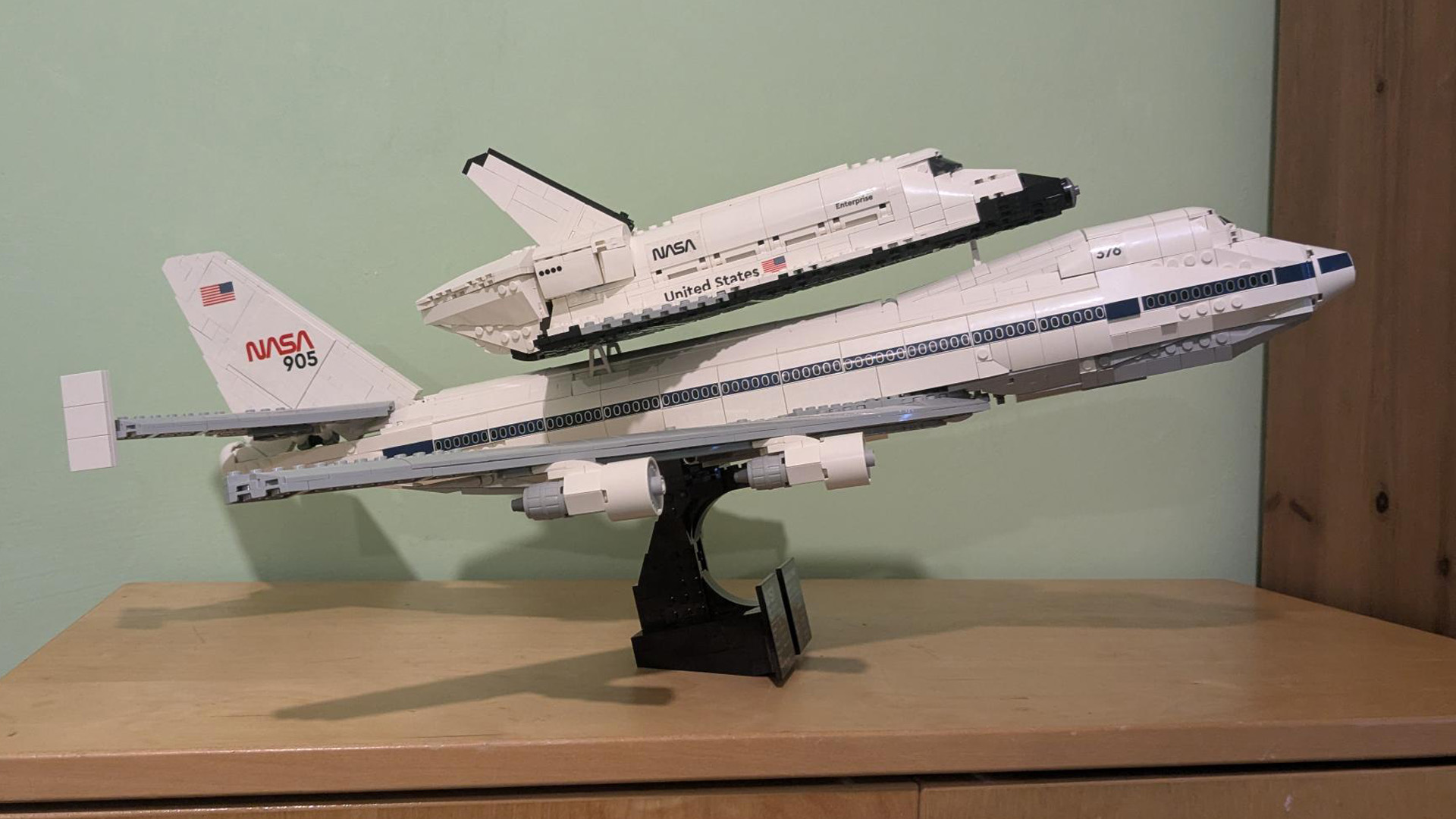
If you've the slightest interest in the space shuttle, and aren't buying for play, this Lego Icons Shuttle Aircraft Carrier is absolutely worth your money, especially since the previous shuttle set has been retired. Am I okay with all those stickers? No, but unless Lego takes their NASA range to the next level, I can't see them manufacturing printed elements for one or two sets.
Perched atop a suitably sized shelf or table, this is as impressive and as accurate as you could hope a set of this scale to be, and it's a blast to build, too. And while it's worth the $229 asking price, it's always worth keeping your eyes open for the best Lego deals; I saved 20% on this set during Black Friday.
Other sets to consider
If you're looking for a more play-friendly but still realistic set, consider the Lego Creator 3-in-1 Space Astronaut, or if it's a pocket-friendly sci-fi ship you're after, have a look at this Lego Interstellar Spaceship. The Lego City Modular Space Station makes a nice companion piece to this set. Or if you've got a little more to spend and want a spacecraft that's still in active use, this Lego NASA Artemis Space Launch System is for you.
]]>NASA's new chief Jared Isaacman said a controversial proposal to move the space shuttle Discovery to Texas from its current home on display at a Smithsonian Air and Space Museum hangar in Virginia, may end with a different spacecraft entirely landing in Houston.
"My predecessor has already selected a vehicle," Isaacman said of Transportation Secretary Sean Duffy, who led NASA as acting chief until this month, in a CNBC interview on Dec. 27. "My job now is to make sure that we can undertake such a transportation within the budget dollars that we have available and, of course most importantly, ensuring the safety of the vehicle." Isaacman officially took charge at NASA on Dec. 18, a day after being confirmed by the Senate.
The plan to move space shuttle Discovery, NASA's most-flown orbiter, to Houston was originally laid out by Sen. Ted Cruz (R-Texas) and Sen. John Cornyn (R-Texas). The Texas senators included a provision for the move in the so-called One Big Beautiful Bill Act, which President Donald Trump signed into law over the summer.
Cruz and Cornyn have said that Houston, home to NASA's Johnson Space Center where astronauts train and Mission Control is located, should have its own iconic human spaceflight vehicle on display. Discovery flew 39 space missions between 1984 and 2011, when NASA shuttered the shuttle program.
NASA's other retired shuttles - Atlantis, Endeavour and Enterprise test vehicle, which never reached space - are on display at museums in Florida, California and New York City, respectively. Two other shuttles, Challenger and Columbia, were lost in tragic space accidents in 1986 and 2003, respectively.
But there's a catch to moving Discovery. (Several of them, actually.) NASA gave the shuttle to the Smithsonian outright in 2012, so moving it to Houston would require the government to claw back the orbiter.
And there's the cost. The One Big Beautiful Bill set aside $85 million to cover the cost of Discovery's move, but critics have said that budget pales in comparison to the actual funds needed to move the 100-ton spacecraft safely, as well as construct a building for its final display. Officials with the Smithsonian Air and Space Museum's Steven F. Udvar-Hazy Center, where Discovery is currently on display, estimate it would cost up to $150 million alone just for the move.
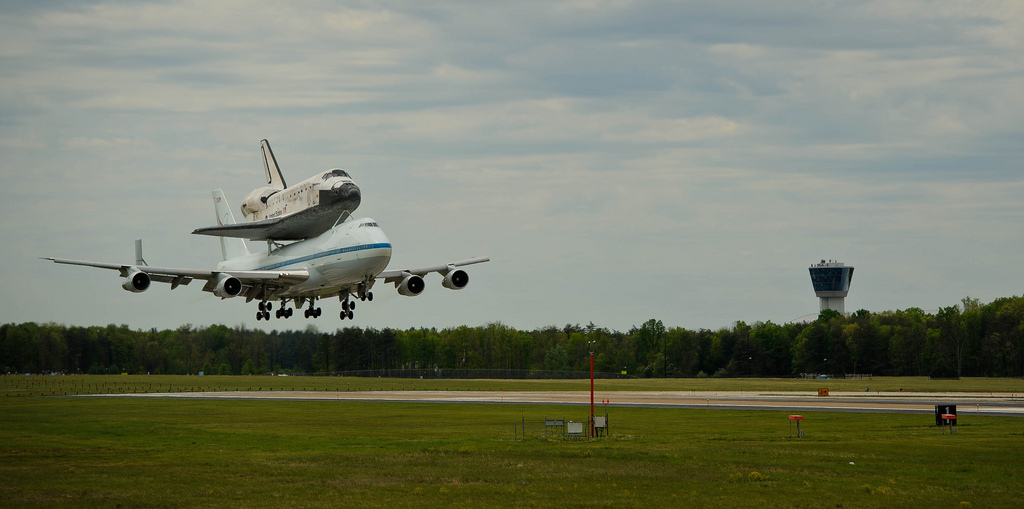
Finally, there's the question of how to physically move the space shuttle.
Discovery is 122 feet (37.2 meters) long and has a wingspan of 78 feet (23.8 m). NASA originally flew the shuttle to the Udvar-Hazy center atop a Shuttle Carrier Aircraft (a modified Boeing 747 jumbo jet), then used a series of cranes to hoist the orbiter to the ground. The agency's two Shuttle Carrier Aircraft have since been retired, one of which is on display at Space Center Houston with a mock shuttle atop it.
Smithsonian officials have said Discovery may have to be partially dissassembled to move it to Houston, risking substantial damage to the spacecraft.
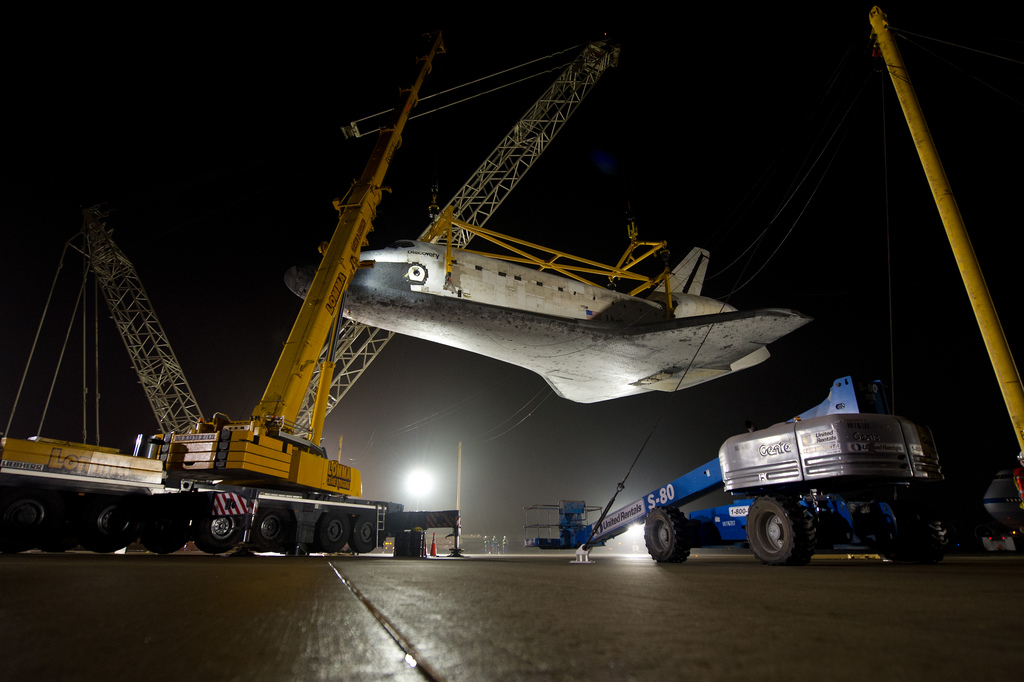
With all that as background, Isaacman told CNBC that assuring the safety of Discovery and weighing the costs of a move to Houston will factor into deciding whether NASA will actually push for the shuttle's relocation.
"And if we can't do that, you know what? We've got spacecraft that are going around the moon with Artemis 2, 3, 4 and 5," Isaacman told CNBC.
NASA is currently preparing to launch four Artemis 2 astronauts around the moon as early as February 2026. The space agency hopes to launch its Artemis 3 moon landing mission by 2028. Both missions and their follow ups on Artemis 4 and Artemis 5 would send astronauts to the moon using an Orion spacecraft, which will launch on a giant Space Launch System rocket.
"One way or another, we're going to make sure the Johnson Space Center gets their historic spacecraft right where it belongs," Isaacman said.
]]>The vision of mining space for resources is no longer science fiction. The moon's proximity to Earth and the presence of precious resources make it an increasingly attractive prospect for exploitation.
Resources thought to be present on the moon include uranium, potassium, phosphorus, water ice, platinum group metals and helium-3. The last of these is a rare isotope that could help power relatively clean fusion energy in future.
There are billions of dollars in it for companies able to kickstart mining operations, even if such returns are still years away. Technological breakthroughs in launch and exploration capabilities are occurring at breakneck pace. In the US, Seattle-based startup Interlune, working with Iowa industrial manufacturer Vermeer, is developing an electric lunar excavator designed to extract helium-3.
Their prototype can process up to 100 metric tons of lunar soil per hour. Interlune plans a 2027 mission to confirm helium-3 concentrations before deploying a pilot plant in 2029.
The Pittsburgh-based space company Astrobotic is developing the Griffin-1 lander to transport a rover designed by the California-based company Astrolab for surface analysis. A different lander called Nova-C, built by Intuitive Machines in Houston, is being designed to conduct analysis of lunar soil and rock under Nasa's Prism programme. Prism is a science and technology initiative designed to support various aspects of lunar exploration.
Meanwhile, Nasa's Polar Resources Ice Mining Experiment 1 (Prime-1), which was carried to the moon this year by an Intuitive Machines lander, demonstrated Honeybee Robotics' Trident drill on the lunar surface. Trident both drills and extracts samples of lunar soil.
SpaceX's giant Starship rocket, which has a large payload capacity and reusable design, could send multiple large experiments to the moon, and cut launch costs by as much as US$250–US$600 (£188-£451) per kg. Assuming it overcomes its teething problems, Starship could be the game changer that makes large-scale lunar infrastructure and resource missions economically viable.
While US-led initiatives have been commonplace in lunar exploration, new political and corporate players are emerging globally. China aims to achieve human lunar landings by 2030, with plans for the robotic construction of lunar bases in partnership with Russia and other nations. This would establish an international Lunar Research Station by 2035.
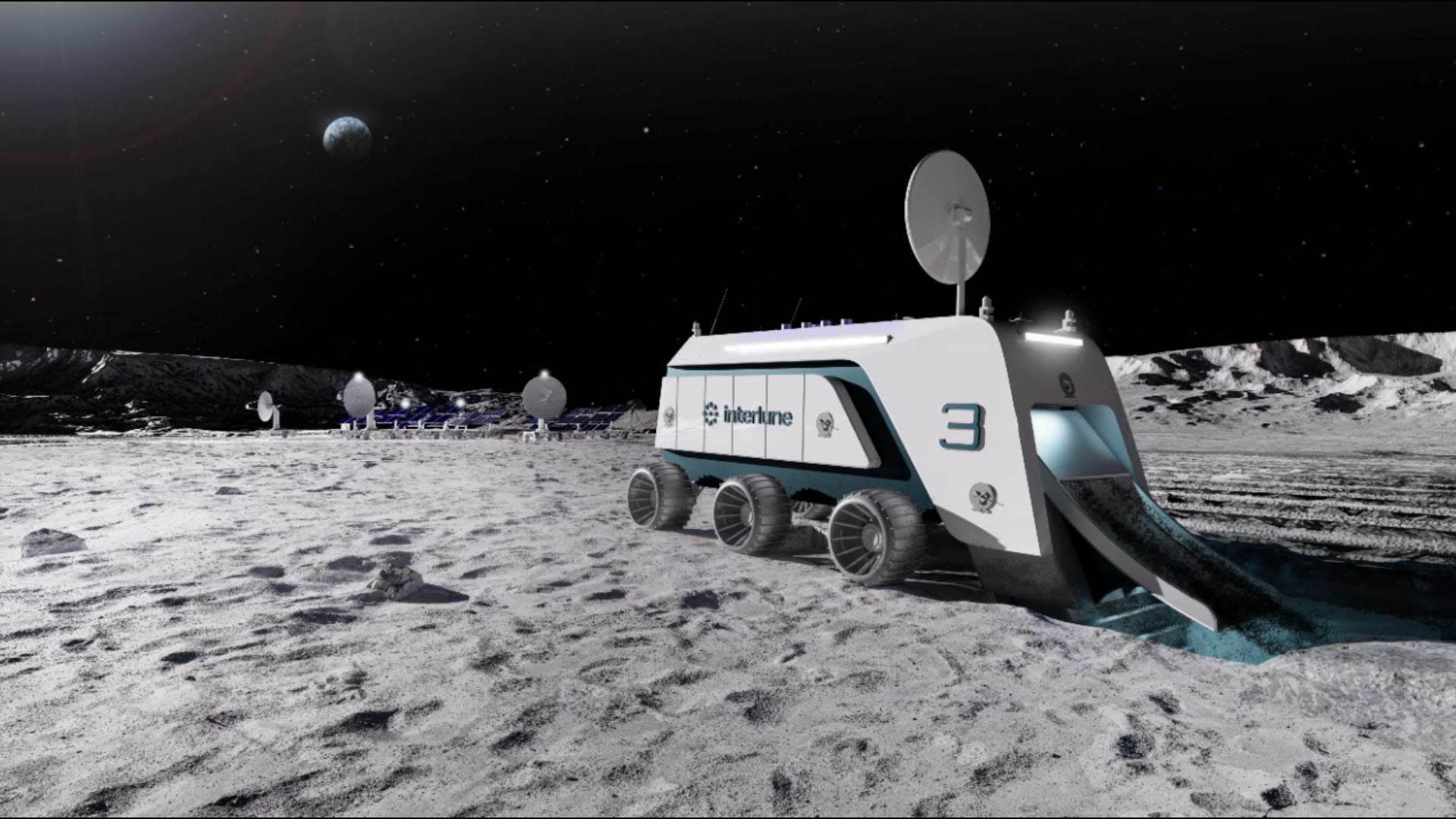
Australia's 2026 rover will put its mining expertise to work extracting oxygen and collecting soil on the moon, while Japan's Slim mission focuses on precision landings that can target resource-rich areas. At the same time ispace, a Japanese company, is developing a mini rover to explore lunar resources.
In the EU, the Argonaut programme is developing the ESA (European Space Agency)'s first lunar lander, with the involvement of a growing body of industrial enterprises across Europe. These missions are critical for gathering data and capabilities needed to understand what’s actually available on the moon and how we might one day mine it.
Frozen treaties
Yet despite evolving technical capabilities, the international legal framework governing exploitation of the moon is both very limited and frozen in the Cold War era. The 1967 outer space treaty established that space cannot be subject to national appropriation, but debate remains as to whether this prohibition extends to private entities extracting resources.
The treaty's article I declares exploration shall benefit "all mankind", yet provides no mandatory mechanism for sharing benefits, leaving it entirely to nations that have conducted activities to decide how, or whether, to share benefits at all.
The 1979 moon agreement attempted to designate lunar resources as the "common heritage of mankind" and establish an international regime for exploitation. This agreement received only 15 ratifications, and none from spacefaring powers. The "common heritage" concept met fierce opposition from industrialized countries, who viewed it as restricting their technological advantage.
National legislation, as well as other types of agreement, has filled the vacuum. The US Commercial Space Launch Competitiveness Act of 2015 granted American citizens rights to extract space resources. Luxembourg, UAE and Japan followed with similar laws. The Artemis accords of 2020, which are non-binding arrangements between the US and other countries, have provided for voluntary coordination among like-minded states. They have established principles for lunar activity including transparency and safety zones.
However, they function more as a coalition agreement than a universal law. Clear international property-rights frameworks would determine which nations capture value. The current state of ambiguity primarily benefits those with clearer frameworks and first-mover advantages, and indicates a missed opportunity for equitable benefit-sharing from space resources.
The pursuit of profit raises paramount scientific and environmental concerns. Astronomers caution that large-scale mining activities could disrupt ongoing research and preservation of the lunar environment, leading to calls for development of comprehensive lunar laws and regulations to manage these activities responsibly.
ESA's push for a zero debris charter, which it hopes will gain global recognition by 2030, reflects a growing awareness that mining and resource use in space must go hand in hand with responsible behavior.
As lunar mining and exploration accelerate, the security dimension also becomes increasingly complex and fraught, with the potential for conflict between nations. Valuable lunar resources such as water ice and rare metals are concentrated in limited, highly contested regions.
In the absence of internationally binding governance agreements, the risk of overlapping claims, operational interference and even direct confrontation is real. Exclusion zones and safety zones around mining sites could serve as flashpoints for disputes over access, resource rights and commercial interests.
The possibility of competing governance frameworks, such as the Artemis Accords and the Outer Space Treaty, to manage claims could further exacerbate the risk of conflict. The urgent need for international cooperation and transparent, equitable frameworks is clear.
The international community stands at a crossroads. The technology enabling lunar resource extraction is arriving faster than most anticipated. Policymakers and legislators have a waning opportunity to design and implement governance that keeps pace with innovation and growing appetites for lunar resources.
Binding international agreements – particularly between the great space powers – which emphasize principles of stewardship, clarify access rights and support common benefits from lunar development would ensure the moon becomes a proving ground for the equitable and sustainable development of space.
]]>Bruno, who led ULA for nearly 12 years and oversaw the development of that company's new Vulcan rocket, has joined Blue Origin, the private spaceflight company founded by billionaire Jeff Bezos. Bruno will oversee a newly formed National Security Group at Blue Origin, the company said on Dec. 26.
"Welcome to Blue Origin, Tory Bruno," Blue Origin CEO Dave Limp wrote on social media during the announcement. "We share a deep belief in supporting our nation with the best technology we can build. Tory brings unmatched experience, and I’m confident he’ll accelerate our ability to deliver on that mission."
Bruno served as ULA president and CEO since 2014 and watched over the retirement of that company's Delta family of rockets. ULA is a collaborative project by Boeing and Lockheed Martin. Bruno also led the company as ULA developed its new Vulcan Centaur rocket, which uses Blue Origin's BE-4 rocket engines on its first stage and is designed to be the company's new workhorse booster.
At Blue Origin, Bruno will apparently oversee the company's national security projects for its massive New Glenn rocket. Blue Origin launched its first two New Glenn rockets in 2025, and successfully landed the first stage of the new booster during a November mission that also launched NASA's twin ESCAPADE Mars probes. The company aims to fly U.S. national security missions alongside flights for commercial and civilian government customers.
"We are going to bring important, innovative, and urgently needed capabilities to our Nation," Bruno wrote on social media. "Can’t wait to get started."
Jeff Bezos welcomed Bruno into the Blue Origin fold with a hearty post on social media.
"Welcome, Tory. Gradatim Ferociter!" Bezos wrote, using Blue Origin's Latin motto "Step by Step, Ferociously."
"Thanks, Jeff," Bruno replied. "We are going to do important work together."
]]>This small, cloud-like galaxy is dominated by clusters of young, hot, blue stars, yet it also contains a striking red-tinged region. This reddish glow is the signature of something dramatic happening inside: a population of massive, short-lived Wolf–Rayet stars whose powerful stellar winds carve their imprint directly into the galaxy's spectrum.
What is it?
Wolf-Rayet stars are in a brief, turbulent phase of their lives. Having exhausted the hydrogen in their cores, they shed their outer layers in violent stellar winds, producing strong emission lines—particularly from ionized hydrogen and oxygen—that appear red in specialized Hubble filters. Wolf–Rayet stars live only a few million years, so their presence indicates that new stars formed very recently. Yet astronomers were initially puzzled as Mrk 178 has no obvious large neighboring galaxies that could have triggered such activity. It's a puzzle that continues to be a focus for many astronomers.
Where is it?
Mrk 178 is located around 13 million light-years away in the constellation Ursa Major.
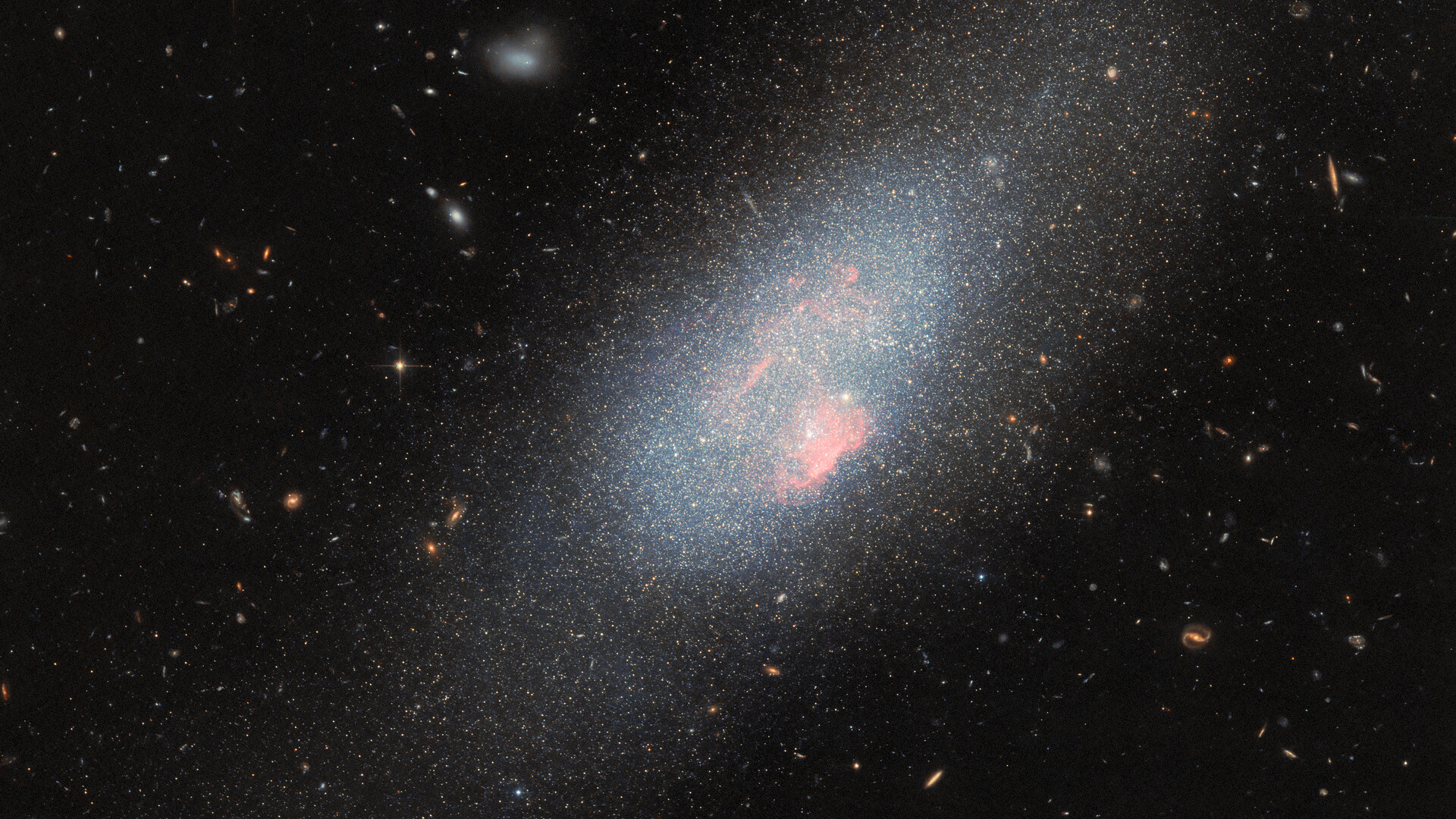
Why is it amazing?
Galaxies like Mrk 178 resemble the small, rapidly star-forming galaxies that populated the young cosmos. Studying them today provides clues to how the first galaxies built up their mass and how heavy elements spread through the universe.
As Hubble and ground-based telescopes continue to probe its structure and history, this glittering blue dwarf will help illuminate some of the most powerful forces shaping our cosmos.
Want to learn more?
You can learn more about dwarf galaxies and star formation.
Elon Musk's company has now set a new mark six years in a row, and the numbers are getting pretty silly. The record has risen from 25 orbital liftoffs in 2020 to 31 (2021) to 61 (2022) to 96 (2023) to 134 (2024) and, now, to a whopping 165. And that's not including five non-orbital Starship test flights by SpaceX.
That's a launch almost every other day, a staggering cadence that leaves other companies — and entire nations — in the dust. Indeed, SpaceX launched nearly twice as many orbital missions as China did this year, and the company's 2025 output represented about 85% of the United States' total tally.
All 165 of those launches were conducted by SpaceX's workhorse Falcon 9, which features a reusable first stage. (There were no liftoffs by the powerful Falcon Heavy, which hasn't flown since October 2024.) And those Falcon 9 boosters came back to Earth for a safe landing on all but three occasions.
Two of the exceptions were launches in January and October that sent massive Spainsat NG communications satellites to geostationary transfer orbit. These were heavy lifts for the Falcon 9 first stage, which didn't have enough fuel left over for a return to Earth.
The other non-landing was a failed attempt, suffered during the launch of a batch of Starlink internet satellites on March 3. The booster actually touched down successfully on a drone ship in the Atlantic Ocean as planned that day, but it tipped over after a fire broke out near its base and damaged a landing leg.
Speaking of Starlink missions: They dominated SpaceX's manifest this year, making up 123 of the 165 Falcon 9 launches. Together, those missions lofted more than 3,000 satellites for the Starlink megaconstellation, which currently consists of more than 9,300 active spacecraft.
SpaceX notched a number of other milestones during this very busy year. For example, the company pulled off its 500th rocket landing and 500th launch of a used rocket in 2025. And it repeatedly extended the record for most launches by a single Falcon 9 booster, which currently stands at 32.
The 165 Falcon 9 missions weren't SpaceX's only liftoffs this year, though. The company also launched five suborbital test flights of Starship, a fully reusable vehicle that's the biggest and most powerful rocket ever built. SpaceX lost at least one of the megarocket's two stages during the first three Starship flights of the year, but the most recent two, in August and October, were unalloyed successes.
We should see a lot more Starship action in 2026, including the stainless-steel vehicle's first orbital flight — and maybe, if things go exceedingly well, an uncrewed trip to Mars.
Correction: An earlier version of this story initially reported the number of SpaceX's orbital launches as 167 in 2025. It has been corrected to 165, per the company's records.
The moon will be visible halfway up the eastern horizon in the hours following sunset, with the delicate light of the Pleiades open star cluster vying for attention 5 degrees — roughly the width of your three middle fingers held at arm's length — to the upper right of the 95%-lit lunar disk.
Look directly below the moon to find the stars of the constellation Orion twinkling close to the eastern horizon. The brightest point of light to Orion's left is no star at all, but rather the "king of the planets," Jupiter. On the final night of 2025, Jupiter shines in the constellation Gemini, close to its two brightest stars — Castor and Pollux.
Saturn's steady light can also be seen shining halfway up the southern horizon around this time. A telescope with an aperture of around 6 inches will help reveal its famous rings as a thin line bisecting the planet's cloud tops. The rings are currently oriented edge-on to Earth, but will gradually open up throughout 2026 to reveal their majestic, sweeping structure, including a 2,980-mile (4,800-kilometer) gap known as the Cassini Division.
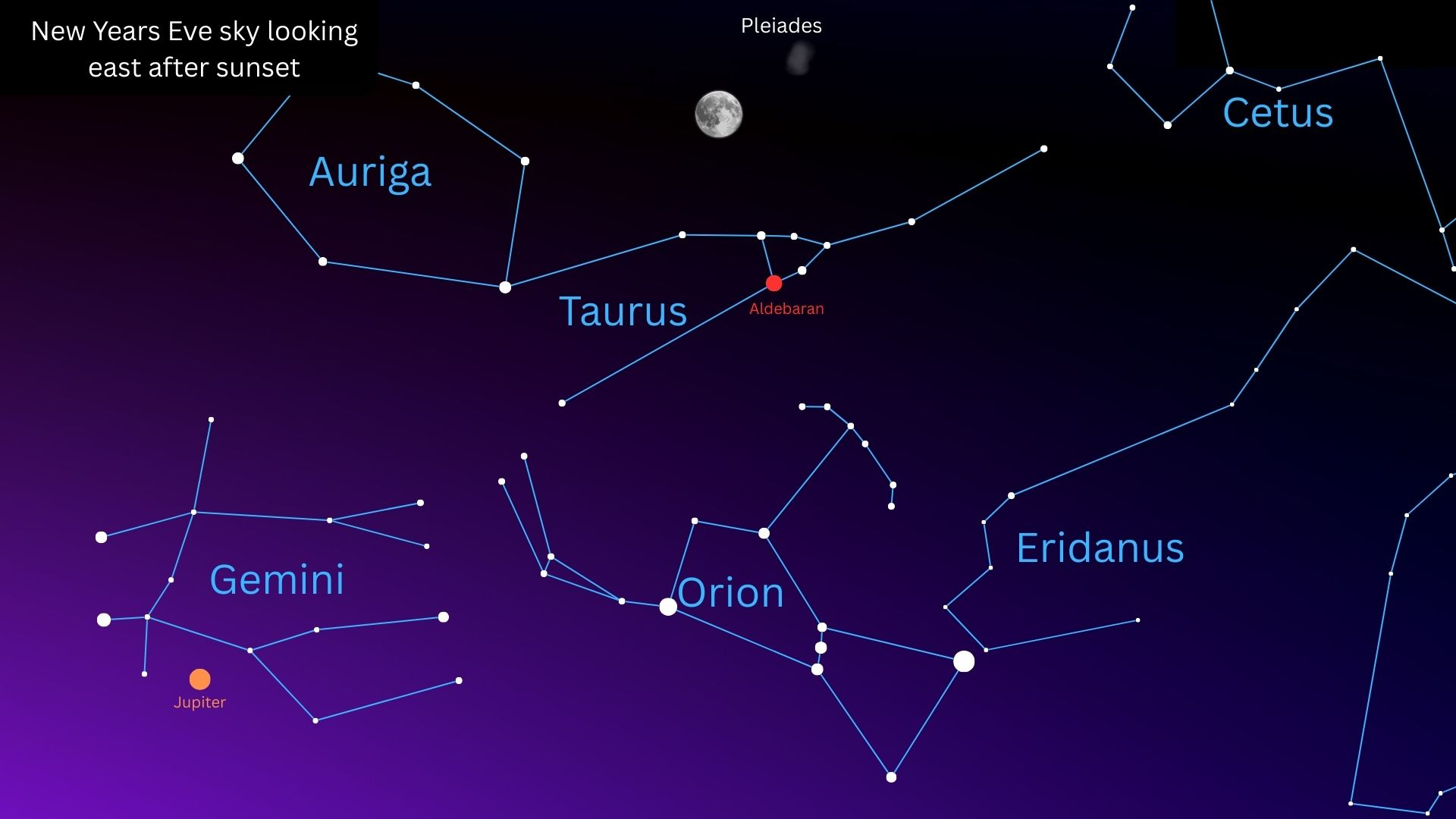
By midnight, Saturn will have slipped below the horizon, while the moon and Jupiter will stand high overhead. Look roughly 40 degrees above the northern horizon — approximately the width of four clenched fists stacked on top of each other — to find the bright star Polaris, around which the entire sky appears to rotate. To its right you'll spot the familiar sight of the Big Dipper, tilted so that it appears to be standing on the end of its handle.
Looking for a telescope companion to explore the skies with in 2026? We reckon the Celestron NexStar 8SE is the best motorized telescope out there as it's great for astrophotography, deep-space observing and it offers stunning detailed imagery. It is a little pricey but for what you get, it's good value. For a more detailed look, you can check out our Celestron NexStar 8SE review.
Those same stars will glide silently through the night as the last moments of 2025 fade and the first of a new year begins, heralding the start of another year of incredible stargazing opportunities.
If you're new to stargazing, be sure to read our article filled with expert advice on how to begin your amateur astronomy journey. We also have tips on how to observe the moon, along with superb roundups of the best telescope and binocular deals available if you're looking to upgrade your equipment.
Clear skies and a Happy New Year from everyone here at Space.com!
Editor's Note: If you would like to share your astrophotography with Space.com's readers, then please send your photo(s), comments, and your name and location to spacephotos@space.com.
Space debris experts say nearly 130 million pieces of orbital junk are zipping around our planet: high-speed leftovers from rocket stage explosions, abandoned satellites, as well as bits and pieces of junk from space hardware deployments. Some of this meandering mess is the result of the deliberate demolition of spacecraft by way of anti-satellite weapons testing.
All this space clutter means increased risk of collisions that generate more debris — better known as the Kessler syndrome. That cascading effect was detailed back in 1978 by NASA scientists, Donald Kessler and Burton Cour-Palais in the seminal space physics paper "Collision frequency of artificial satellites: The creation of a debris belt." 47 years later, the problem has only gotten worse, and as several debris strike incidents this year show, we still have no good way to solve or even slow down the accumulation of orbital debris around our planet.
Debris strike prompts emergency launch
As China's Shenzhou-20 astronauts were preparing to undock from the country's space station on Nov. 5, that crew found that their spacecraft had developed tiny cracks in its viewport window. The cause was tagged to an external impact from space debris, rendering the craft unsuitable for a safe crew return.
This incident called for the first emergency launch mission in China's human spaceflight program; an uncrewed, cargo-loaded Shenzhou-22 spaceship was launched on Nov. 25.
The Shenzhou saga ended well with the Chinese astronauts safely returning to Earth aboard the Shenzhou-21 spacecraft. It was the first alternative return procedure activated in the history of China's space station program.

However, the Shenzhou-20 landing delay is not just a procedural footnote. It's a signal about the state of our orbital commons, said Moriba Jah, a space debris expert and professor at the University of Texas at Austin.
"A crew return was postponed because microscopic debris compromised a spacecraft window," Jah told Space.com. "That decision, to delay and substitute vehicles, reflects responsible risk management grounded in incomplete knowledge. It also exposes the deeper issue. That is, our collective inability to maintain continuous, verifiable understanding of what moves through orbit," he said.
Every fragment we leave aloft, said Jah, "adds to a rising tide of uncertainty."
Wanted: data fidelity and transparency
That uncertainty is not merely statistical, it is epistemic, Jah said. "When the rate at which uncertainty grows exceeds the rate at which knowledge is renewed, safety margins erode," advocating the designing of missions, governance frameworks, and information systems that "regenerate knowledge faster than it decays," he said.
A cracked window of the Shenzhou-20 spacecraft, Jah said, "traces back to gaps in global tracking, attribution, and accountability. Until nations and companies treat data fidelity and transparency as part of safety engineering, similar near-misses will recur."
China's decision to delay the Shenzhou-piloted vessel's re-entry until its engineers were confident in the assessment "was an act of epistemic humility — recognizing what was unknown and adjusting accordingly. Such humility should be codified, not exceptional," he said.
In practice, Jah said that the Shenzhou-20 episode should push the international community toward auditable stewardship, that is, common baselines for orbital situational awareness, interoperable knowledge graphs, and certification programs that recognize missions restoring order rather than adding risk.
"Only by aligning engineering, policy, and information ethics can we prevent 'routine' anomalies from becoming precursors to catastrophe," Jah said. "If we learn the right lesson, this will not be remembered as a lucky escape but as a turning point," he said, adding that "evidence that safety in orbit begins with honesty about what we do and do not know, and with the will to regenerate knowledge faster than we lose it."
Ignoring long-term effects
Darren McKnight is a senior technical fellow of LeoLabs, a group dedicated to space domain awareness.
For McKnight the biggest issues in 2025 were:
- Proliferation of satellite constellations, some responsibly like Starlink, Iridium, and OneWeb and some poorly like China's "Thousand Sails" megaconstellation and its "Guowang" satellite internet payloads, leaving rocket bodies at a high rate and at high altitudes and not working with other constellations to "show your work, share your work, and understand context."
- Abandonment of rocket bodies in orbits that will linger for more than 25 years. The good news is there can be a 30% reduction in debris-generating potential in low Earth orbit by removing the top 10 statistically-most-concerning objects. The bad news, however, is that the global community is leaving rocket bodies at an accelerating rate despite the known negative, long-term effects for doing so.
"Some operators in low Earth orbit are ignoring known long-term effects of behavior for short-term gain," McKnight said, a situation he senses that parallels the early stages of global warming.
"Some will not change behavior until something bad happens." McKnight concluded.
Risks and responsibilities
Raising another voice of concern is the United Nations Environment Program (UNEP). This month it released "Safeguarding Space: Environmental Issues, Risks and Responsibilities." That document dubbed a set of space debris woes as "emerging issues."
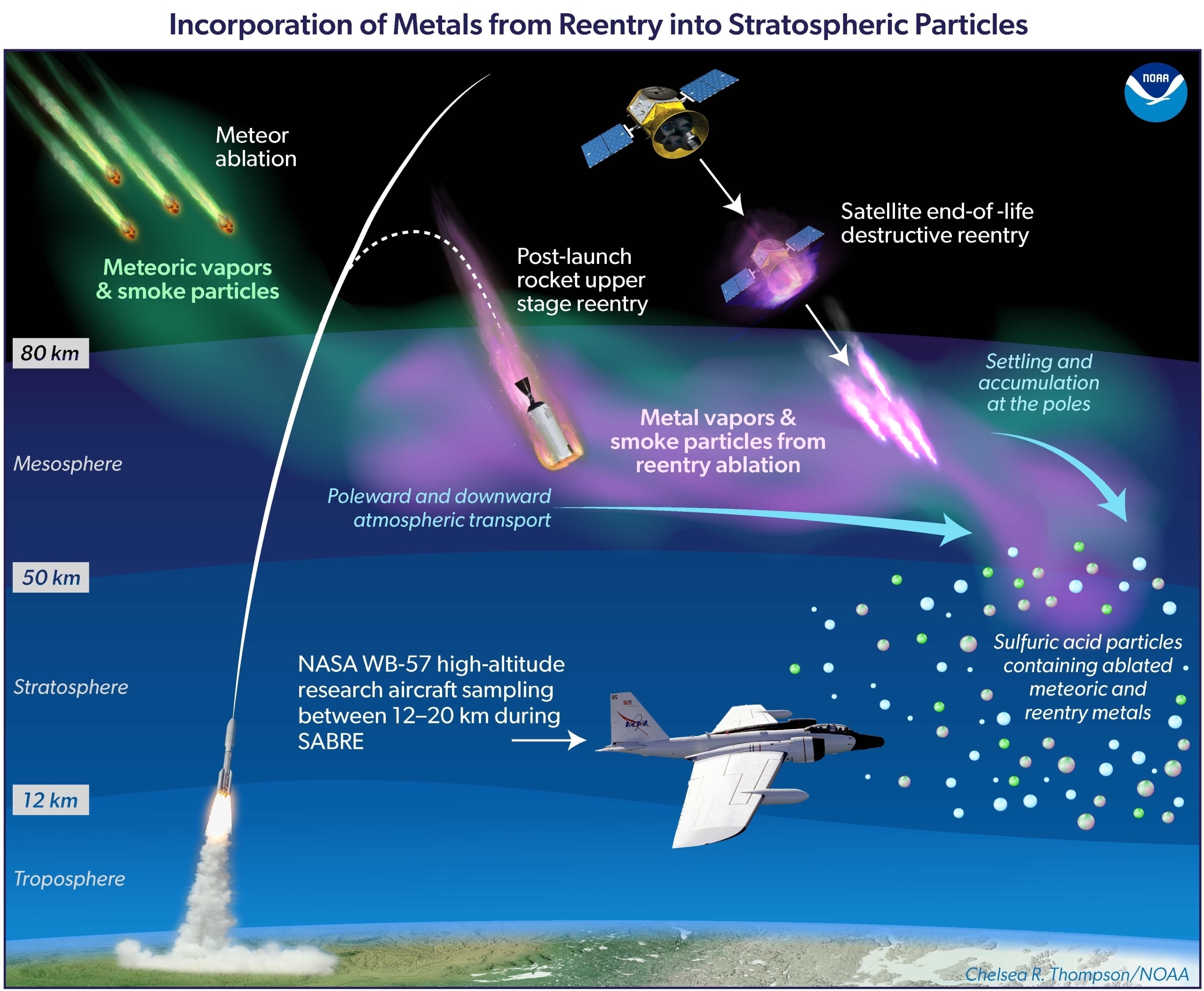
"The space sector is growing exponentially, with over 12,000 spacecraft deployed in the past decade and many more planned as the world embraces the benefits provided by satellite services. This growth presents significant environmental challenges at all layers of the atmosphere," the document explains.
Specifically flagged by the UNEP are air pollution from launch emissions, spacecraft emissions in the stratosphere, as well as space debris re-entry and the potential to alter Earth's atmospheric chemistry and dynamics with implications for climate change and depleting stratospheric ozone.
The UN group's bottom line?
"A multilateral, interdisciplinary approach is needed to better understand the risks and impacts and how to balance them with the essential daily services and benefits that space activity brings to humanity," the document states.
In September, Govee released two new models to its star projector portfolio, joining the now year-old Govee Star Light Projector (Nebula), which we reviewed earlier this year.
Size: 9.37 x 6.41 x 5.82 inches
Weight: 4.4 pounds (2.01 kilograms)
Laser: Yes, Class 1
Control: On-body, app, voice
Rotation: Yes
Sleep timer: Yes
Speaker: Yes
Projection surface: 90° wide projection covering 301 sqft
The first, Govee Star Light Projector (Ocean Wave), is only slightly different from the aforementioned model, offering dynamic water-inspired patterns as opposed to Nebula-inspired ones.
The other, which we are reviewing, is the model H609D, a disk-based projector. It projects an 8K ultra-high-definition image from the supplied disks. It still includes a built-in speaker, white noise effects and laser 'stars'. But does it stand up against the stiff competition in the disk-based star-projector world? Let's find out.
Govee Star Light Projector review
Govee Galaxy Light Projector 2 Pro: Design
★★★★
- Nicely designed packaging
- Fairly large footprint
- Quality-looking unit
As with the Govee Star Light Projector (Nebula), the packaging of the Govee is nicely designed and stylish. It is a large rectangular box made from high-quality materials and the unit is packed securely inside with polyethylene foam. It would be wonderful to give or receive as a gift.

Unlike some units we've reviewed, the spelling and grammar are correct (we often find them as a result of poor translations), which can instantly reduce the perceived integrity of the product.

This relatively large projector comes with a separate rubberized stand. The purpose is not entirely clear, except to give the user the freedom to adjust the projection angle from ceiling to wall, although other models have incorporated this functionality into their main stands. It is not a drawback, just an observation.
The unit adopts a modern capsule-style design, moving away from the American football shape seen in previous Govee models. Its interface is straightforward, with the projector lens and lasers positioned on one side and a disk tray with four control buttons on the top. It is a sleek, unobtrusive device that would blend comfortably into most interiors.
The eight supplied disks are packaged in a compact booklet, which we prefer to the individual plastic cases often used for single disks. The book format is far more practical for storing small, thin slides.
Govee Galaxy Light Projector 2 Pro: Performance
★★★★
- Fast smart home connection using "Matter"
- Bright enough for use in dark rooms and on dark walls
- Noisy motor
As with the previous version of the Govee projector, "Matter" connectivity means we were up and running in seconds, unlocking all functionality in the Govee app and linking it to our Google Home account. You can also integrate it with Alexa, which we expect is just as easy a process.
As this is a disk-based projector, there is limited customization in terms of colors and patterns, as it does not offer this functionality. The stars either 'diffuse' or 'gather', head from the outside edge in, or the inside edge out. That said, there are still several 'scene' modes displayed on the app, that tweak things like the rotation speed, the arrangement and movement style of the lasers and add 'white noise'.
The Class 1 lasers are very bright, even in a brightly lit room; however, the disk-based projection requires a dark room, even when it's at full brightness.
The lasers are the most dynamic we have seen. They don't simply rotate in a circle; the different scene selections activate some lasers, turn others off, make some bright and some dull, and some move quickly, while others move slowly. You get the idea. They are more like dancing fireflies than predictable laser dots. This was our favorite thing about the device.

The disk-based projections are attractive, but there is no indication of what each disk is meant to depict. Unless you are already familiar with nebulae or space imagery, you are essentially looking at something pretty without knowing what it represents. Disks from previous models are not compatible with this unit; the new disks use a square format, and we have not yet found anywhere to purchase additional ones.
We also noticed that most of the detail in each projection sits around the outer edge of the disk. A more even distribution would have avoided the effect of a colorful ring with a largely empty centre. Naturally, the further the projector is from the wall or ceiling, the larger that circle becomes. It is also worth mentioning that a few Amazon reviewers report that the disk images fade quickly. We have not used the unit long enough to confirm this ourselves, but it is concerning, given that we still do not know where replacement disks can be sourced.
We were hopeful that the motor noise present in the Govee Nebula we reviewed earlier this year would be addressed. The unit is pleasantly quiet at first, at least until the cooling fan activates. The fan is obviously necessary to prevent overheating, but it is fairly loud and typically switches on after 20–30 minutes of use. On several occasions, we used the projector to fall asleep, only to be woken by the fan's whirr. It is something to keep in mind if you plan to use it as a sleep aid without white noise or music to mask the sound. If you are using the projector while watching a film, gaming or hosting a party, the noise is unlikely to be an issue.
Govee Galaxy Light Projector 2 Pro: Functionality
★★★★

- Smart integration is great
- Requires mains power
- Good Bluetooth Speaker
Although you can use the on-body buttons for basic controls, the Govee app unlocks all of the star projector's advanced features.
Setup through the dedicated Govee app is seamless — no error messages, no frustrating reboots or restarts. It just works.
20 scene modes adjust the speed, brightness, white noise track (if enabled) and laser direction. The variations between modes are subtle, but distinct enough to have standouts — our favorites being Cosmic Waves and Interstellar Travel.
Within the app, you can control the sleep timer and the wake-up timer. The unit is set to turn off automatically after 120 minutes. This is apparently designed to help increase the disks' lifespans. We'd have preferred it to be a little longer, to account for watching alongside long movies or an evening gaming stint, but it's easy enough to turn the unit off and on again to restart the timer.
As well as being able to pair the star projector with another Bluetooth device (like your phone) to play music, it also comes with 50 'white noise' sounds — though 'ambient noise' would be a better description. There is themed music and sound effects, but funnily enough, no actual 'white noise'.
The speaker is good enough for a pleasant listening experience. Lacking large amounts of bass, like most Bluetooth speakers do, but good enough for background music, podcasts, audiobooks and spa music.
This is a mains-powered unit and, unfortunately, isn't rechargeable. In reality, you're likely to find a good spot for your projector and leave it there rather than moving it around too often, so this isn't a deal breaker for us.
Should I buy the Govee Galaxy Light Projector 2 Pro?
✅ You are looking for a disk-based projector that you don't need to move too often: This is a mains-powered unit, best for keeping in situ.
✅ You like buying from reputable manufacturers: Govee is a trusted manufacturer of ambient lighting solutions, not a distributor of mass-produced 'cheap' units.
❌ You want something with a small footprint: If space is limited, you'll want something that occupies less of it.
❌ You don't want a disk-based projector: For that, try the previous model, the Govee Star Light Projector, which allows you to customize a plethora of lights and patterns to your liking.
This isn't a budget-friendly star projector; in fact, it sits at the pricier end of the spectrum (unless we're talking about the truly expensive ones). At the time of writing, it's currently retailing for $149.99, which we do think is pretty steep, especially when much cheaper models are available and probably do just as good a job. For example, the Orzorz Galaxy Lite disk-based projector is one of the best models we have reviewed for image vividness and brightness; however, it lacks a built-in speaker.
For a good 'lights and patterns' style projector, the Cadrim, which we reviewed earlier this year, is a very affordable option that operates quietly and only takes up a tiny amount of space. It is controlled by a supplied remote control rather than an app, so it's great for keeping children off their screens, too. The Cadrim would be a good option to give as a gift, whereas this Govee model would be better as an indulgent 'me to me' holiday purchase.
If a disk-based projector without a speaker is definitely what you are after, the Sega Toys Homestar Matataki is our top choice for a plug-in device, and the Pococo Galaxy Star Projector is the best rechargeable option. For a disk-based option with a speaker, this is the best we've come across to date.
]]>The four astronauts set to fly around the moon on the Artemis 2 mission participated in the launch day dress rehearsal on Dec. 20 at NASA's Kennedy Space Center (KSC) in Florida. The test marked a milestone in final preparations for NASA astronauts Victor Glover, Reid Wiseman and Christina Koch and Canadian Space Agency astronaut Jeremy Hansen for their journey around our nearest celestial neighbor in early 2026.
The dress rehearsal, also known as a countdown demonstration test, simulated the launch day timeline, including the astronauts suiting up in spacesuits, a walkout and getting in and out of their Orion spacecraft, according to a NASA statement.
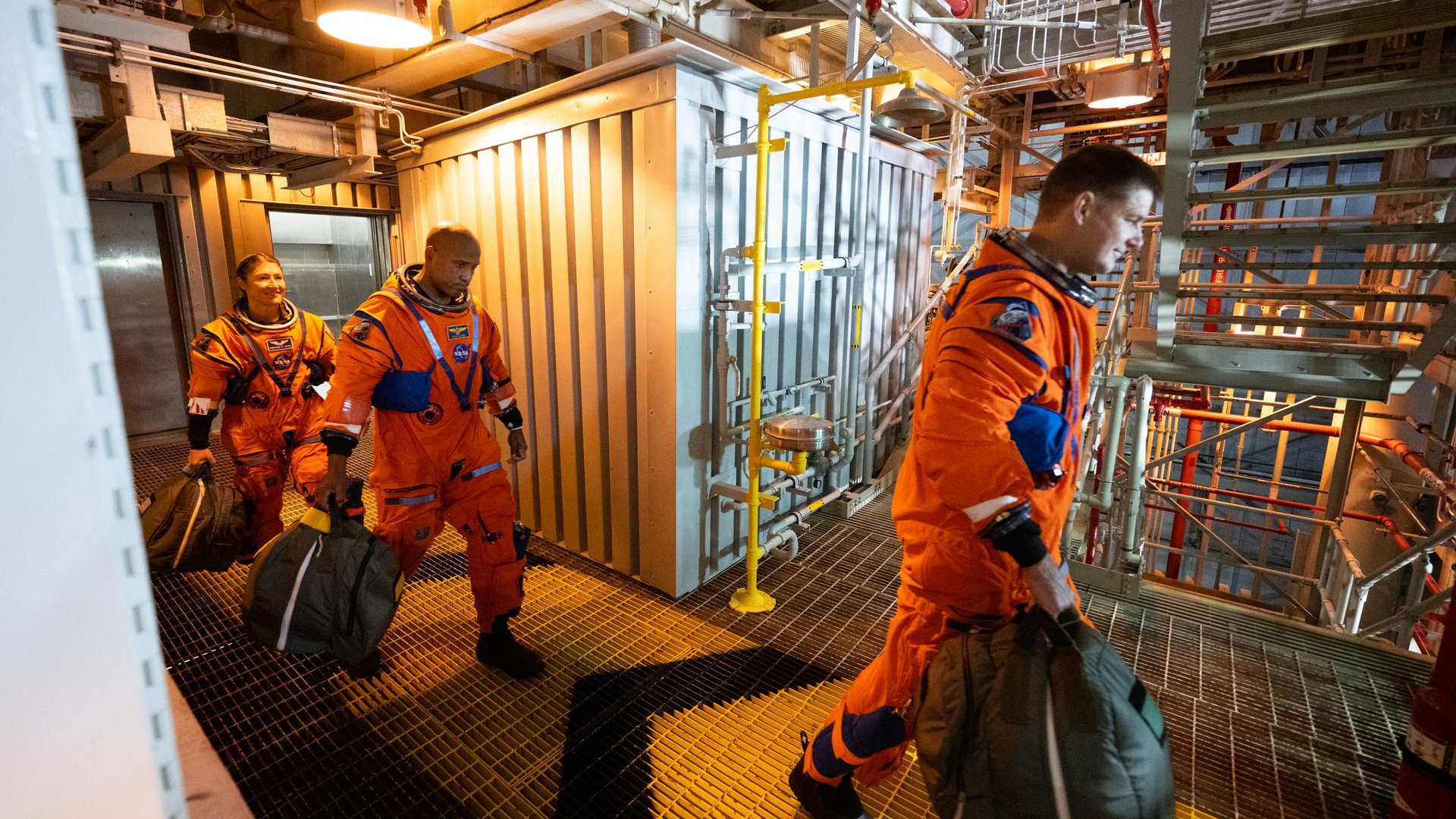
The action took place at the Vehicle Assembly Building (VAB) at KSC, where Orion and its European Service Module and the gigantic Space Launch System (SLS) rocket are being prepared and tested ahead of rollout and launch.
Artemis 2 is currently slated to launch from KSC no earlier than Feb. 5, 2026. The mission will mark the first time astronauts will journey to the vicinity of the moon since Apollo 17 in December 1972.
A day before the rehearsal, newly confirmed NASA Administrator Jared Isaacman posted on the social media platform X that "Artemis 2 is America's return to the moon, and the start of something much bigger."
The following mission, Artemis 3, will attempt to land astronauts on the surface of the moon. The mission is officially scheduled for 2027, but reports suggest that it will not launch until 2028 at the earliest.
]]>Across cultures and centuries, constellations have been used to explain myths, guide travelers, and inspire dreamers. Each one carries its own symbolism, energy, and mystery, just like people do.
This quiz is designed to connect your quirks, strengths, and hidden sides with the constellation that resonates most with you.
So, are you ready to discover your cosmic twin? Step into the universe, answer a few revealing questions, and let the night sky tell you: What constellation am I?
Try it out below!
As more and more satellites enter orbit, one of the biggest questions becomes: how can these satellites approach and maneuver around each other safely? To answer that question, Luxembourg-based companies LMO and ClearSpace carried out a carefully designed simulation using the European Space Agency's Guidance, Navigation and Control Rendezvous, Approach and Landing Simulator (GRALS).
What is it?
GRALS is part of ESA's Guidance, Navigation and Control Test Facilities and is built to recreate close-proximity operations in space with remarkable realism. The satellite model shown in this image was developed by ClearSpace to replicate the geometry, materials, and visual complexity of real satellites.
Its crinkled gold thermal insulation, metallic structures, and the cup-shaped reflective thruster are not just aesthetic details but critical features that influence how light behaves in space and how cameras perceive an object during a rendezvous.
To ensure reliability, engineers combine computer-generated imagery used to train AI systems with physical testing on increasingly realistic models. Smaller models simulate long-range approaches, while larger, high-fidelity replicas like the one shown are used to test the most delicate, close-range phases of a rendezvous.
Where is it?
This photo was taken at the ESA's technical center, ESTEC, in the Netherlands.
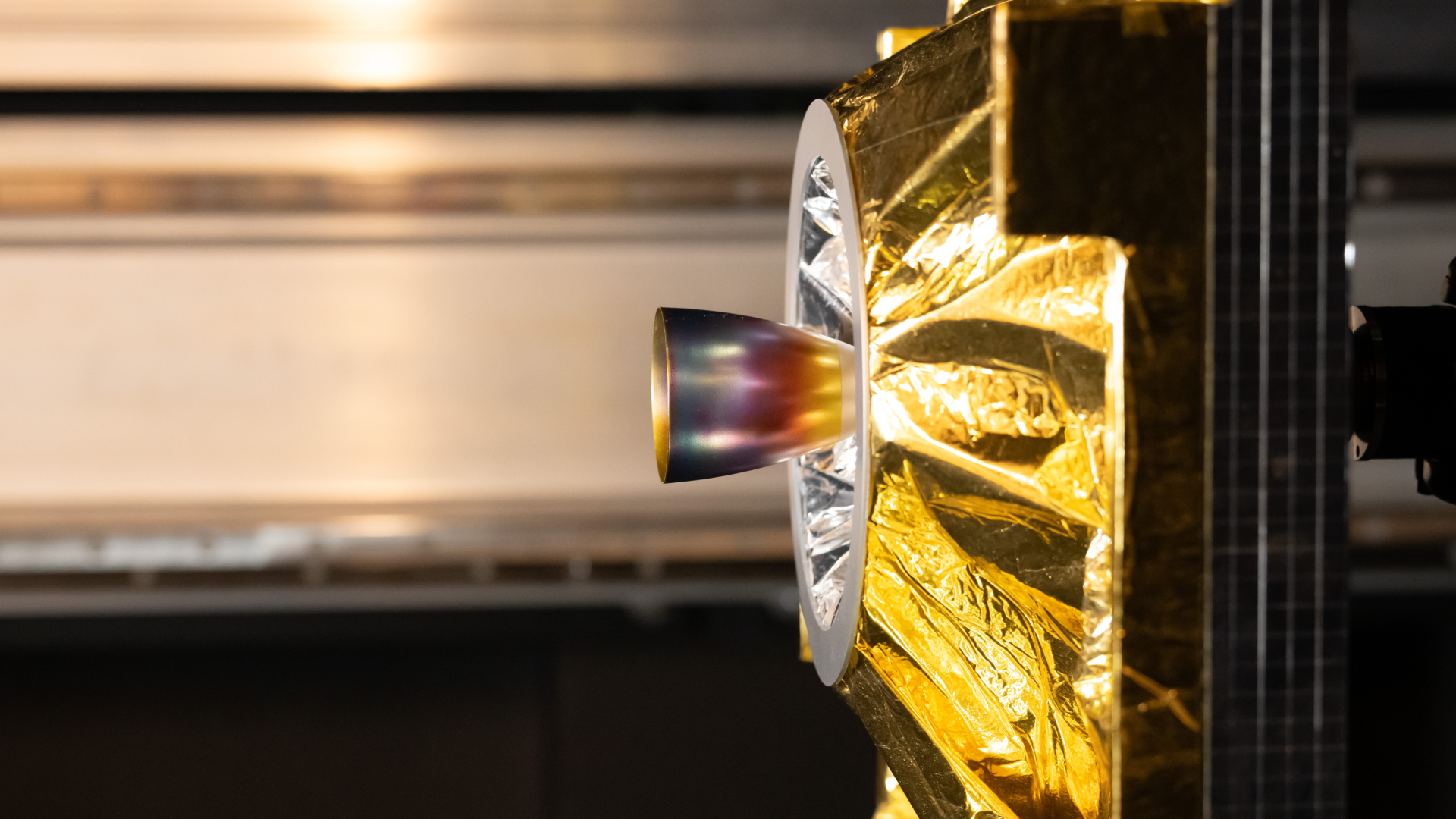
Why is it amazing?
The thousands of satellites orbiting Earth pose growing risks to operational spacecraft and to the long-term sustainability of space activities. Before a spacecraft can refuel, repair, or safely deorbit another satellite, it must be able to see, identify, and approach its target with exceptional accuracy. Vision-Based Navigation systems are key to making this possible. Much like self-driving cars rely on cameras and AI to interpret their surroundings, VBN-equipped spacecraft must interpret light, shadow, reflections, and rapidly changing viewpoints in the harsh environment of space.
Facilities like GRALS play a critical role in bridging the gap between theory and reality. By testing real hardware against realistic satellite models under space-like lighting conditions, engineers can expose weaknesses, validate AI training, and build confidence that autonomous systems will behave safely once deployed in orbit.
Want to learn more?
You can learn more about satellite crowding and space junk.
A key question: Have these various traumas changed NASA dramatically, and potentially permanently?
Battle lines are being drawn and now Congress has to spin up their views as to the space agency's overall stability and, indeed, its future. As for what's ahead, it's all sausage making — political style. The outcome for NASA is literally a to-be-determined matter of time and space.
Corporate/agency history
"Clearly, things have changed," said Henry Hertzfeld, a research professor of space policy and international affairs at George Washington University's Elliott School of International Affairs, noting that his observations are from afar, not from within the space agency.
"A lot of very experienced people with a lot of 'corporate/agency history' are now gone from the agency. Some may have retired soon anyway, but that is not an excuse or explanation of the changes," Hertzfeld told Space.com.
Since the whole policy office at NASA was eliminated, said Hertzfeld, many of those people and functions are gone. Whether, for example, economics and other policy offices will be missed or not is arguable, he said.
"But I do think not having them is a significant loss of talent and input into NASA programs and decisions," Hertzfeld said.
Long-term loss
Like many suggest, if Congress doesn't act with funding, the real loss is in the science area.
"There will be fewer new initiatives and many cuts in the work that now won't be done across the board," said Hertzfeld.
"The science part of NASA is relatively small but it is the one true research area that has produced significant learning and information over the years. And, it will be a long-term loss since the agency will likely face more difficulty in hiring and keeping highly trained and skilled scientists," Hertzfeld said. "They will go elsewhere … and elsewhere is not the government."

Investment dollars
Hertzfeld said that one less well understood impact is the rapid funding of various defense and security space efforts.
"We read about the significant increase in private sector investment activity oriented toward space. But what is really happening is that the Department of Defense spending on buying more from companies is the main driver of these investment dollars," said Hertzfeld. "NASA programs and needs are no longer the main stimulus for 'commercial' space activity."
The resulting innovation and products for new space activities, Hertzfeld added, will primarily benefit the security aspects and not so much the civil space programs. "Thus, the aggregate commercial and government space sector will benefit, but quite differently from what we experienced in history," he said.
Heightening concerns
Keith Cowing is founder of the private NASA overseer website, NASA Watch. He is passionate about the space agency's revered history and its future.
"While every NASA field center saw workforce reductions of around 20%, perhaps no center was more drastically affected by budget cuts than NASA's Goddard Space Flight Center," pointed out Cowing.
There was a long term plan in place that would have morphed Goddard over the course of nearly a decade to better adapt it to future NASA needs, Cowing told Space.com. That plan was co-opted by Administration personnel in place at NASA Headquarters, he said, to accelerate and expand Goddard facility closures that will result in half of the center's buildings and laboratories being mothballed, he said.
"These cuts are a standout when compared to changes elsewhere at NASA," Cowing said, "so much so that the House Oversight and House Science, Space and Technology committees sent repeated inquiries to NASA asking for an explanation."
The result is that "NASA has been slow to respond, thus heightening concerns about the overall impact on NASA science programs as presented by the White House in its FY 2026 budget request," Cowing said.
Tremendous challenge
Marcia Smith is founder and editor of the informative SpacePolicyOnline.com
NASA is not "crippled," Smith said, but time will tell the effects of the loss of personnel.
"I certainly don't know the names and positions of all the 4,000 or so people who left, but of the people I personally know, they were the best of the best," Smith advised. "Now, surely, a lot of terrific people are still there, but how they're going to manage to execute whatever programs remain with so many excellent colleagues gone will be a tremendous challenge."
Both what's happening at the NASA Goddard field center and given layoffs of Jet Propulsion Laboratory (JPL) talent, "is extremely worrisome to American leadership in space science," said Smith.
Smith observed that it may well be the effect on morale is the most dramatic effect.
"People who have spent their lives keeping America as the world leader in civil space science and technology basically being told their work is valueless and can be erased with the wave of a 'DOGE wand.' That's tough," Smith said.
DOGE stands for the Department of Government Efficiency, a special commission put in place by President Donald Trump, established to slash federal spending.

Years to rebuild
NASA does what no other organization — public or private — can do, said Jack Kiraly, director of government relations for the Planetary Society, a member-funded nonprofit organization based in Pasadena, California that's dedicated to advancing space science and exploration.
"The agency has led the world in the exploration of space, redefining our understanding of the universe, and inspiring countless innovations in science and technology," Kiraly told Space.com.
Kiraly sees the events of 2025 as a profound shock to NASA and the space community.
"The agency will begin the new year with a civil servant workforce smaller than what it had at the dawn of human spaceflight in 1961. Nearly 4,000 scientists, engineers and space professionals have left the agency through pressured resignation and layoffs amid rapid reorganizations and funding uncertainty," said Kiraly.
That action represents a loss of specialized expertise and institutional knowledge that will take years to rebuild, added Kiraly.
Pivotal moment
Beyond the immediate impacts, said Kiraly, the termination of NASA awards valued at more than $315 million and the reduction of future research opportunities have disrupted the science, technology, engineering, and mathematics (STEM) pipeline that trains the next generation of scientists, engineers, and innovators.
Because NASA's activities involve every state and more than 75% of congressional districts, these effects will be felt nationwide, Kiraly said.
"The damage is real, but it doesn't have to be permanent," Kiraly said. "Congress has, in a bipartisan way, signaled to the White House and the public that they intend to fully fund NASA in 2026, rejecting the worst of the cuts proposed earlier this year."
And given the confirmation of Jared Isaacman to be NASA's Administrator "brings new leadership and momentum at a pivotal moment for the agency," Kiraly concluded.
And while we experience the cosmos first through the human eye, our vision has limits. We can't zoom in on distant nebulas, see the faintest glows, or safely take in the brightest targets — and much of the electromagnetic spectrum is invisible to us entirely.
Thankfully, the Space.com community is packed with talented photographers and observers armed with sophisticated cameras, clever techniques and powerful telescopes capable of revealing the hidden majesty of the cosmos. Read on for a selection of breathtaking images captured by astrophotographers around the world and featured on Space.com throughout 2025.
10 Incredible astrophotography highlights of 2025
1. Plasma twists above the solar surface
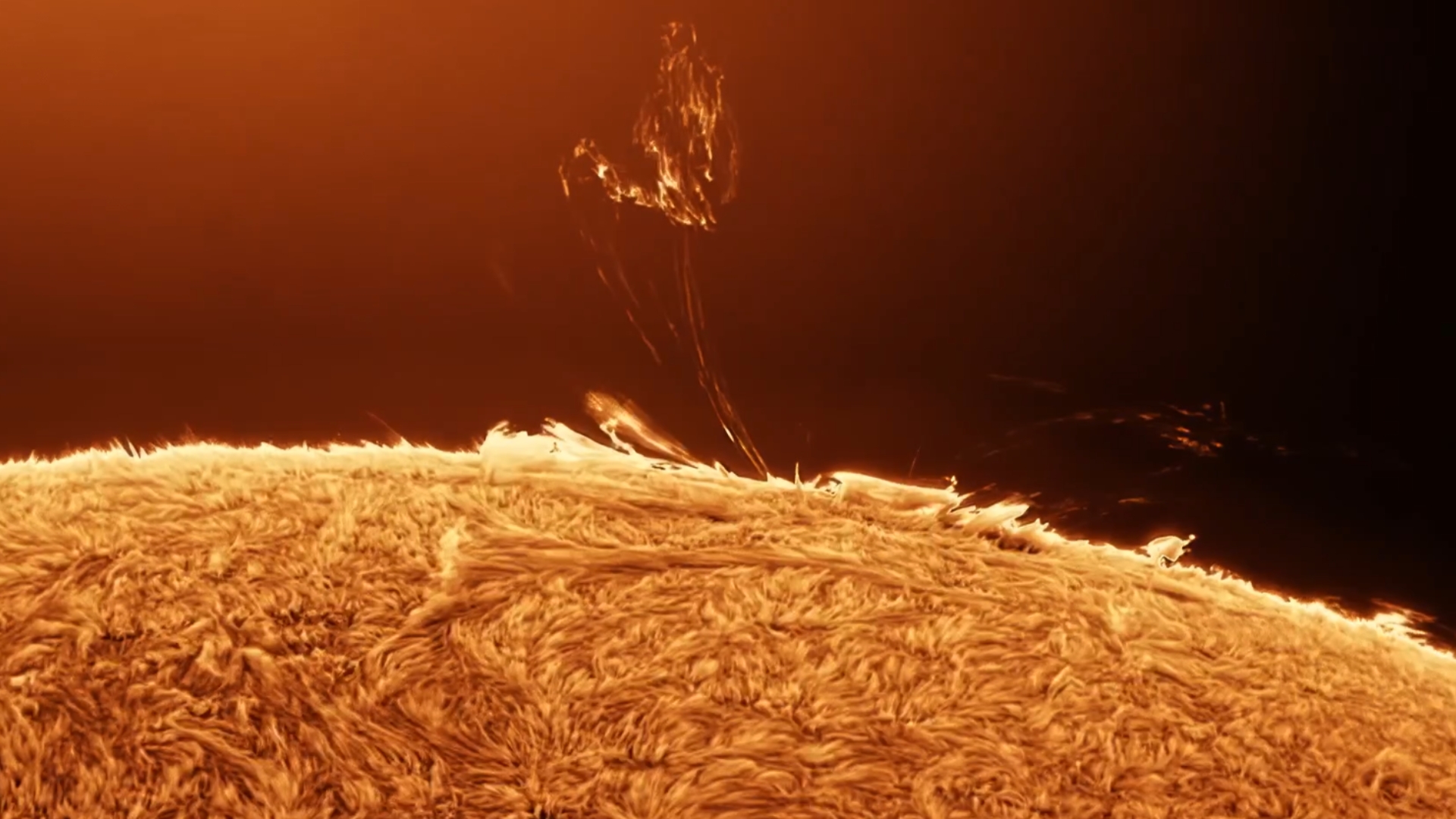
Astrophotographer Mark Johnston captured a jaw-droppingly detailed view of hydrogen plasma suspended in the powerful magnetic field above the sun on Oct. 20 from Willow Springs, Arizona, using a TEC160FL refractor telescope fitted with specialized filters.
2. A nebula shark is spied hunting through the depths of space
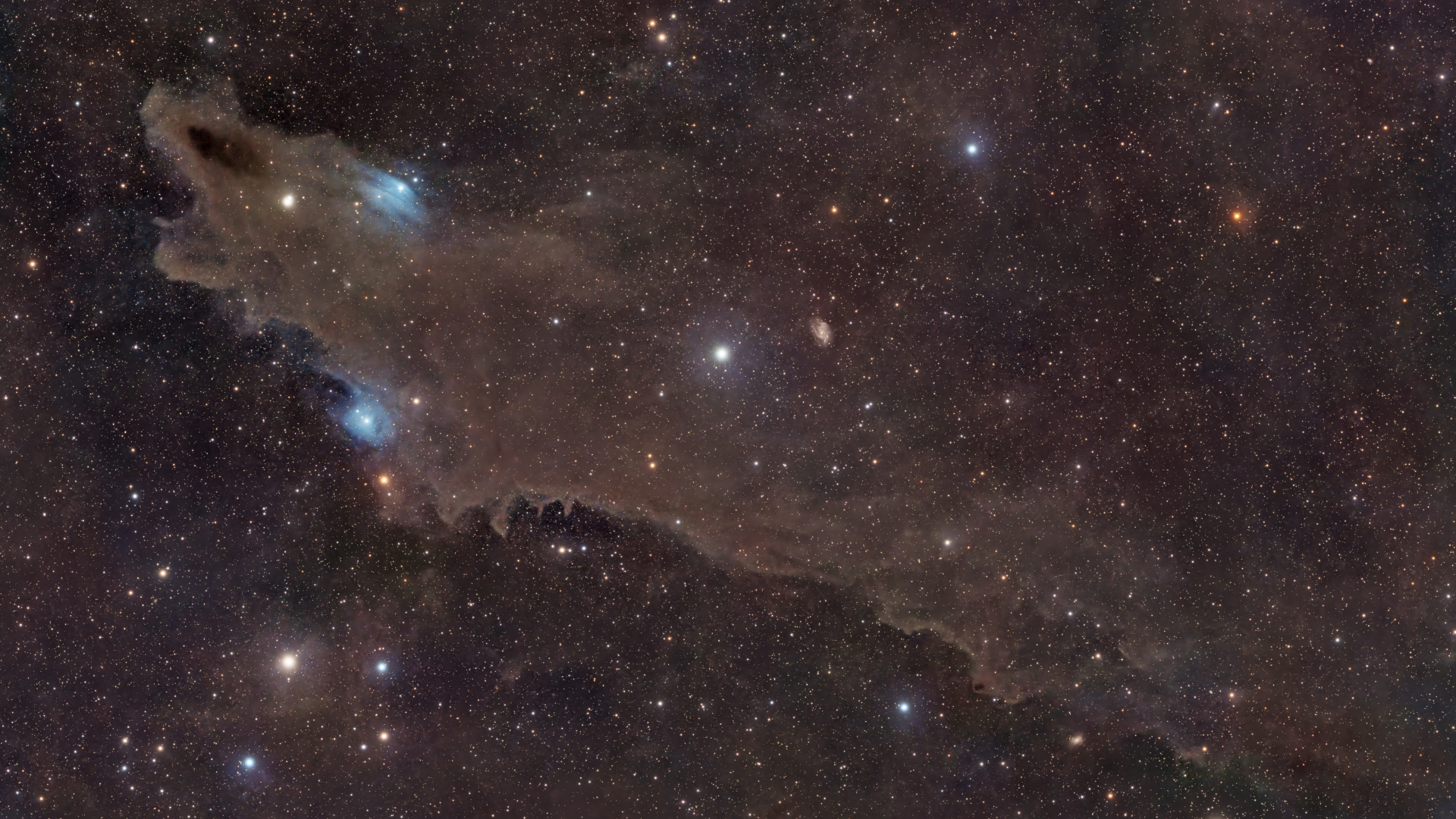
Ronald Brecher, meanwhile, set his sights further afield, targeting a spectacular deep-space nebula vista in the constellation Cepheus, some 650 light-years from Earth, which happens to resemble a vast cosmic shark swimming through deep space.
3. The moon and sun meet over Stonehenge
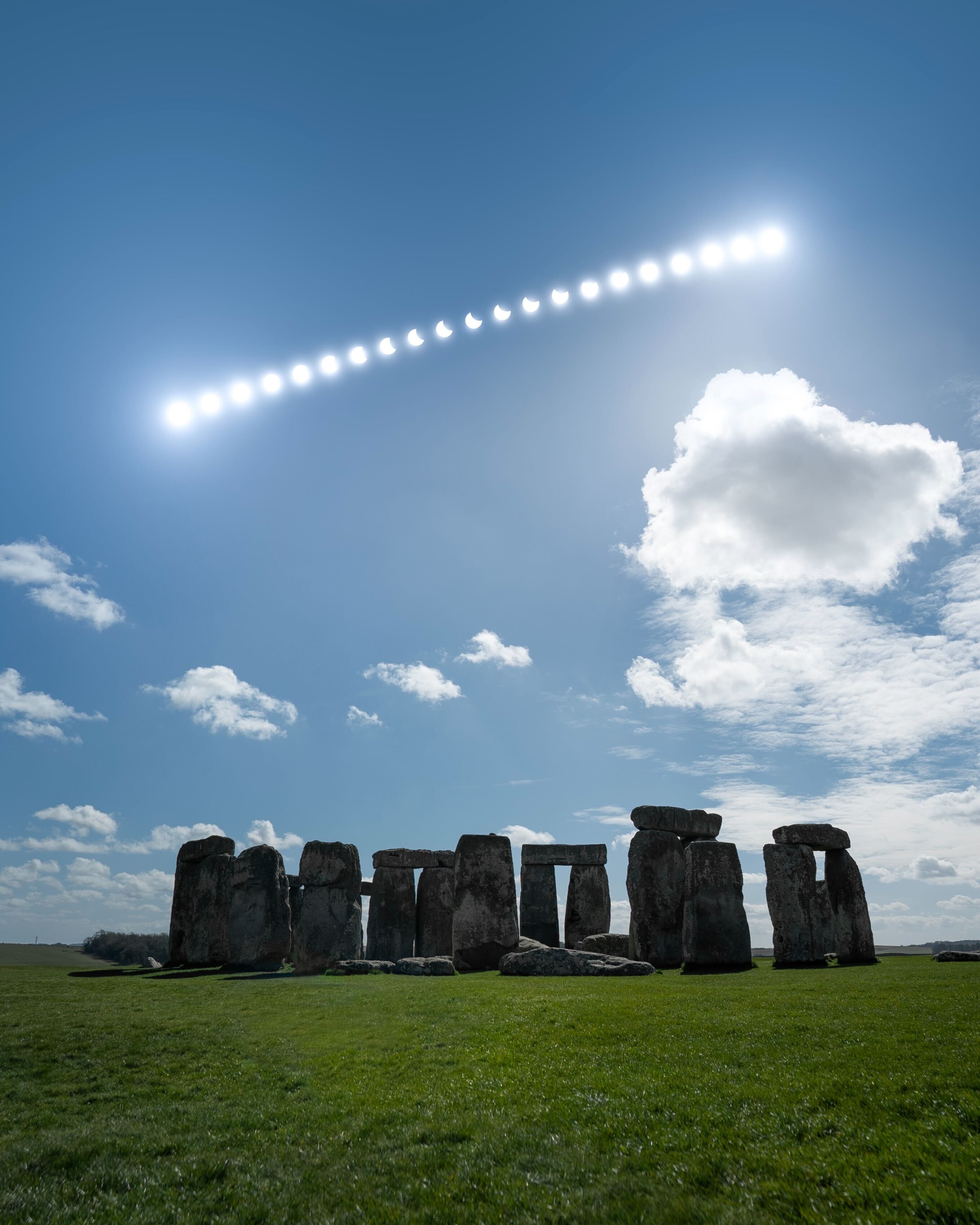
This gorgeous composite shot detailing the phases of a partial solar eclipse unfolding above the ancient monument of Stonehenge was captured by award-winning photographer Josh Dury as the moon slid between the sun and Earth on March 29.
4. Comet Lemmon twists in the solar wind
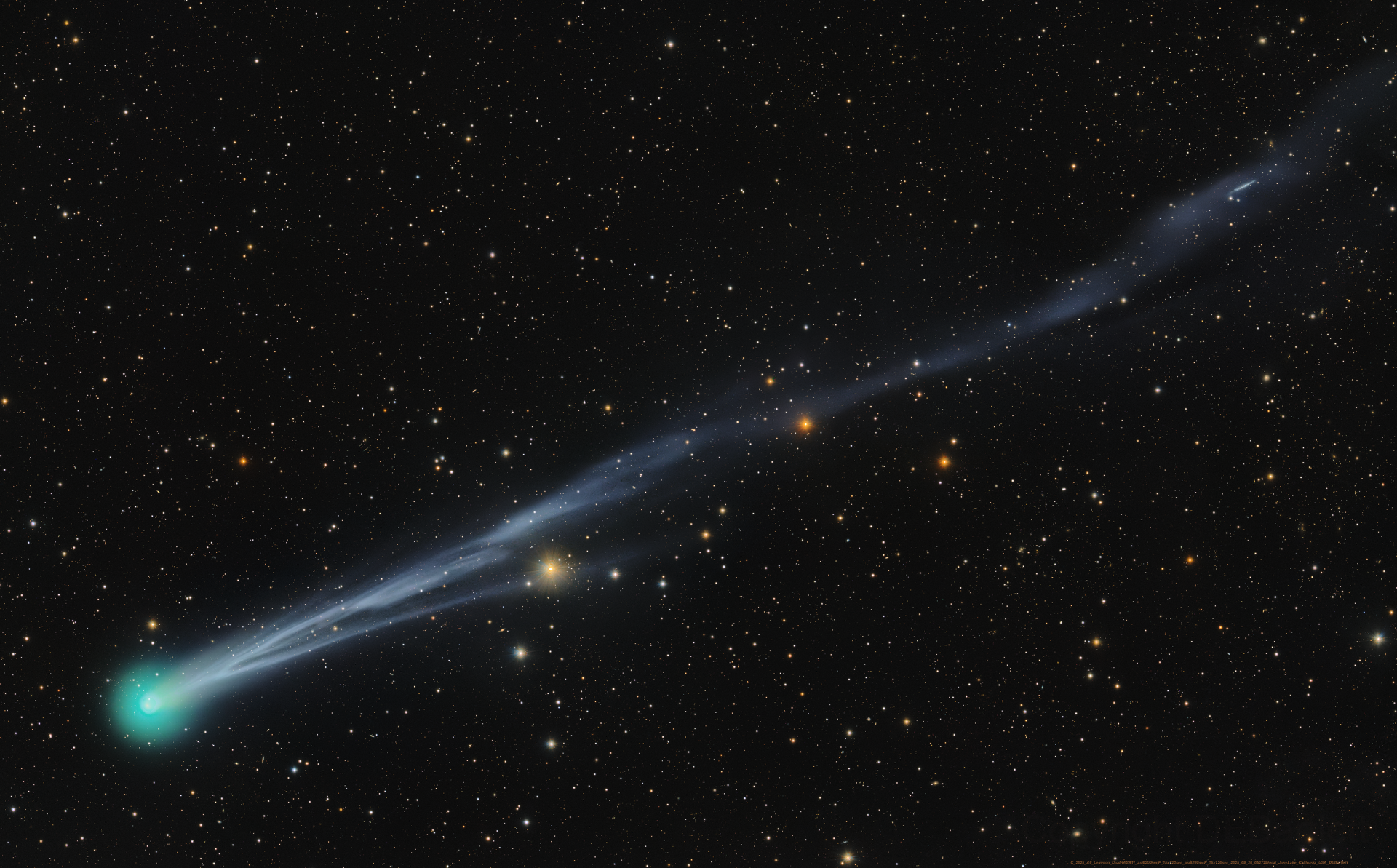
In a year packed full of phenomenal cometary capers, astrophotographer Dan Bartlett captured a staggering image of comet C/2025 A6 (LEMMON) looking its best as it shone in the skies over June Lake, California, on Sept. 26, as its tail twisted in the relentless stream of the solar wind.
5. The northern lights from 36,000 feet

Of course, not all of the best astrophotography subjects exist beyond Earth's atmosphere. Airline pilot Matt Melnyk snapped an impressive view of the northern lights shining in the upper atmosphere from a height of 36,000 feet (11 kilometers), while shepherding a Boeing 787 from London to Calgary during a geomagnetic storm on Nov. 12.
6. A cosmic baboon rages light-years from Earth
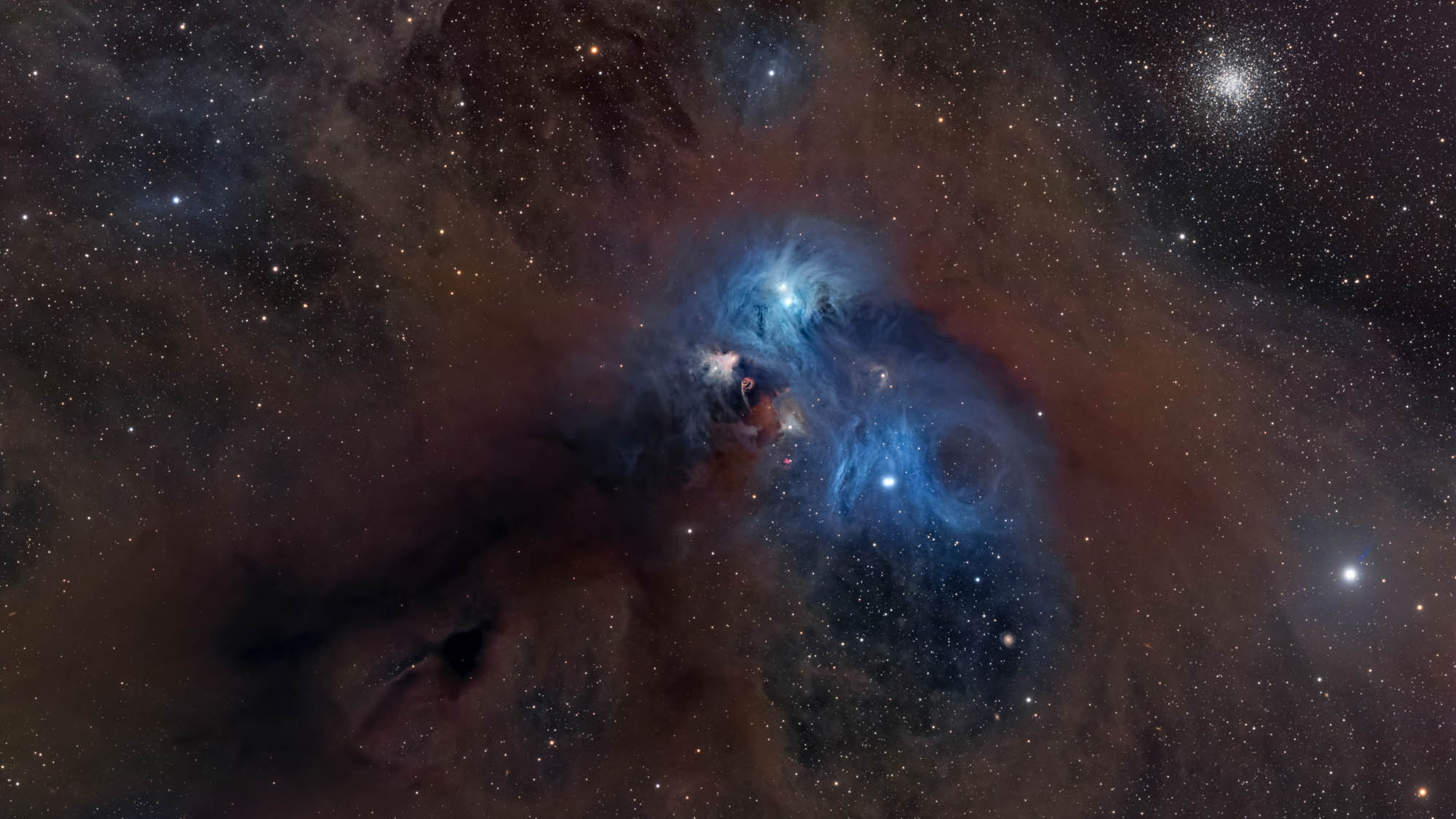
Astrophotographer Greg Meyer captured light of a more ancient variety while imaging a nebula 500 light-years from Earth in the constellation Corona Australis, which takes on the shape of a mandrill with glowing blue eyes in long-exposure photography.
7. Perseid meteors race the Milky Way
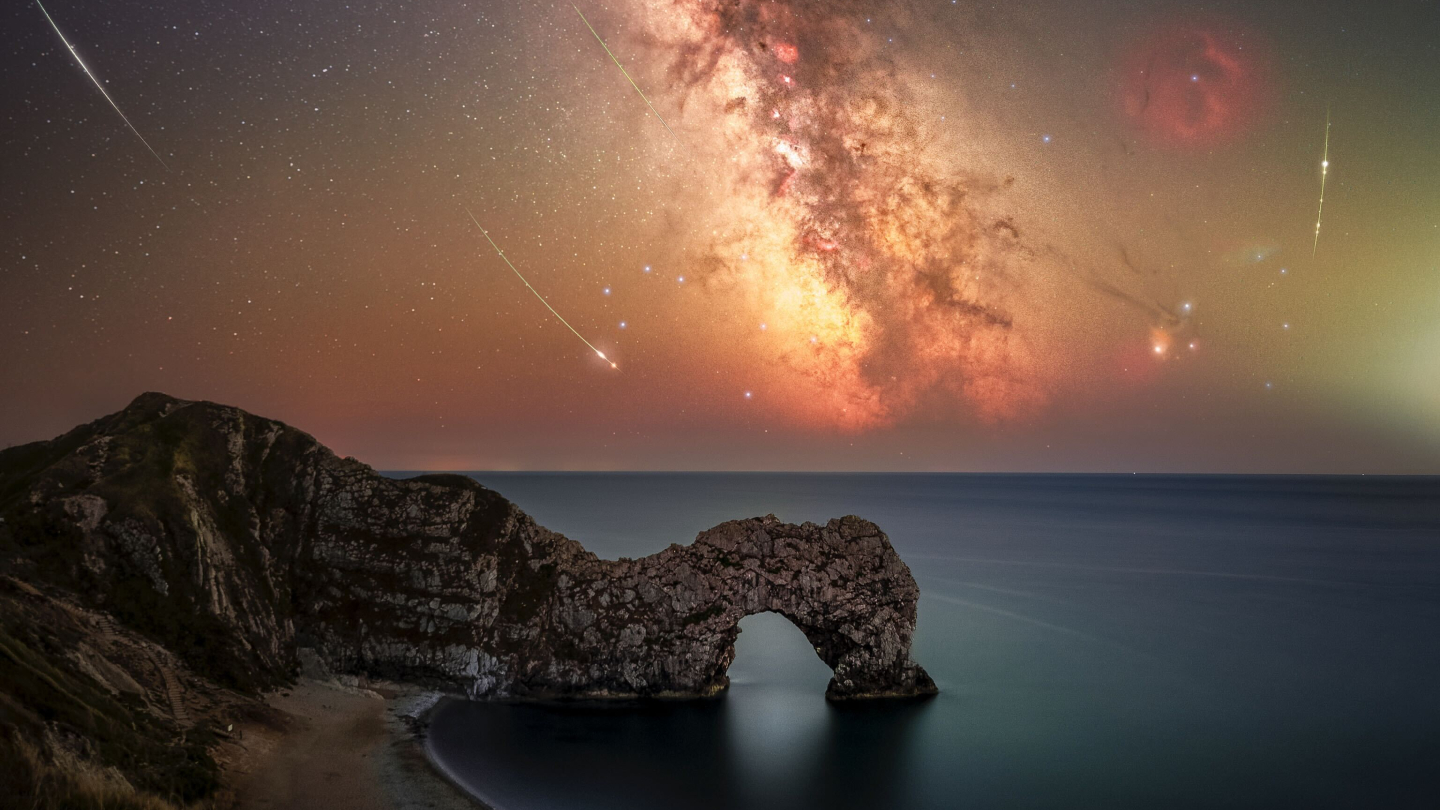
This stunning composite from Josh Dury shows shooting stars belonging to the annual Perseid meteor shower streaking towards the horizon alongside the glowing band of the Milky Way above the iconic Durdle Door rock formation in Dorset, United Kingdom.
8. An 'Elve' red halo flashes to life over the Italian Alps
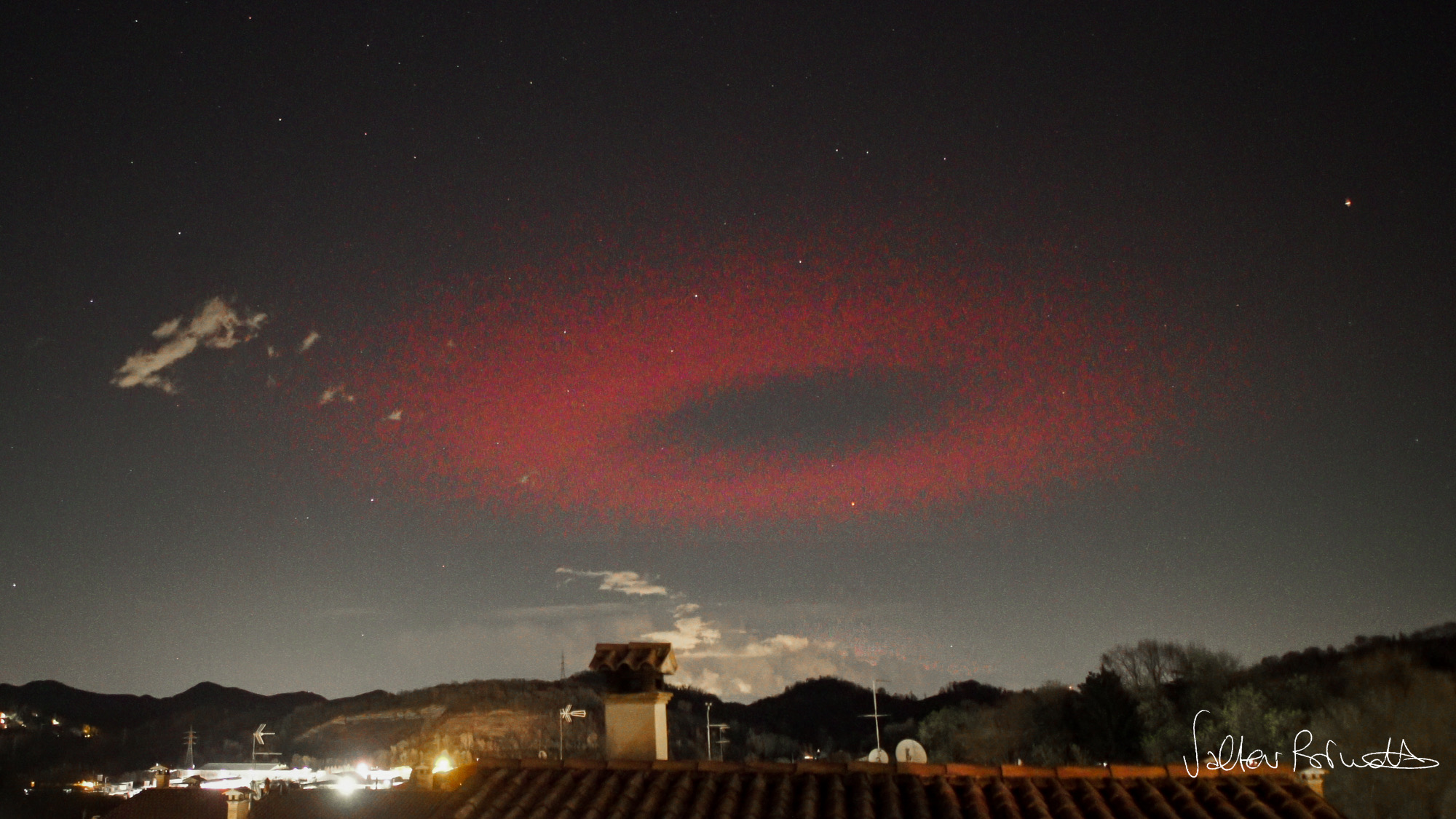
Valter Binotto, meanwhile, was able to capture a split-second view of a red ring manifesting over the Italian Alps on Nov. 17. This strange phenomenon, known as an "elve", is a super-rare form of lightning that occurs in the upper atmosphere, which lasts less than a thousandth of a second and can span up to 300 miles (480 km) in diameter, according to NOAA.
9. Comet C/2025 R2 (SWAN) crosses the Eagle Nebula

Astronomer Daniele Gasparri seized the opportunity to image the glowing green coma and diffuse tail of comet C/2025 R2 (SWAN) as it passed in front of the Eagle Nebula in the constellation Serpens, the serpent on the night of Oct. 17. Look to the left of the comet to find the iconic Pillars of Creation — vast collections of dust and gas made famous by the Hubble Space Telescope — nestled beneath a population of stars close to the nebula's glowing core.
10. A blood moon over Egypt
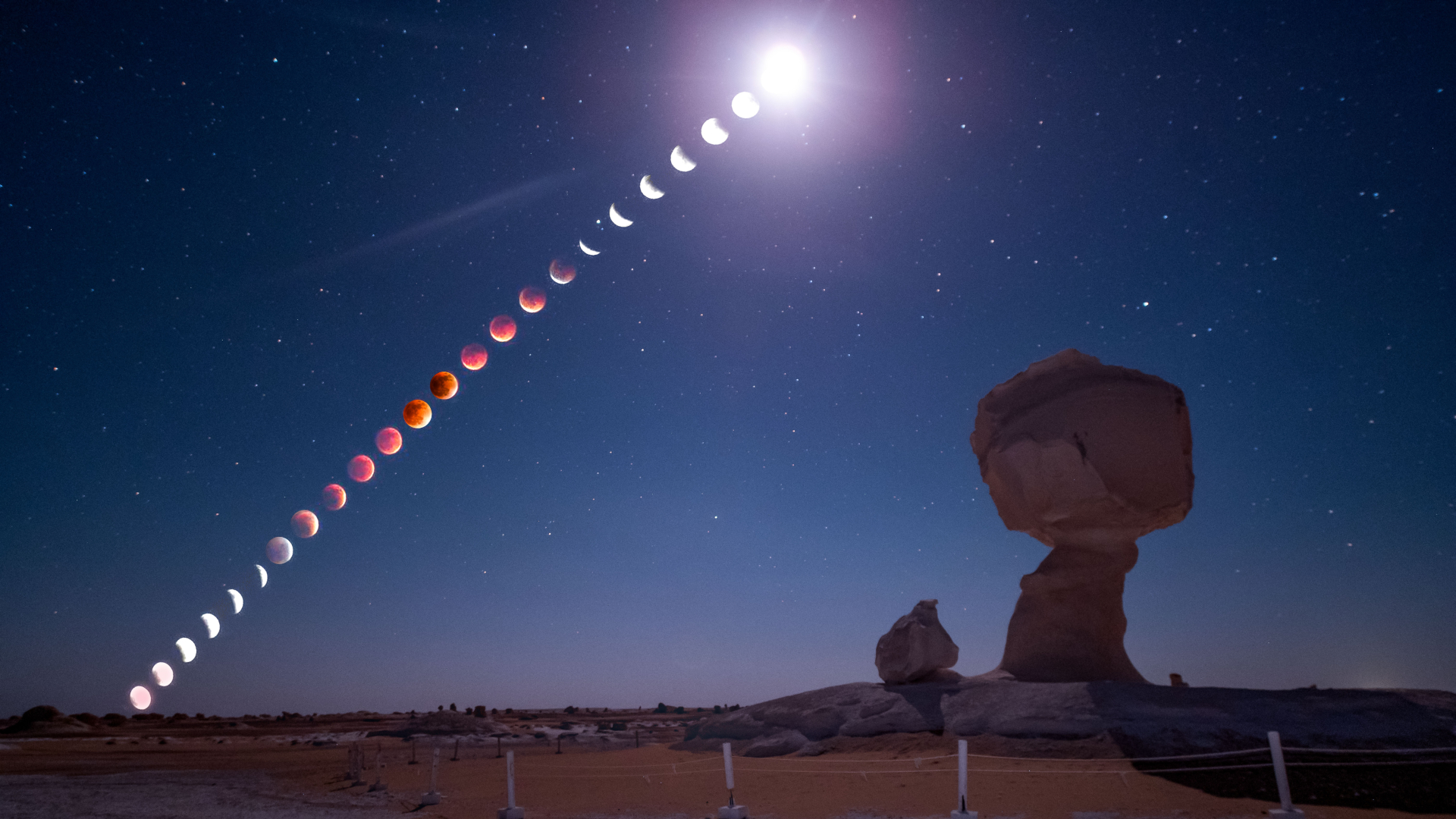
Finally, photographer Osama Fathi captured a beautiful composite scene chronicling the rise of the Sept. 7 "Blood Moon" as it soared into the skies over the chalk formations in Egypt's White Desert, while contending with the shifting light conditions and destabilizing gusts of wind.
Feeling inspired to take the first steps on your own astrophotography journey? Then why not check out our picks of the best cameras and lenses for imaging the night sky to ensure that you're ready for 2026.
Editor's Note: If you would like to share your astrophotography with Space.com's readers, then please send your photo(s), comments, and your name and location to spacephotos@space.com.
After a comprehensive selection process, Celestis has chosen Stoke Space and its new Nova rocket as the launch provider for its next deep-space Voyager mission named "Infinite Flight," traveling beyond our Earth-moon system and into a permanent heliocentric orbit up to 185 million miles away.
This mission is slated to lift off from Space Launch Complex 14 at Cape Canaveral sometime in late 2026 and represents only the second commercial odyssey of its, the first of which was 2024’s "Enterprise Flight" that carried remains of "Star Trek" luminaries, three former U.S. Presidents, and "2001: A Space Odyssey's" Douglas Trumbull.

"The 'Infinite Flight' continues what began nearly thirty years ago when we promised that remembrance could itself be an act of discovery," said Charles M. Chafer, Celestis Co-Founder and CEO. "Our Voyager missions ensure that every story we carry into space helps extend humanity’s presence across the solar system. To fly aboard Nova, one of the most advanced reusable launch systems ever built, is both a technical and symbolic leap forward."
Stoke Space's Nova is a medium-lift, 100% reusable two-stage rocket built by the Kent, Washington-headquartered aerospace firm founded by former Blue Origin principles, Andy Lapsa and Tom Feldman. It’s schedule to lift off on its first orbital test flight in 2026.
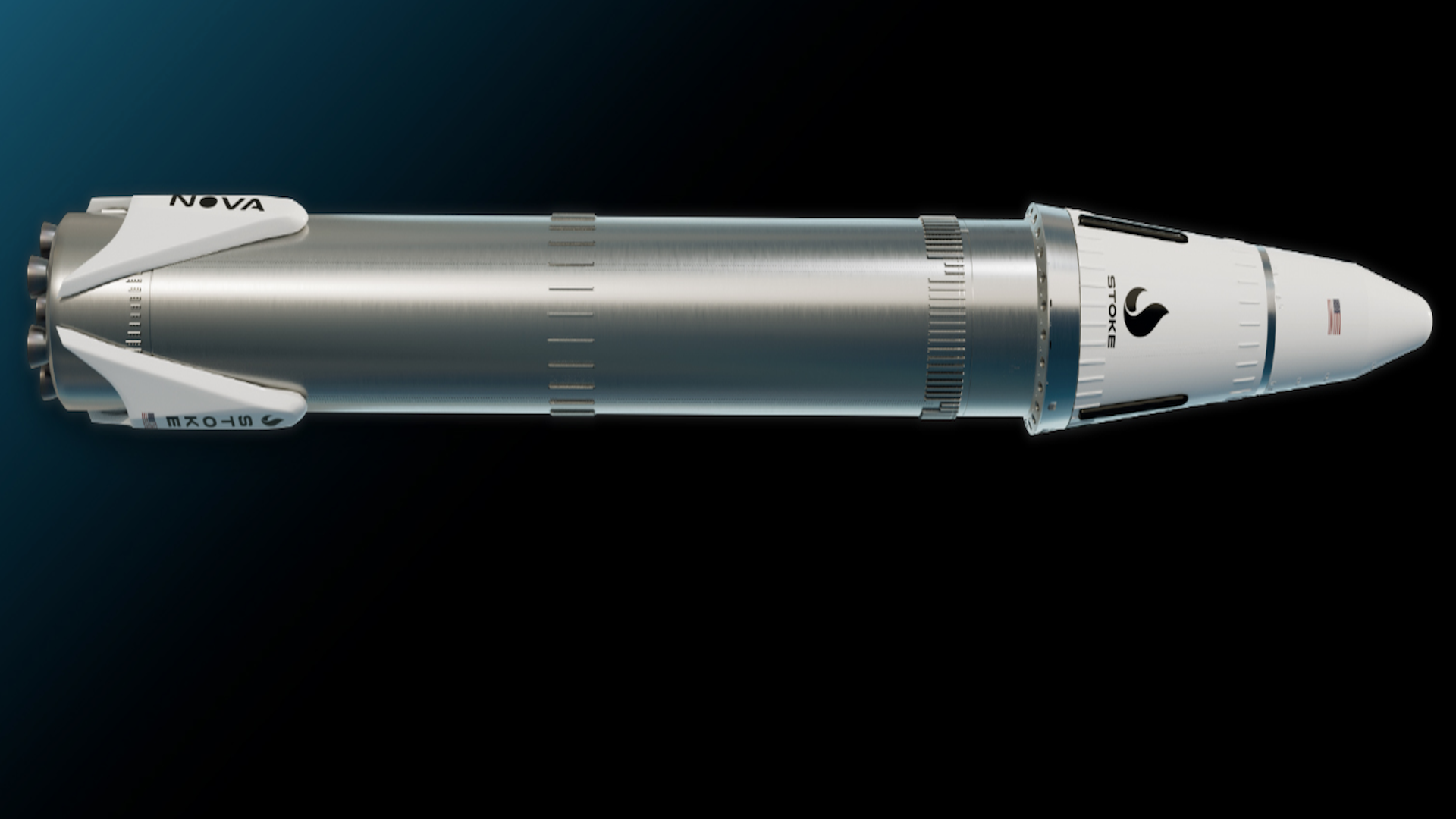
Last month, Charles Chafer revealed news that his company has opened reservations for its pioneering "Mars300" spaceflight that endeavors to send human DNA to orbit around the Red Planet as early as 2030 once a suitable launcher becomes available.
The Houston company has previously utilized the launch services of various aerospace firms using a variety of rockets, including United Launch Alliance's new Vulcan Centaur. This past summer, European spacecraft manufacturer The Exploration Company (TEC) hosted a Celestis Memorial Spaceflight payload employing a Falcon 9 rocket blasting off from Vandenberg Space Force Base on SpaceX's Transporter 14 rideshare mission. Unfortunately, TEC's Nyx capsule carrying the remains of 166 people failed to deploy its parachute during reentry over the Pacific Ocean and Celestis' "Earth Rise" cargo capsules were lost.
With mission management services being carried out by Ensemble, Celestis' "Infinite Flight" hopes to launch on its long journey in Q4 2026.
]]>